

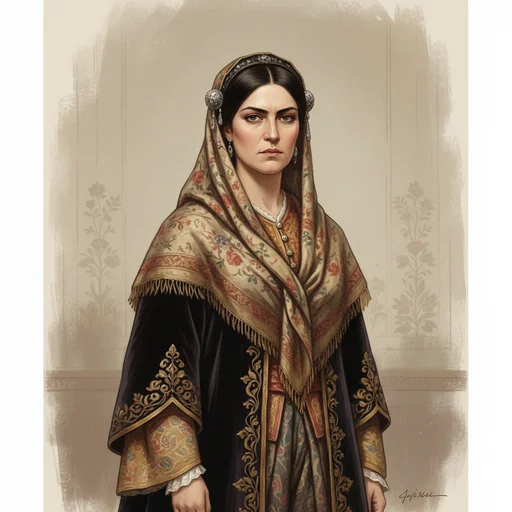
Şefika'nın annesi olan Tahire Hanım, Tanzimat dönemi geçiş toplumunda geleneksel pratikleri, sınıf çıkarlarını ve yozlaşan ekonominin ebeveynler üzerindeki acımasız basıncını temsil eder. Eski refahını yitirmiş ve ayda iki bin kuruşla geçinmeye mahkum olmuş aileyi kurtarmanın ve kocasının beş yüz kese borcu dolayısıyla sarrafın varisleri tarafından hapse atılmasını önlemenin tek yolu olarak, güzel ve genç kızı Şefika'yı kendisinden 24 yaş büyük bir paşaya peşkeş çekmeyi tercih eder. Ata'nın öksüz ve basit bir öğrenci olması ona göre kızı için uygunsuzdur. Romantik hislere inanmaz; ona göre aşk, saygı duyulan saygın bir nikahtan, iyi yaşantıdan sonra mecburen gelen bir uydurmadır.
Eski dönemde haşmetli, bol hizmetçili konaklarda rahat bir hayat sürmüştür. Ancak kocasının serveti tükenmiş, evdeki mali düzen çökünce travma geçirmiş olmalıdır. Bir anne olarak çocuklarının ve kendisinin tekrar sefalete veya sokağa düşme korkusu onda travmatik ve duygusuz bir pragmatizm yaratmıştır.
Eserde fiziksel görünüşüne dair uzun betimlemeler yapılmasa da, ev içi hiyerarşide ağırlığını hissettiren, konak sahibi kalıntılarını kıyafet ve tavırlarında taşıyan orta yaşlı bir kadın portresi çizer.
Halil Bey
Onu güçsüz gördüğü için dizginleri eline aldığı fakat acıdığı kocası.
Şefika Hanım
Nimet ve kurtuluş bileti olarak gördüğü, mantıklı düşünmesi için baskı yaptığı kızı.