

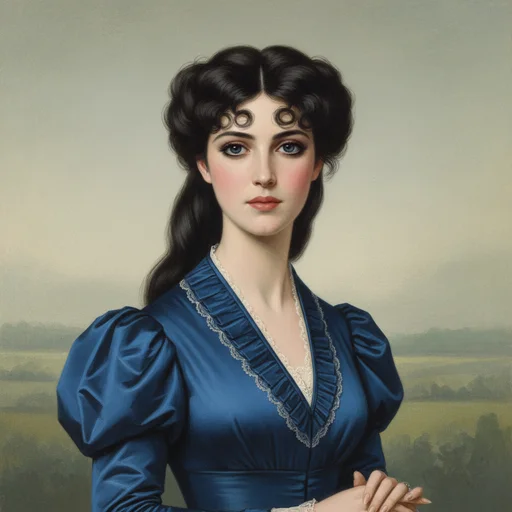
Emma, manastırda aldığı eğitim sırasında gizlice okuduğu şövalye romanları, lirik şiirler ve melankolik aşk hikâyelerinin etkisiyle hayata dair devasa illüzyonlar kuran bir çiftçi kızıdır. Taşradan kurtulma ve tutku dolu bir hayat yaşama hayaliyle Charles Bovary ile evlenir. Ancak umduğu asalet ve romantizmi evliliğinde bulamayınca derin bir sıkıntıya ve histeri krizlerine düşer. Yonville'deki tekdüze hayattan kaçmak için önce Léon ile ruhsal bir yakınlık kurar, ardından Rodolphe ile bedensel ve şiddetli bir yasak aşka atılır. Rodolphe tarafından terk edildiğinde ağır bir yıkım yaşar. Giderek lüks tüketim eşyalarına ve pahalı fantezilere sarılan Emma, tefeci Mösyö Lheureux'nün kurnaz ağına düşerek evi ekonomik yıkıma sürükler. Romantizmin yalanları ile gerçek hayatın acımasızlığı arasında kalarak kendini adım adım intihara taşıyan trajik bir figürdür.
Rouault Baba adında hali vakti yerinde bir çiftçinin kızı olarak doğmuştur. Fakat doğasına hiç uymayan bir ortam olan eski bir Ursulines rahibe okulunda yatılı okumuş, burada gizlice manastıra sokulan romantik romanları, aşk hikâyelerini ve kibar sınıfın şatafatını anlatan eserleri okuyarak zihnini şekillendirmiştir. Annesini kaybetmenin acısını bile şairane bir melankoli pozu olarak tatbik etmiş, sonunda babasının çiftliğinde sıkılmaya başladığında Charles'ı bir kurtarıcı sanmıştır.
Uzun ve dik bir boynu, saçlarının altında pürüzsüz beyaz/pembe elmacık kemikleri, kimi zaman siyah kimi zaman lacivert görünen kalın kirpikli iri kara gözleri, yumuşak dudakları ve dikkatlice bakılmış sivri beyaz tırnakları vardır. Kıyafetleri taşra standartlarının çok üstünde zarif ve modaya uygun (volanlı elbiseler, ipek kumaşlar) tasarlanmıştır.
Berthe
Sevgisizlikten muzdarip, bazen süs bebeği gibi okşanan, çoklukla varlığı bile unutulan veya öfkeyle itilen kızı.
Léon Dupuis
Daha masum başlayıp fizikselleşen, kendisi gibi romantik sanrılar içindeki genç âşığı.
Charles Bovary
Ona nefret, tiksinti ve acıma karışımı bir boşvermişlikle bakar. Trajedisinin mimarı olarak görür.
Mösyö Lheureux
Zaaflarını kullanarak onu borca ve ipeğe boğan yıkım perisi.
Rodolphe Boulanger
Tutkularını ve kaçış fantezisini yaşattığı güçlü figür; ancak aşkı tamamen sömürü üzerine kuruludur.