

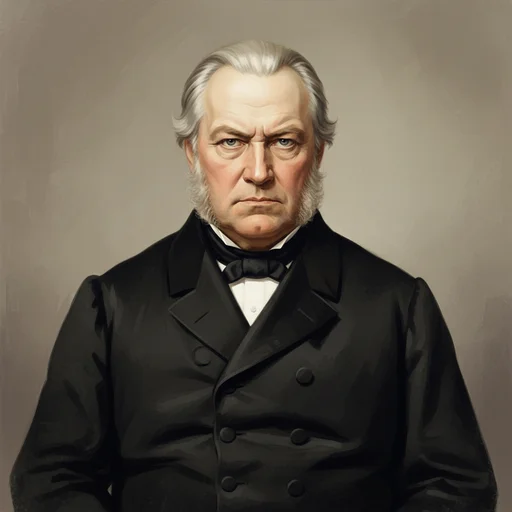
The Russian Emperor of the era. He is the novel's most powerful background figure and represents not just authority, but serves as proof of how absolutist power turns a person into someone arrogant, ruthless, and disconnected from reality. The final word on decisions determining Hadji Murat's fate belongs to him. He legitimizes his own cruelty under the guise of the state's survival and virtue. While ordering the destruction of villages in the Caucasus and the exile of innocent villagers, there is not a trace of mercy in his mind; on the contrary, he fancies himself a supreme figure carrying the welfare of the entire world on his shoulders.
He has been on the throne for years and has witnessed countless wars and rebellions (including the Decembrists), suppressing them in the most brutal manner. As a result of the sycophants constantly praising him, he has lost all connection to reality and begun to feel like a semi-divine entity.
Tall and large-framed. He wears a black frock coat that tightly belts his large belly. His hair has thinned, and he combs it meticulously like a wig to cover the gaps. His sideburns resemble sausages. He radiates a terrifying authority with his dull, lead-like eyes in a pale face.
Hacı Murat
A worthless pawn to be used solely to suppress the Caucasus.
Çernışev
A minister who must carry out his decisions, whom he dislikes but depends upon.