

The Awakening — 9 karakter
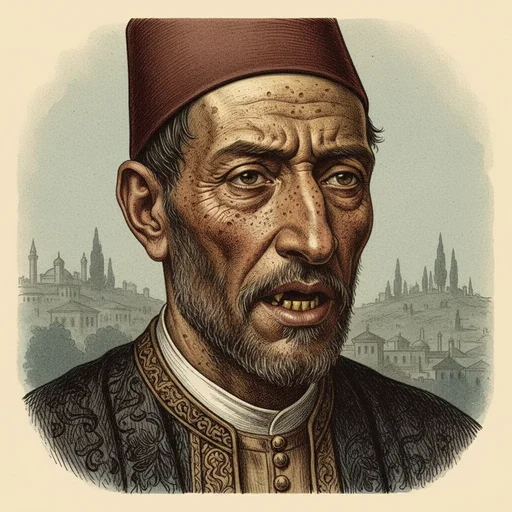
Abdullah Efendi
A Syrian (as he is often referred to), over 70 years old, wealthy but boorish and vile-natured merchant. He acquired a massive fortune through trade with Egypt and Syria. He uses his wealth to hide his hybrid and ghastly physical appearance and to purchase young beauties. He has been Mehpeyker’s primary patron for years, dominating her as if she were his slave. Upon learning of the relationship between Ali Bey and Mehpeyker, he devises a horrific revenge plot to save his own ego and satisfy his inferiority complex. Although he is the chief devil who ordered the murder, as the plans go awry and Ali Bey loses his mind, he suffers a fatal stroke out of fear.
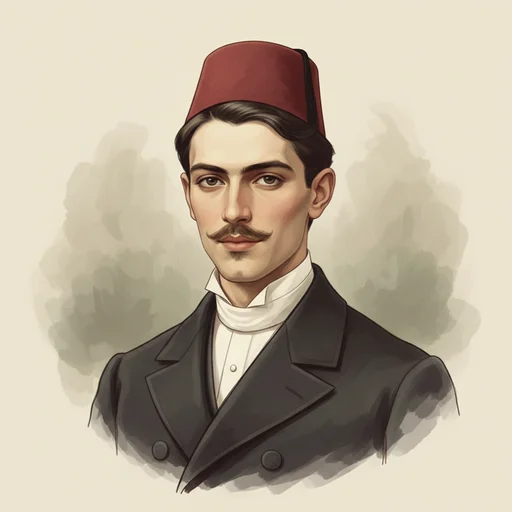
Ali Bey
Ali Bey is the only child of a wealthy, polite, and elite family. Until the age of twenty-one or twenty-two, he was raised in complete isolation from the outside world, receiving a flawless education under the excessive affection and protectiveness of his father. His father's death creates a deep melancholy in him, and his inexperienced heart is deceived by Mehpeyker during an outing to Çamlıca, urged by his mother. This passionate first love leads him away from logic into drink, debauchery, and a terrible downfall. He fails to see the love of the innocent Dilaşub—brought home by his mother to save him—because of Mehpeyker's slander. Blinded by jealousy and rage, he eventually causes the destruction of those he valued most. The sorrow he falls into upon seeing Dilaşub's corpse at his own feet is his final lesson in humanity before his death.

Atıf Bey
A loyal friend who is the same age as Ali Bey and stands closest to him. He is well-versed in the rules of Istanbul’s nightlife and indulgence, a rational and easygoing young man. When he becomes aware of the whirlpool Ali Bey has fallen into, he offers friendly advice and tries to steer him away from this disgraceful and dangerous path, but to no avail. Even when Ali Bey distances himself and goes into hiding toward the end, he tries to reach him through letters and provide financial assistance. In the final moment, he is forced to leave his friend in the arms of destruction due to Ali Bey's astounding lack of willpower.

Dilaşub
A beautiful 16-18-year-old concubine bought from the slave market by Fatma Hanım for the purpose of saving Ali Bey from the clutches of Mehpeyker. She brings light to the mansion with her purity, innocence, and dignity befitting a lady. She becomes attached to Ali Bey silently but with deep passion. However, since Ali Bey is obsessed with Mehpeyker, he ignores her. Furthermore, when she falls victim to Mehpeyker's games and is falsely accused, she is unjustly cast out of the house. Having ended up in Mehpeyker's hands again due to another scheme in the slave market, Dilaşub is subjected to unimaginable torment and insults, yet she refuses to compromise her honor despite diabolical blackmail. Ultimately, volunteering to be a sacrifice for her great love, she takes Ali Bey's place in the dark hut and dies while shielding him from the daggers of Hırvat.
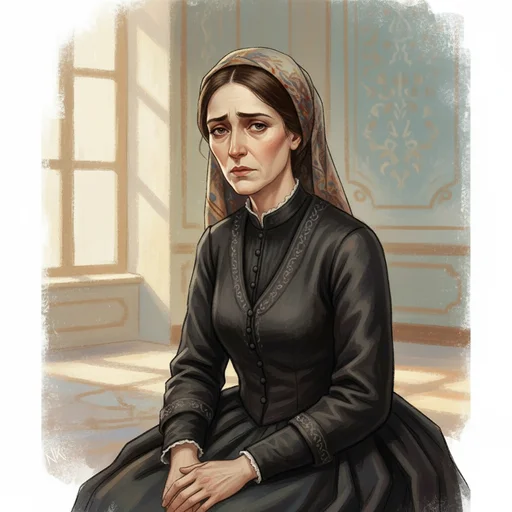
Fatma Hanım
Ali Bey's affectionate but aging mother, whose life revolves entirely around her son. Following the death of her husband after 25 years of a good marriage, she has pinned all her hopes on Ali's rise. Throughout the novel, she helplessly struggles to prevent her son's moral and physical decline solely through prayers and good intentions. Her idea—born of traditional wisdom—to 'bring a beautiful concubine into the house to rescue him from a bad woman' backfires horribly due to Ali Bey's state, poisoned by Mehpeyker's intrigues. Her heart is broken by her son drifting into a life of debauchery, abandoning her, and ignoring his filial duties. Consumed by deep sorrow, heart palpitations, and grief, she falls onto her deathbed and dies in utter isolation, having lost her son to darkness that he could not legitimize.
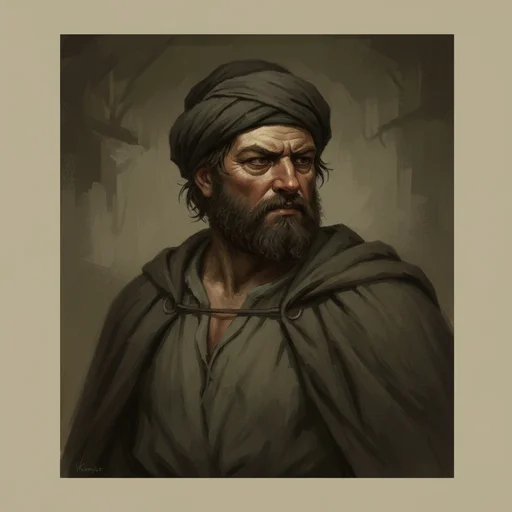
Hırvat
A dark man who works for Abdullah Efendi and acts as a hitman. As a servant of orders, he lacks a moral filter; he is ready to commit the most vile murders the moment he is paid. At the end of the novel, acting on Mehpeyker's orders, he takes the life of the innocent Dilaşub in the dark, thinking she is Ali Bey. Afterward, he is cornered by the public and police led by Ali Bey, and he perishes immediately upon capture due to the beating he receives.

Mehpeyker
An ambitious woman who was led into a life of infamy by her relatives at a very young age (13) and who plays wealthy men like puppets thanks to her beauty. She easily seduces the young and naive Ali Bey. While using him like a toy, she is forced to temporarily abandon him due to her extremely wealthy, old, and ugly lover, Abdullah Efendi. However, Ali Bey’s independence and insults turn her passion into a savage grudge. She envies Dilaşub and tears Ali Bey's family apart through various diabolical schemes. In the end, as she tries to trap and have Ali Bey killed, she ends up causing Dilaşub's death instead. In the finale, she pays the price for the very trap she set by losing her life to the knife of the deranged Ali Bey.
Mesut Efendi
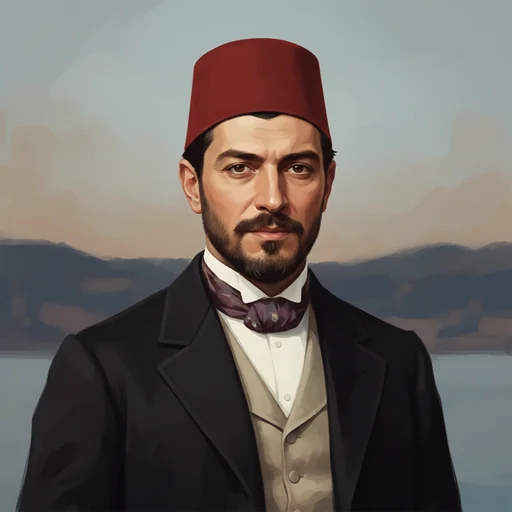
Atıf Bey’s experienced uncle who has seen much of the world. He is around 40 years old, an intelligent, resolute, dark-complexioned man. He initiates a pragmatic conflict in Çamlıca by making a remark at Mehpeyker's carriage to open Ali Bey's eyes and reveal the true nature of their relationship. He is a realistic person who does not mince words. When Ali Bey insults him, he shows no mercy and lets the situation take its course. He adds weight to the novel as a figure who does not cover up the bitter truths of life and is well-acquainted with the mechanics of gossip and scandals.
Namık Kemal
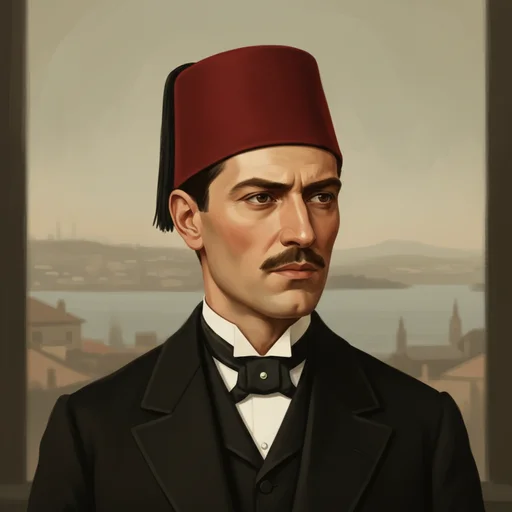
Namık Kemal was born on 21 December 1840 in Tekirdağ. His father, Mustafa Asım Bey, would later become chief astrologer at the imperial court; his mother, Fatma Zehra Hanım, died when the boy was eight. He spent his childhood trailing his grandfather Abdüllatif Paşa from one provincial post to the next, along a route that ran from Kars to Sofia. He never attended school regularly, learning Arabic, Persian and Divan poetry from private tutors. He took the pen name "Namık" in Sofia, from a poet who admired his verses. As a young man he settled in Istanbul and entered the Translation Office, where the French he polished opened a door onto Europe. The real turn came in the early 1860s, when he met Şinasi. He abandoned the moulds of Divan poetry for journalism, and when Şinasi left for Paris he took over the editorship of Tasvir-i Efkâr, writing the articles that planted words like liberty, homeland and nation in Turkish. Joining the Young Ottomans brought heavier pressure; in 1867 he fled to Paris, then in London brought out the newspaper Hürriyet with Ziya Paşa. He returned in 1870 and founded İbret. When Homeland or Silistria was staged in 1873 and the audience's enthusiasm spilled into the streets, he was exiled to Famagusta without trial. The thirty-eight months in that fortress were his most productive: The Poor Child, Akif Bey, Celaleddin Harzemşah and The Awakening were all written there. He treated art as a means of rousing society, dropping ornate Divan prose in search of a language his readers could follow. The Awakening is regarded as the beginning of the Turkish novel, and his plays as the beginning of Western-style drama in Turkish. After 1876 he governed Lesbos, Rhodes and Chios. He died on Chios on 2 December 1888 and, as he had wished, was buried at Bolayır beside the tomb of Süleyman Paşa.