
Wu Cheng'en
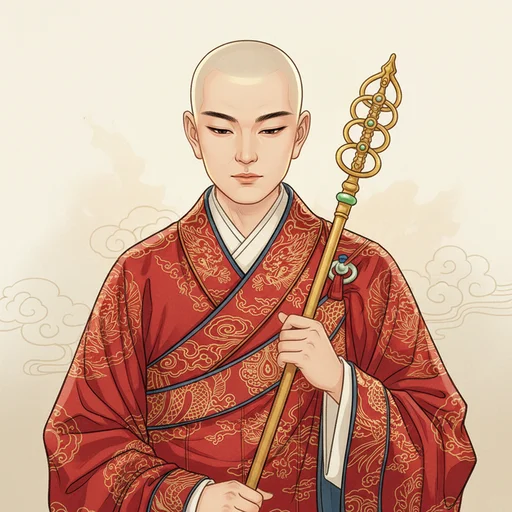
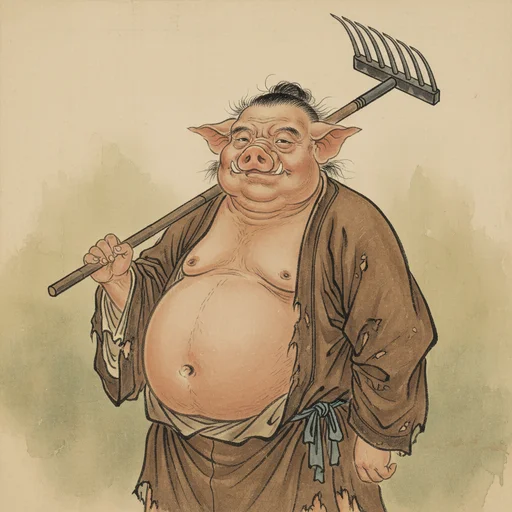
Set during the Tang Dynasty, it recounts the epic and mythological journey of the Buddhist monk Tang Sanzang to India (the West) to retrieve sacred scriptures. Guided by the Buddha and Guanyin, the monk is accompanied by three powerful disciples who seek to pay for their past sins and achieve enlightenment. The most well-known among them is the Monkey King Sun Wukong, who possesses extraordinary powers and a rebellious nature. The others are the greedy and lustful pig demon Zhu Bajie, and the loyal river ogre Sha Wujing. Along the way, the team encounters countless demons, monsters, and obstacles seeking to eat them or lead them astray. This adventure is both a physical struggle for survival and a process of spiritual purification and personal transformation. The novel blends Chinese folklore, Taoist, and Buddhist philosophy with a satirical tone to present a unique fantasy world.
Beyond the physical battle for survival against supernatural evils and demons to reach the scriptures, the journey represents the effort to overcome inner weaknesses such as pride, greed, and naivety.
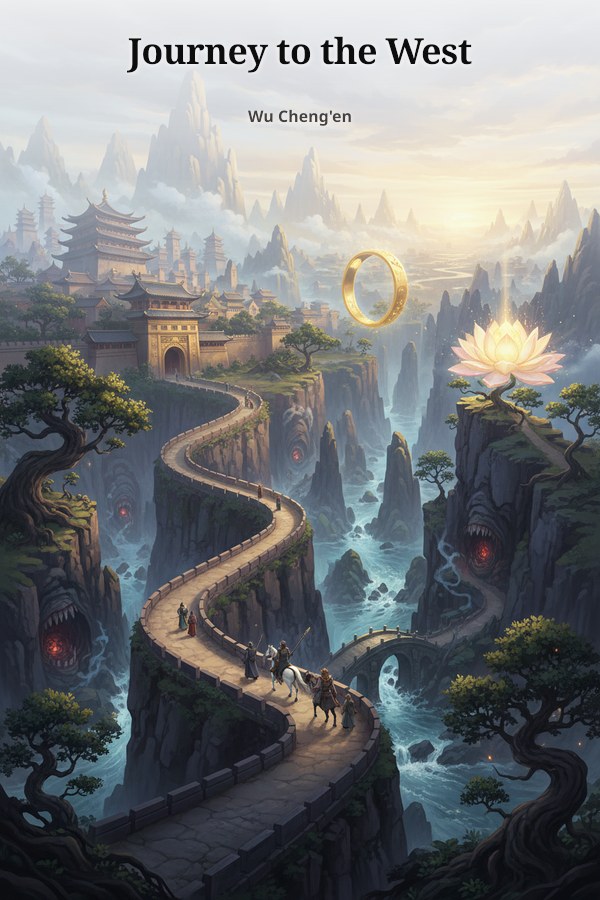
A fictional and fantastic Eurasian geography starting from the capital Chang'an (modern-day Xi'an) and stretching through Central Asia to India (the Western Paradise), filled with mythological mountains, dangerous rivers, and demonic lairs.
7th Century AD (Tang Dynasty era)
Mythological, epic, humorous, philosophical, adventurous, and fantastical.
An omniscient third-person narrator in the style of a classic Chinese novel, which divides the story into chapters and frequently addresses the reader.
The cosmos is divided into three realms: Heaven, Earth, and the Underworld (Hell). Taoist gods and Buddhist figures coexist within the same universe under a bureaucratic hierarchy. Animals and inanimate objects can achieve consciousness, perform magic, and turn into demons (yaoguai) through long-term Taoist practices. After death, souls are judged in the Underworld, and the cycle of reincarnation (karma) binds every being.
A rich folkloric foundation blending the three pillars of Chinese culture: Buddhism, Taoism, and Confucianism (the Three Teachings), while incorporating subtle satires on the Chinese bureaucracy of the era.
Characters are arranged at equal intervals on a circle; you can read the relationship type and dynamics by clicking on the lines.
Bir çizgiye tıklayarak ilişki detayını açın.
Wukong is often angered by his master's naivety but does his best to protect him. Sanzang, in turn, fears Wukong's violent tendencies and uses the magic of the Golden Fillet to restrain him.
The White Bone Demon (Baigujing) incident, where Sanzang is deceived by a demon's illusion and wrongfully banishes Wukong, but Wukong returns to rescue him when the monk falls into danger.
They constantly bicker. Wukong mocks Bajie's laziness and nicknames him 'Idiot.' Bajie attempts to get revenge by complaining about Wukong to their master, yet they usually fight side by side in battle.
Instances where Bajie goes to sleep instead of keeping watch, and Wukong turns into an insect to sting him, pester him, and expose his lie.
Bajie easily manipulates his master to serve his own interests. Sanzang's mercy and weakness serve as a perfect refuge for Bajie's laziness and lies.
Bajie frequently suggesting that they 'split the luggage and return home' whenever the journey becomes difficult, which saddens Sanzang.
Sha Wujing is the most obedient and trouble-free disciple in the group. He never questions his master's decisions, respects him like a father figure, and carries the physical burdens.
When Wukong and Bajie fight, Sha Wujing immediately intervenes and focuses on protecting his master.
Despite his hatred of authority, Wukong has deep respect for Guanyin. She acts as both his monitor and a wise mentor whom he turns to in the most difficult times.
Wukong flying to Guanyin's island to complain and ask for help whenever he faces a powerful demon he cannot handle or experiences major conflicts with his master.
When Bajie tries to shirk his duties, the burden usually falls on Sha Wujing. Wujing silently judges Bajie's worldly desires but avoids entering into a direct conflict with him.
When Bajie sees a beautiful woman or chases after food, Wujing coolly reminds him of his tasks.
Sanzang is bound to Guanyin with complete devotion and gratitude. He accepts walking the path she has set as an existential duty.
When Sanzang falls into despair in moments of danger, he first prays by calling upon the Buddha and Guanyin.
Because Wukong once turned Heaven upside down, the Jade Emperor remains wary of him and views him as a troublemaker. Wukong, meanwhile, mocks the Emperor's bureaucracy.
Instead of bowing formally to the Emperor or the gods when he goes to Heaven to ask for help, Wukong makes fun of them by calling them 'Old Man'.