
Fyodor Dostoyevski
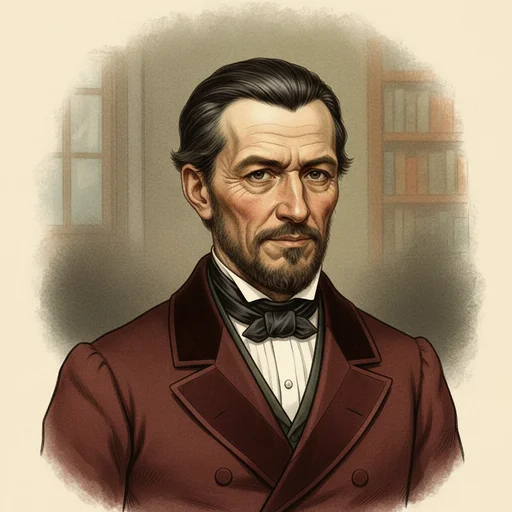
The Brothers Karamazov is a philosophical masterpiece by Fyodor Dostoevsky set in 19th-century Russia. The work revolves around the tensions between Fyodor Karamazov, an immoral landowner, and his four sons (Dmitri, Ivan, Alyosha, and Smerdyakov), who each possess vastly different worldviews and psychological makeups, as well as the murder of the father.
A conflict of potential murder and destruction that escalates between the father (Fyodor) and the son (Dmitri) over the inheritance within the Karamazov family and their shared lust for a woman (Grushenka). On this axis, the war between faith and denial, pride and humility is displayed.
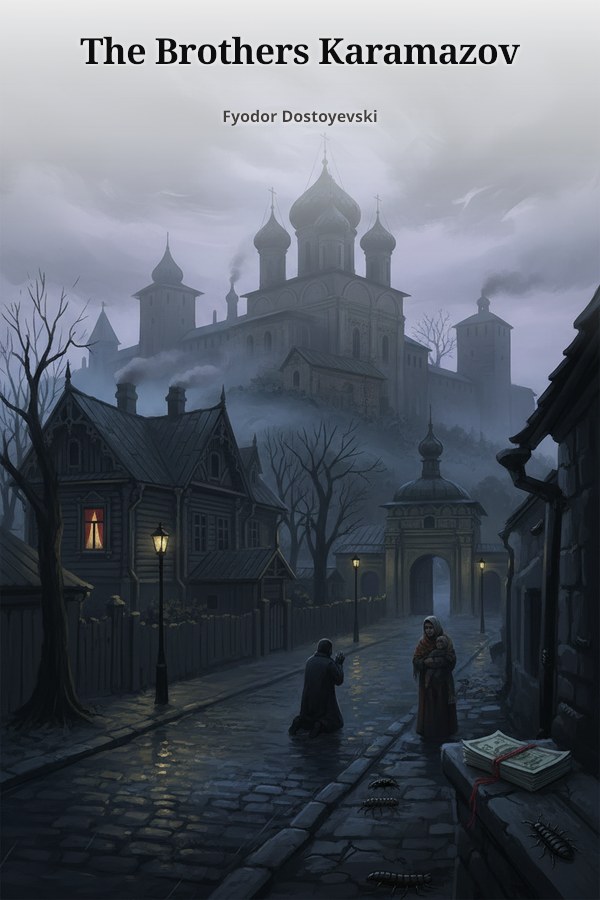
A small provincial town in Russia; the events take place in the monastery (cells, hermitage), Fyodor Pavlovich's house, and the salons of Katerina Ivanovna and Khokhlakova.
The second half of the 19th century in Russia, a period marked by the abolition of serfdom, the introduction of new courts (social and legal reforms), and debates over liberal movements.
A heavy, electric, philosophical, and psychological atmosphere of tension where religious and worldly desires, high moral values, and animalistic instincts constantly and sharply collide.
An omniscient narrator using the first-person plural/singular, referring to 'our town' and 'us' like a local who lived through the events; while attempting to appear neutral, the narrator analyzes the deepest states of mind of the characters and their philosophical contradictions.
While social respect is measured by money and rank, the human soul is governed by the laws of lust, pride, and faith. The Orthodox monastic system (Starets culture) demands absolute obedience and love, whereas the outside world (the father's house, taverns) is ruled by greed, calculation, and unbridled passions. Appearing high-minded while acting basely is intertwined in most people.
The pious Russian people, struggling in poverty and suffering, expect miracles from the Elders (Starets) with pure faith. There is a hidden tension between the elite class and the clergy; Western-influenced liberal and socialist ideas collide with traditional Orthodox values.
Characters are arranged at equal intervals on a circle; you can read the relationship type and dynamics by clicking on the lines.
Bir çizgiye tıklayarak ilişki detayını açın.
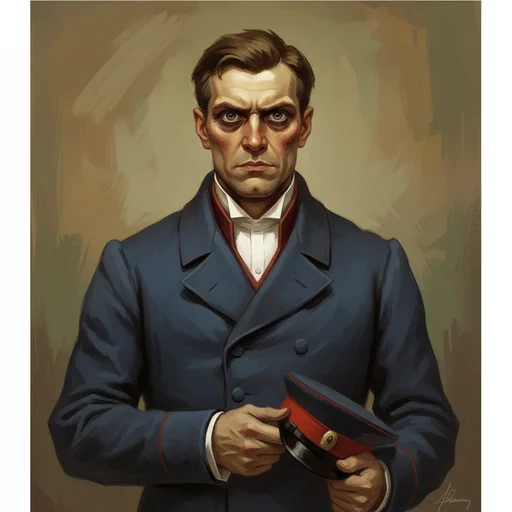
The disagreement, which began due to money and inheritance, is a competition that has reached the stage of murder due to their wild, shared lust for the same woman (Grushenka). The father fears his son but cunningly seeks opportunities to provoke and crush him. The son is disgusted by his father's shamelessness and is inclined to commit violence against him at any moment.
When they clash in the Elder's room, Dmitri openly shouts that his father gave promissory notes to Grushenka to corrupt him, threatening him with patricide.
Fyodor knows that Ivan despises and inwardly loathes him; he fears Ivan even more than he fears Dmitri. Ivan, meanwhile, views his father as a disgusting 'reptile' and a 'pig', and while he displays cold politeness to his face, he desires his death.
While drinking with Ivan, Fyodor openly tells Alyosha, 'Ivan doesn't love us, I don't trust him,' while Ivan shows his hatred by remaining indifferent to his father being beaten, remarking that 'one reptile would have eaten the other.'
Alyosha loves his immoral father without judgment, evoking a surprising sense of admiration in him. Fyodor, knowing that only Alyosha does not despise him, feels a rare, pure, and tear-inducing mercy and affection for him.
In the presence of the servants, Fyodor calls out to Alyosha, 'The way you look into my eyes and love me makes me melt; could I ever hurt you?'
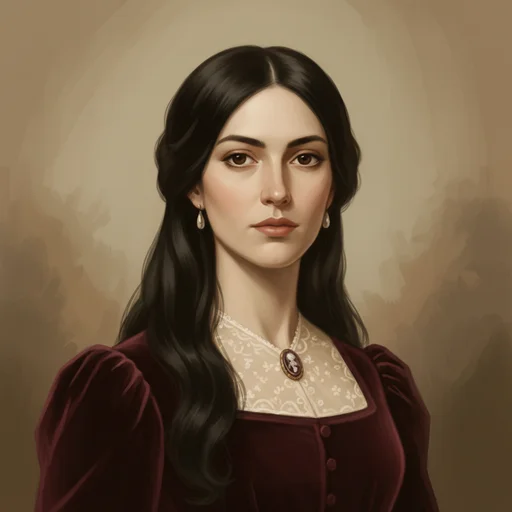
Dmitri is crushed by Katerina's nobility and gratitude; because of his own debauchery, he feels as base as an insect before her. Katerina, enduring Dmitri's betrayals, has proudly taken on the duty of 'saving' him as if it were a submission to fate.
While Dmitri tells Alyosha how Katerina's bow to him, touching her forehead to the ground, terrified him, Katerina declares that 'for the sake of her own honor,' she will never leave him and will remain faithful to him for the rest of her life.
It is an irresistible animalistic lust for which Dmitri has sacrificed everything (his honor, his money, his fiancée). Grushenka mocks this love, acting capriciously to make the man her slave, but Dmitri takes a masochistic pleasure in this.
Dmitri says that he spent the stolen money for Grushenka's sake and went to Mokroye, and that now, with a mere wink from her, he could even kill his father.
Ivan loves Katerina with great passion, but Katerina keeps him by her side as a 'mentor and friend' to feed her own pride, causing him pain. Ivan realizes that this woman's true pleasure is suffering and false martyrdom; he tells her to her face and says he will leave her.
As Ivan storms out of the room, he tells Katerina: 'You never loved me because of your desire for revenge; you only love the indomitable insults Dmitri heaped upon you.'
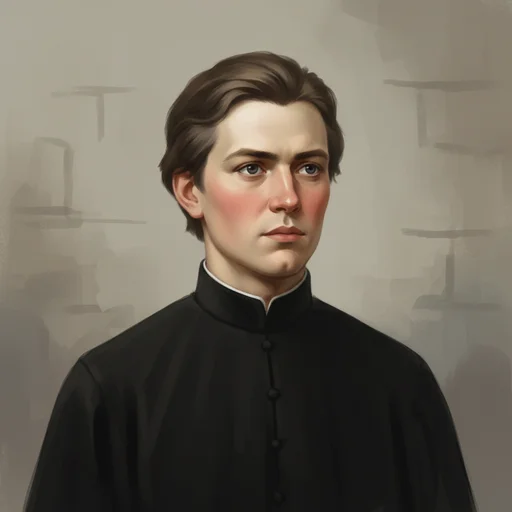
Zosima loves Alyosha like an angel on earth and prepares him to leave the monastery for his worldly mission. Alyosha is completely devoted to Zosima with a childlike, unshakable awe and faith, believing him to be a saint capable of performing miracles in the eyes of God.
Alyosha is horrified when Zosima kneels before Dmitri, and he wants to cry as his heart breaks at the thought of the Elder's impending death.
Lise is a bedridden young girl; she enjoys both mocking and unsettling Alyosha, yet deep down, she is deeply in love with him. Alyosha receives this love with calm and purity, taking it seriously without finding it strange.
In the letter she writes, Lise declares that she has loved Alyosha since she was a child and wants to marry him, while Alyosha receives this letter and smiles as he prays.
At first, Katerina tries to manipulate Grushenka by showing her such gratitude and affection that she even offers to kiss her hands. However, Grushenka deliberately refuses to let her kiss her hand, trapping her and revealing the woman's true pride, which instantly leads them into a state of wild hatred.
After Katerina's exaggerated compliments, Grushenka says, 'I made no promises, I will not kiss that hand,' causing Katerina to scream, 'Slut! Get out!'
Miusov, a haughty nobleman who has seen Paris, is disgusted by Fyodor's buffoonery. Fyodor, in turn, deliberately acts immorally and provokes him to drive him to distraction, all to break Miusov's pretentious nobility and humiliate him.
When Fyodor tells stories and invents lies in the monastic cell just to spite Miusov, Miusov loses his composure and begins to shout.
Smerdyakov admires Ivan's disbelief and nihilistic ideas, and they share a strange, tacit agreement. Even though Ivan looks down on him, he enjoys the valet's bold mockery of religious rules.
While Smerdyakov explains at the table that denying faith is not a sin, he looks directly into Ivan's eyes, implicitly seeking his approval.
Rakitin is a pragmatic and vindictive seminary student who is ostensibly Alyosha's friend. He mocks Alyosha's naivety and the Karamazov family. Alyosha, though he senses Rakitin's malice and feels troubled by it, tries not to judge him.
While saying that a crisis of lust and murder is near for the Karamazovs, Rakitin expresses with spiteful passion his belief that Ivan will marry Katerina and become rich.