
Jules Verne
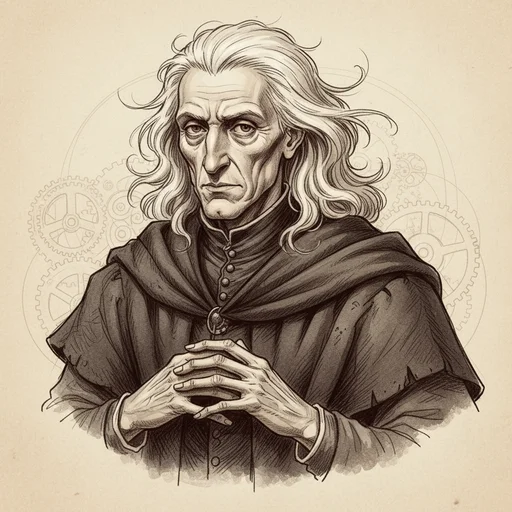
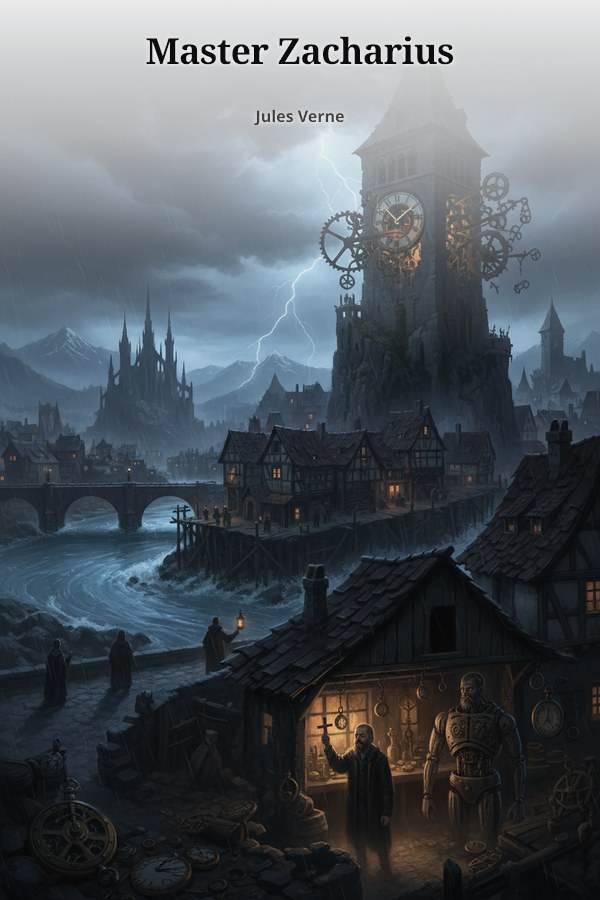
Master Zacharius, featured in the famous Jules Verne work of the same name, is a world-renowned clockmaker living in Geneva. After inventing the "escapement" and revolutionizing watchmaking, he becomes known for his immense hubris, claiming to have created time itself and believing he possesses superhuman powers.
The desperate struggle of the legendary clockmaker Zacharius, who possesses magical abilities and mistakenly believes he equates the spiritual order created by God with timekeeping instruments; his battle over his pride, his daughter, and his soul against the unstoppable, fatal presence of the clockmaker Pittonaccio, which proves that he is not the master of time, but its slave.
Switzerland. Primarily the city of Geneva, with the island district split by the Rhône River where dilapidated pile dwellings are located; later, the stormy Swiss Alps (Dents-du-Midi) and the ruins of the cursed Castle Andernatt.
Around the 16th or 17th century (The era when the clock escapement was invented, old Calvinism gained strength in Geneva, and the echoes of Plato and Medieval philosophy began to yield to science).
Gothic, dark, melancholic, and tempestuous; woven with an increasing sense of despair and gloom against the passage of time, where the hubris of science intertwines with supernatural and demonic elements.
An omniscient third-person narrator with a dramatic and moral tone.
In this universe, a magical-realistic or supernatural law applies, where the creator inextricably binds his existence and soul to his works. The artisan's pride in his skill has led to a metaphysical pact (a demonic curse) between his mechanisms and his own living pulse. As the clocks break down, their creators fall ill; when the clocks stop, the master is driven to death.
The people of Geneva, known for their strict commercial integrity and honest morality. A religious European society where Protestant Calvinism prevails, yet Catholic rituals (prayers, ancient churches) still struggle to survive, and where craftsmanship and artisan masterpieces are exalted.
Characters are arranged at equal intervals on a circle; you can read the relationship type and dynamics by clicking on the lines.
Bir çizgiye tıklayarak ilişki detayını açın.
Although they are initially very close, this bond turns into a one-sided sacrifice as Zacharius becomes obsessed with science and loses control. Zacharius loses his mind to the point where he attempts to ruthlessly sacrifice his daughter to a monster to save his own soul.
Master Zacharius yelling at Gérande at Andernatt Castle: 'You will accept this man as your husband so that I may become immortal and finally attain the power of God!'
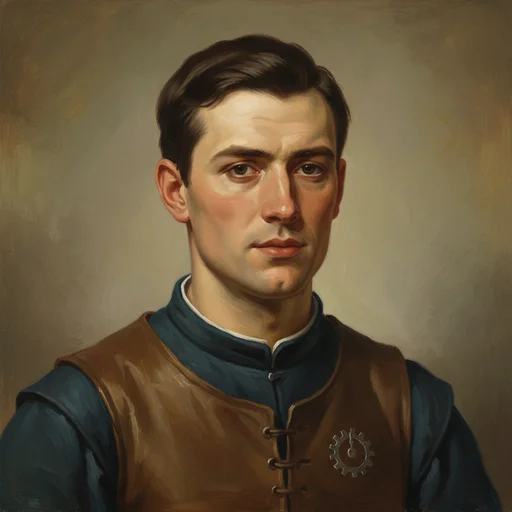
Aubert approaches his master with deep respect, loyalty, and understanding, but Zacharius belittles Aubert's talent, viewing it only as a tool that touches metal. The relationship reaches a total breaking point due to his master's increasing mad pride and dogmatic philosophy.
Master Zacharius scorning his apprentice by saying, 'You do not feel that these metals, to which my genius has given life, beat like the pulse of a living body!'
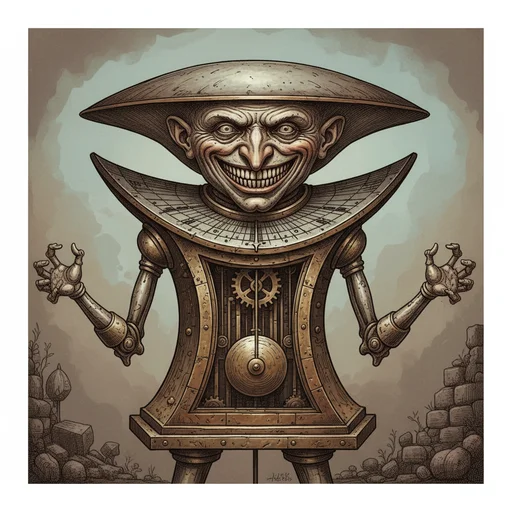
Features a Faustian dynamic of spiritual surrender. Zacharius both hates Pittonaccio, whom he believes has seized control of his clock and soul, and obeys him like a servant who has been left with no other choice. While Pittonaccio is the mocking and controlling side, Zacharius turns into a desperate and selfish victim.
The master agreeing to Pittonaccio's cursed threat, 'When your daughter is mine, this clock will belong to you,' for the sake of his own life.
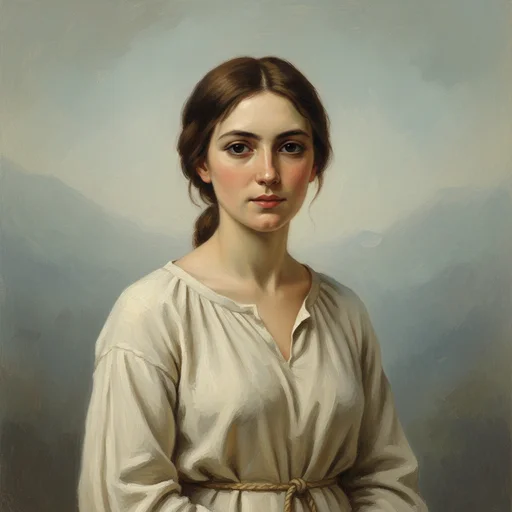
They have a mutual attachment rooted in a clean, pious, and unwavering love. Even in the darkest moments, they exhibit an equal and compassionate relationship, trying to stand together against the master's madness and hoping for goodness.
Aubert trying to protect her at the castle, crying out, 'Gérande, you are my fiancée!'
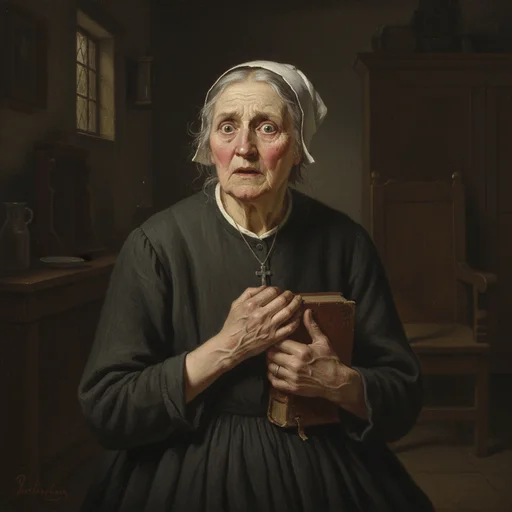
Scholastique is a blindly loyal and garrulous servant. She tries to vehemently deny the rumors of witchcraft that have befallen her master, but Zacharius never takes her mind or her beliefs seriously, constantly blocking out her voice.
The old man shutting his ears to Scholastique's chatter just as he has become deaf to the roar of the river.
While to Gérande, Pittonaccio is merely a terrifying, nightmarish freak, Pittonaccio desires her greedily as the reward for an ominous bargain, a price to be won. It is a relationship of physical and spiritual repulsion.
Gérande clutching at her father in fear when she sees this repulsive creature looking at her with a laugh on the Treille promenade.
Two opposing souls: one championing the infinite ego of the secular scientist, the other defending divine surrender and religious humility. As the monk offers divine warnings to the master, the master dismisses them with his hubris and rejects logic.
Zacharius fleeing the church to pursue his soul after the monk declares: 'Pride has destroyed an angel created for goodness. However, there is no other recourse but to pray for your father!'
When Pittonaccio intends to take Gérande by force, Aubert stands up to the monster, representing pure human love and morality, but the dark powers evade him.
The Young Apprentice's (Aubert's) enraged charge at Pittonaccio when he demands the fiancée at the castle, only for the man to slip through his fingers like a shadow.