
Author · 1 works
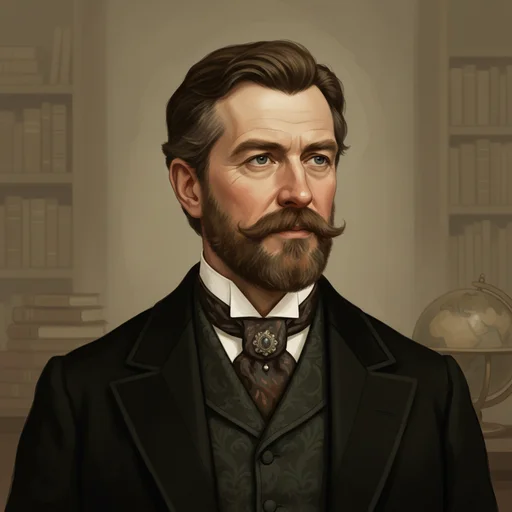
Arthur Conan Doyle was born in Edinburgh on 22 May 1859, into a Catholic family of Irish descent. His father, Charles Altamont Doyle, was a gifted illustrator who lost his post to drink and illness and spent his last years in asylums. The household was held together by his mother, Mary Foley, whose storytelling fed the boy's imagination. Doyle spent seven years at Jesuit boarding schools in Lancashire and a further year in Austria.
In 1876 he began studying medicine at the University of Edinburgh. As a student he sailed as ship's surgeon on an Arctic whaler and on a steamer bound for West Africa. In 1882 he opened his own practice in Southsea and filled the long hours of waiting for patients with writing. Taking his cue from his surgery teacher Joseph Bell, who read a patient's history at a single glance, he created Sherlock Holmes and published A Study in Scarlet in 1887.
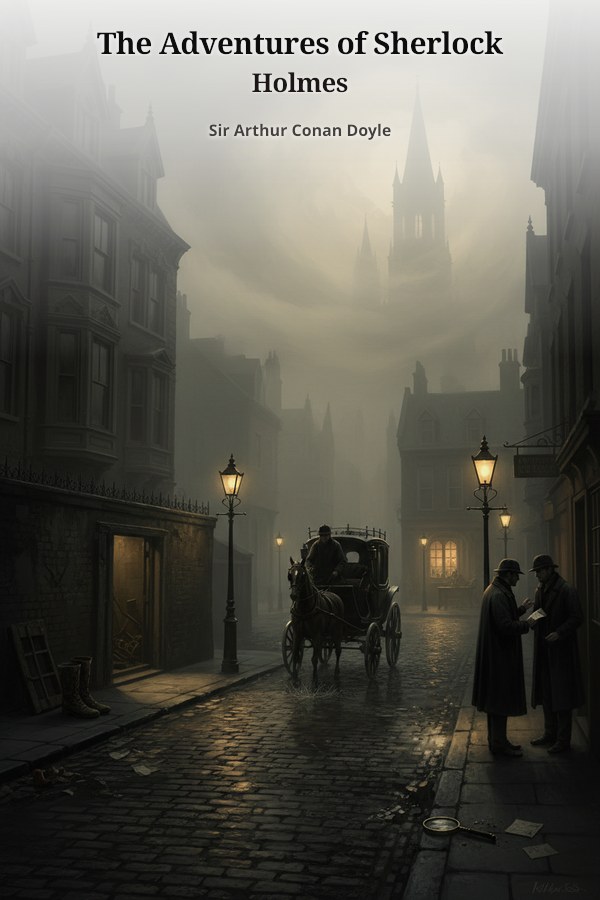
His real breakthrough came with the stories that began appearing in The Strand in 1891; The Adventures of Sherlock Holmes was gathered from them. When the detective started to overshadow him, he killed Holmes at the Reichenbach Falls in 1893, then gave in to his readers and brought him back in The Hound of the Baskervilles. He also wrote historical novels and reached into science fiction with The Lost World; after a pamphlet defending British conduct in the Boer War, he was knighted in 1902. His campaign to clear George Edalji, wrongly convicted, helped bring about a court of criminal appeal in England.
With plain, quick prose that trusted the telling detail, he gave detective fiction a lasting form built around reasoning. At the end of the First World War he lost his son and his brother, and devoted his remaining years to spreading spiritualism, a cause he had followed for a long time. He died at his home in Crowborough on 7 July 1930.
Doyle wrote in the last thirty years of the Victorian age, in a Britain industrialising fast and at the height of its empire. Cheap monthly magazines had created a mass readership, and serial fiction was the engine of popular literature. It was a contradictory time: scientific reason was expected to settle everything, while séances filled the drawing rooms. The Boer War shook imperial pride, and detective fiction, after Poe and Gaboriau, was hardening into a genre with rules of its own.