
Sir Arthur Conan Doyle
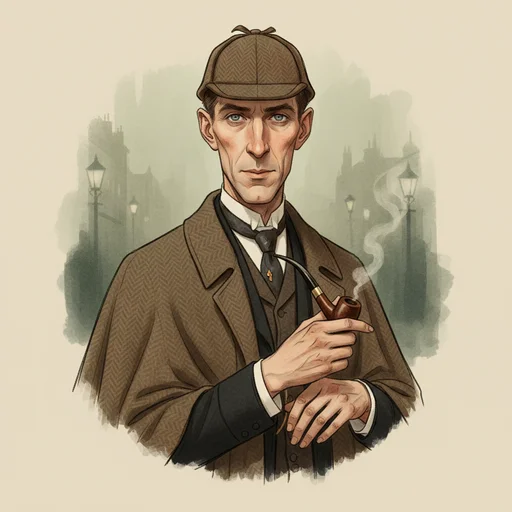
The Adventures of Sherlock Holmes is a world-famous collection of detective short stories by Sir Arthur Conan Doyle, set in late 19th-century London. It follows the adventures of detective Sherlock Holmes, who solves crimes through his intellect and deductive reasoning, and his friend Dr. John Watson.
A relentless intellectual battle between unique and bizarre crimes that trouble various segments of society, which the police force cannot solve with ordinary methods, and the superior intellect of detective Sherlock Holmes, who has dedicated his mental capacity to solving these crimes.
England; primarily the crowded and bustling streets of London, Baker Street, train stations, as well as surrounding towns, old country estates (such as Stoke Moran), and hidden dens.
Late 19th century, late Victorian era (mostly the 1880s).
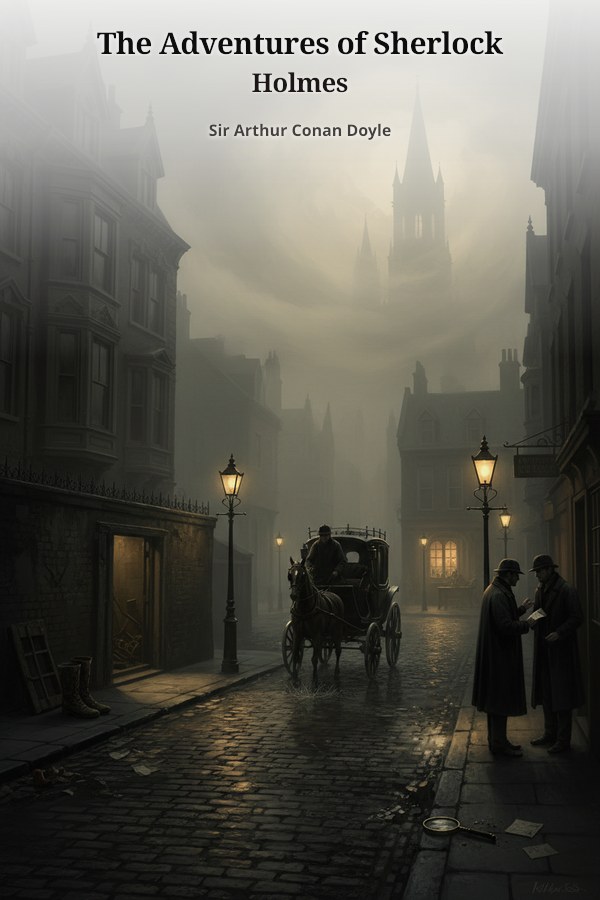
A foggy, mysterious, and uncanny Victorian London; an atmosphere filled with wet streets illuminated by gas lamps, old mansions, and dismal corners where the dark shadow of crime falls.
Presented from the first-person (I) narrative perspective of Dr. John Watson. A reliable narrator who sees events and clues simultaneously with the reader, full of admiration but not as brilliant as Holmes.
Behind even the most impossible and strange cases that appear supernatural lies a logical reason based on human greed. Through regular and meticulous observation and the act of combining small details (deduction), every crime, no matter how dark, can be solved.
Victorian society, where strict moral codes and sharp class distinctions prevail. A cultural backdrop shaped by the rise in crime brought on by rapid urbanization after the industrial revolution, the aristocrats' concern to protect their reputations at any cost, and exotic dangers brought by the English returning from the East (India, etc.).
Characters are arranged at equal intervals on a circle; you can read the relationship type and dynamics by clicking on the lines.
Bir çizgiye tıklayarak ilişki detayını açın.
Holmes' cold, analytical genius and Watson's warm, practical, and human nature create a perfect balance. Watson is an indispensable validator, recorder, and listener for Holmes. Although Holmes often boasts of his abilities, he deeply values Watson's presence and relies on him in difficult situations.
Holmes asks for his support by saying, 'I am lost without my Boswell. This case is obviously interesting. It would be a pity to miss it.'
Although there is no direct romantic love between the two, there is a deep intellectual respect. Holmes views Adler as a symbol of pure wit and cunning. Adler, in turn, stays one step ahead of Holmes despite his fame, forever shattering the detective's dismissive attitude toward female intelligence.
At the end of the case, Holmes chooses to take only Irene Adler's photograph instead of the emerald ring offered by the King of Bohemia, and he always refers to her as 'The Woman'.
The King had a passionate love affair with Irene in his youth, but he was forced to marry another noblewoman due to status requirements. Irene Adler's courageous nature and determination cause a deep fear and, at the same time, a mixture of admiration and regret in the King.
The King is ready to do anything to retrieve the letters and the photograph, and says of Adler, 'She has the face of the most beautiful woman, and the mind of the most determined man.'
While Lestrade finds Holmes' methods fanciful and dismisses them, he is actually in need of his intelligence. Holmes mocks the stereotypical and shallow thinking of official detectives, yet remains generous regarding fame and credit, leaving the success to them.
Despite Lestrade accusing the wrong man, Holmes solves the mystery and establishes a calm superiority by saying, 'You apply your method, and I will apply mine.'
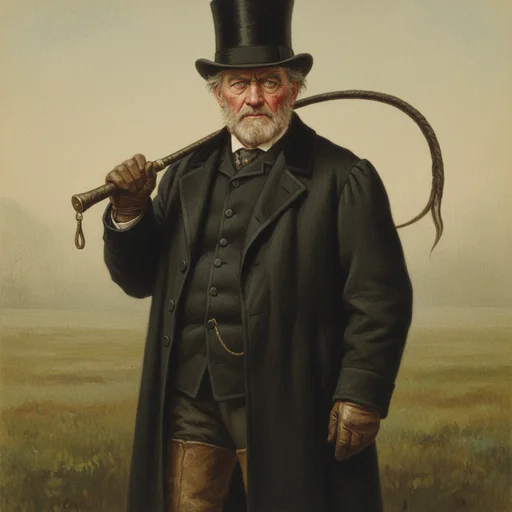
Dr. Roylott uses his strength and intimidating presence to keep his stepdaughter under pressure. He has developed entirely ruthless and diabolical methods against his daughters to keep the inheritance left by their mother for himself. Helen lives in constant terror of him, in a state of hopelessness.
During her visit, Helen Stoner shows Holmes the finger marks on her wrist, which are the traces of violence Roylott has inflicted upon her.
John Clay, hiding his extraordinary intelligence and thieving skills, deliberately enters Wilson's service as an apprentice for a low wage. He manipulates Wilson, a simple and ordinary man, through a puppet organization created under the absurd pretext of hair color.
While Wilson praises his assistant's honesty, he is completely unaware that Clay is digging a tunnel from the shop's cellar to the bank next door.
Windibank commits a disgusting fraud to avoid losing the income of his stepdaughter, Mary, who is only five years younger than him. He employs a cruel plan by wearing a disguise (Hosmer Angel) to make the girl fall in love with him, only to disappear on their wedding day, leaving her faith in men shattered for years to come.
While Mary Sutherland swore on the Bible to remain loyal to him, Windibank ruthlessly exploits this devotion for his own benefit.
McCarthy exploits and effectively enslaves Turner for twenty years by using the secret that Turner was a bushranger (Black Jack of Ballarat) in Australia. Turner eventually reaches the point where he is willing to commit murder to save his daughter from this parasitic family.
Old Turner explains the true motivation for the murder, stating to McCarthy, 'It was enough to drive me mad to think that everything I cared for in this world was at the mercy of such a man.'
Although Jones views Holmes as someone who constructs fantastic theories, he acknowledges his past successes. Holmes, in turn, finds Jones brave but mentally slow, keeping him around as a useful physical force when setting an ambush.
Holmes describes the inspector by saying, 'He is a man of small professional powers, but he is not a bad one. He is as brave as a bulldog.'
While Mrs. St. Clair believes her husband is an honest, ordinary, and loving family man, he is actually living a double life, earning money in the city as a disguised beggar. Neville is so afraid of this secret that, because of the shame, he would rather be a murder suspect than reveal the truth to his wife.
Neville (when imprisoned as Hugh Boone) says, 'I would rather have been sent to jail, or even to the gallows, than that my miserable secret should be dragged out to disgrace my family.'