
George Orwell
George Orwell's 1984, published in 1949, is a world-renowned dystopian novel depicting a totalitarian future. Through concepts such as Big Brother, the Thought Police, and constant surveillance, it uses critical language to address an oppressive regime of authority where individual freedom is destroyed and history is manipulated.
The unequal and hopeless rebellion of Winston Smith, who attempts to preserve his individual consciousness, humanity, and memory against the omnipotent Party (in the person of O'Brien), which distorts reality for its own benefit and makes obedience absolute.
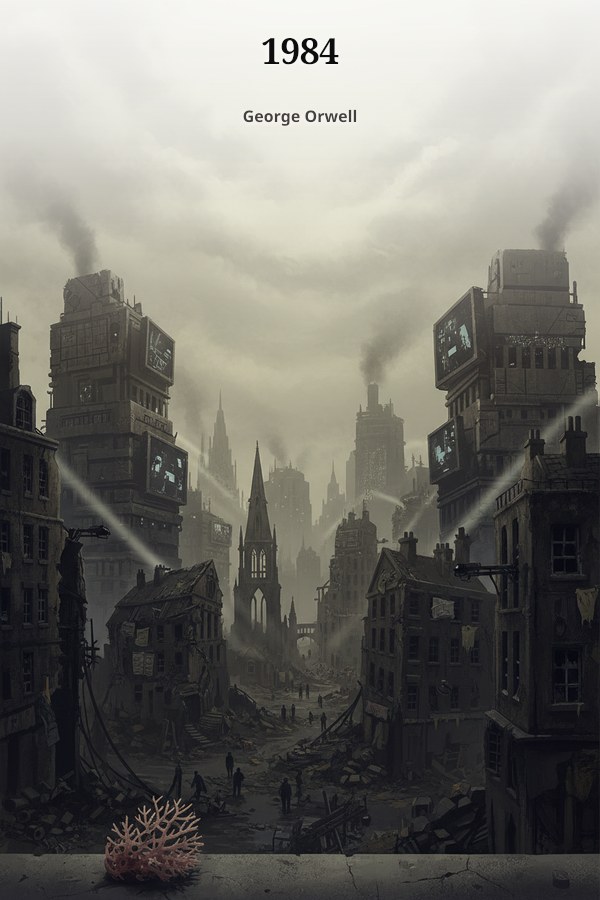
The main city of Airstrip One, a province of the superpower Oceania; a decrepit, dusty London bearing the scars of war.
Although not definitive, Winston estimates it to be the year 1984.
Suffocating, gloomy, and filled with paranoia. The terror triggered by the constant feeling of being watched in a decaying city, an atmosphere of loneliness, and the sense of devastation created by unending war permeate everything.
Third-person limited narrator, conveyed through the mind and perspective of Winston Smith.
The world is divided into three superstates: Oceania, Eurasia, and Eastasia, and is in a state of constant war. While Oceania is governed by the Party (Inner Party and Outer Party), the 'proles,' who make up the majority of the population, live in ignorance and misery. Thoughtcrime is the greatest offense and is ruthlessly punished by the Thought Police through the erasure of the individual from history ('vaporization'). The Ministry of Truth constantly reconstructs history. The concept of 'doublethink' requires believing in two contradictory beliefs simultaneously.
A dystopian context where the individual has no value, love and sexual desire are considered lack of loyalty, past culture and universal values are labeled as 'Oldspeak' and banned, and one of the darkest reflections of Stalinist and Nazi totalitarian regimes is experienced.
Characters are arranged at equal intervals on a circle; you can read the relationship type and dynamics by clicking on the lines.
Bir çizgiye tıklayarak ilişki detayını açın.
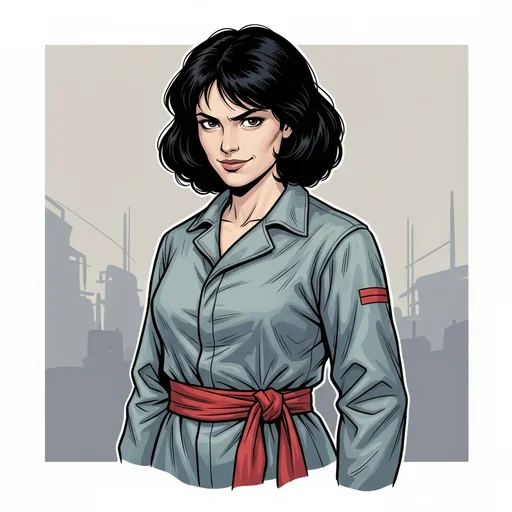
Initially starting as a relationship based on Winston's intense suspicion and a merely illicit rebellion against the Party, it deepens into profound trust and passion over time; however, it ends with ultimate betrayal and rupture when both their minds and love are broken in the torture room.
When threatened with rats in Room 101, Winston severs the tie between them by crying out, 'Do it to Julia! Not me!'
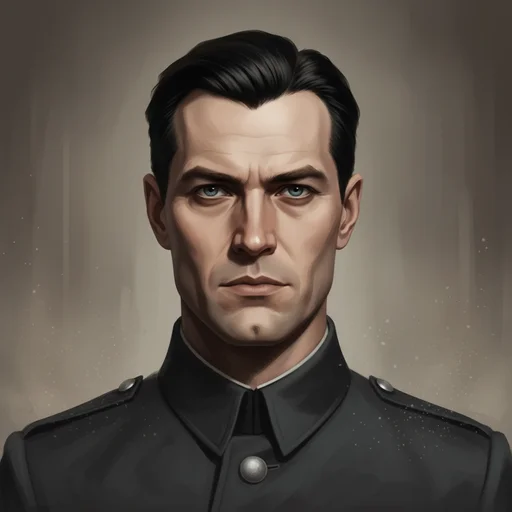
Winston sincerely believes O'Brien is a secret rebel ally and admires him; however, O'Brien is the Party official who has been watching and trapping Winston from the beginning, dismantling his selfhood through the most brutal means.
On the torture bed, O'Brien acts as both a sadistic torturer and a twisted father figure, telling Winston, 'You are in my keeping. I shall save you, I shall make you perfect.'
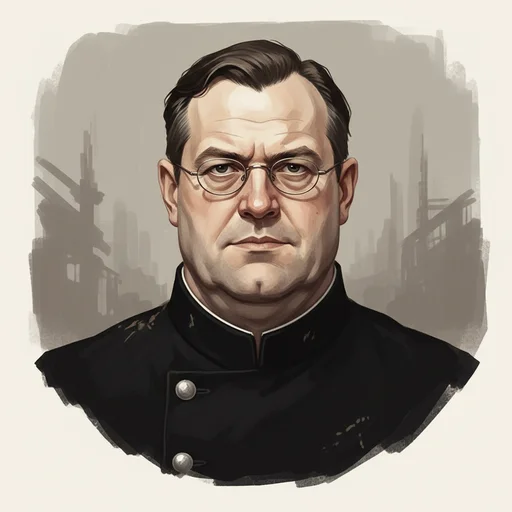
Winston sees Charrington as an innocent, understanding, and harmless relic from past times and trusts him; however, Charrington is actually a ruthless agent of the Thought Police who has been listening to and trapping him for months.
When Charrington enters the room after Winston and Julia are caught, he has already shed his accent, glasses, and submissive demeanor, transforming into a cold 35-year-old officer.
Syme, an intelligent and talkative Newspeak expert, enjoys talking with Winston; however, Winston knows that Syme is too intelligent for the system and will therefore be 'vaporized.'
Winston thinks to himself, 'Syme will be vaporized, sure enough,' because Syme explains the logic of the words the Party wants to destroy with too much clarity.
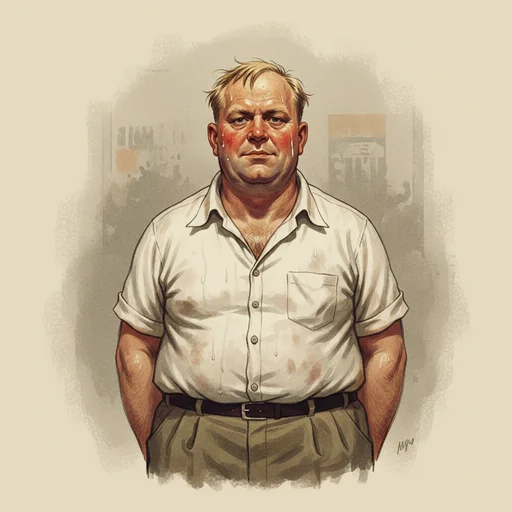
Winston is forced to endure Parsons's shallowness, blindly enslaved bigoted attitude, and stench, but both eventually meet in a dungeon as victims of Party fascism.
Upon meeting in the Ministry of Love's cell, Winston asks with fear, 'You too?' Parsons expresses a strange pride in being reported by his own daughter for cursing the Party in his sleep.
Their ties, a mandatory Party marriage, have unraveled due to Katharine's dullness and obsession with Party rules; they have been separated from each other for years.
Winston recalls his forced intimacy with his wife as 'our duty to the Party' and feels a profound coldness.
O'Brien quickly breaks the youthful rebellion that Julia mistook for nonchalant resistance, and just as he did with Winston, he mercilessly tortures her into betrayal.
O'Brien points out to Winston that Julia could not withstand the torture and gave in quickly, stating 'You wouldn't have recognized her' as she was easily turned to their side.
Both are individuals who worked at the Ministry and dealt with words. The system pushes them into a similar predicament and a shared fate in an obscure prison corner.
While waiting in a cell at the Ministry of Love, Ampleforth, speaking to Winston in a tired and battered state, confesses that he was charged for leaving the word 'God' in a Kipling poem.