

Anna Karenina — 8 karakter
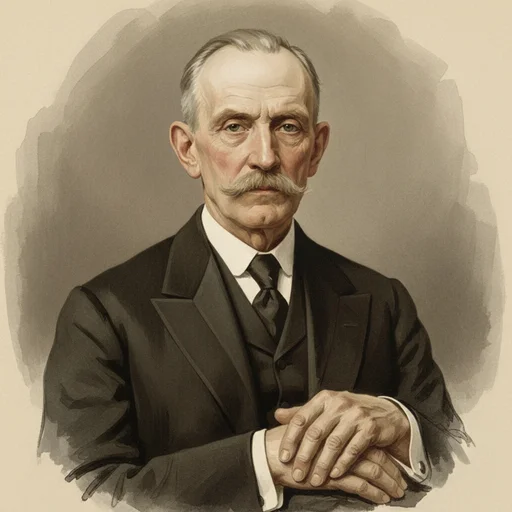
Alexei Karenin
An elderly and authoritative bureaucrat with fame and high office in St. Petersburg's state and political circles, who holds religious and moral rules above all else. While maintaining his marriage of convenience with Anna in a respectable manner by societal standards, he is shaken by her illicit affair with Vronsky. His only concern is to maintain his social status and avoid appearing 'ridiculous.' Due to his moral principles, he begins a process of forgiving Anna, claiming he chooses to remain honorable rather than seek revenge, but his heart and mercy are extremely formalistic. When his path is completely separated from Anna, he turns into a pathetic, rigid man buried in religious and magical (mystical) obsessions under the patronage of the fake, devout, and deceitful Countess Lydia Ivanovna, and refuses Anna's request for divorce to the end.

Alexei Vronsky
He is a wealthy Petersburg officer known for his brilliant state and military career. Seemingly an empty salon gentleman prone to social successes, drinking bouts, and romantic amusements, he finds the meaning of life in falling in love through his irresistible attraction to Anna. He convinces her to flee to Europe, risking his status, titles of nobility, and future for her sake. However, when he realizes that one cannot exist solely on love in provincial life, he turns to pursuits that appeal to his energy, such as building hospitals or managing estates. These independent actions create feelings of jealousy and isolation in Anna. His own moral values are simple, but he cannot understand the deep darkness and depression in Anna's mind. Shattered by Anna's suicide before his eyes, Vronsky loses his faith in life and joins the war in Serbia to die.

Anna Karenina
She is one of the leading, attractive, and intelligent women of St. Petersburg high society, captivating everyone with her charm. At a young age, she entered into a loveless marriage with Aleksey Karenin, a man much older than her who is entirely devoted to the bureaucracy. The only love she feels in her life is her devotion to her son, Seryozha. When she meets Vronsky in Moscow, where she went to save her brother's household, a wild and burning passion for love, which had been hidden in the depths of her soul, awakens. From that moment on, she risks breaking the rules of hypocritical high society, leaving everything behind, including her husband and son. However, neither the exclusionary pressure of society nor her longing for motherhood leaves her alone; as she grows paranoid, controlling, and destructive, believing that Vronsky is also weary of her and yearns for his freedom. Ultimately, at the point where she believes all escape routes are closed, she throws herself under a freight train at the station.
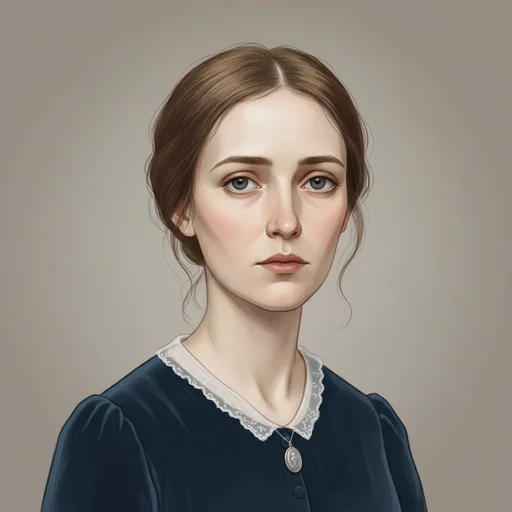
Darya Oblonskaya (Dolly)
She is Prince Shcherbatsky's eldest daughter and Kitty's sister. She is married to Stepan Arkadyevich (Stiva), but her marriage has collapsed due to Stiva's endless infidelities. She is the primary representative in the novel of sacrifice, the suffering honest aristocratic woman, and motherhood. Because of her husband, her life revolves around poverty, children's illnesses, broken furniture, and the drafty rooms of a farmhouse. Despite this, she stands by Kitty during her illness, fills Levin with hope for marriage, and shows her friendship by visiting Anna Karenina at Vronsky's house while all of society has turned its back on her. Although she briefly envies Anna's passionate world there, she senses the deep devastation behind that mask and returns to the realistic peace of her life dedicated to her duties and children.

Kiti Shcherbatskaya
She is the bright and most favorite young girl of the polite, aristocratic Shcherbatsky family of Moscow. At the beginning of the novel, life is like a fairy tale, filled with the joy of balls and gowns fluttering with pink ribbons. She experiences deep devastation and disappointment when she rejects Levin's unwavering love and chooses the glittering but highly superficial attention of Vronsky. She becomes acquainted with illnesses and the true worries of life at the European spas she visits to recover from the physical and spiritual collapse brought by this event; leaving behind the consolation she sought in a false piety, she returns to life with true virtue. When she reunites with Levin and marries, she has learned that life is not just about balls, and she has reached her true potential in a spiritual sense, becoming a brave, practical, and self-sacrificing wife and mother capable of showing compassion even to the sick and dying.

Konstantin Levin
He is a nobleman who hates the glamorous salons and superficial bureaucrats of Moscow and prefers to spend his time on his estate, working with the land, the people, and scientific theories. He dreams of a clean and sublime moral world; to this end, he has made his love for Kitty his most sacred goal. When Kitty initially rejects him, he falls into a depression and turns to philosophical analyses on the existence of the Russian peasant and nature. He tries to understand the abyss between the man who works the land and the machines and Western systems. His greatest torment throughout the novel is his lack of faith; just as he perceives death with horror, he questions what he is living for. Eventually, he marries Kitty and embarks on a new life; however, he finds his true enlightenment not in books, but by discovering God and inner love through the simple sentences of an ordinary peasant. He is a mental and spiritual projection of the author.
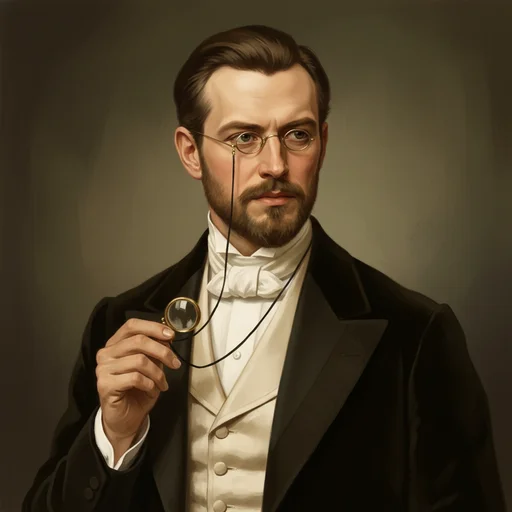
Sergey Ivanovich Koznyshev
He is Konstantin Levin's half-brother, an intellectual and famous writer with a different father. His entire life revolves around the intellectual circles of Moscow and St. Petersburg, focusing on literary debates and lofty social concepts. He visits rural life only for mental respite or to conduct abstract research on the condition of the peasantry. He symbolizes the exact opposite of Levin's active and realistic devotion to the land. He feels a naive love for young Varenka and is on the verge of falling for her in accordance with his ideals, but ultimately decides against the proposal at the very last moment, finding the vulnerability and sacrifice he seeks—and the worldly ordinariness of the marriage decision—to be beneath his own sublime philosophy. He lacks the courage for love, action, or deep emotional risk.
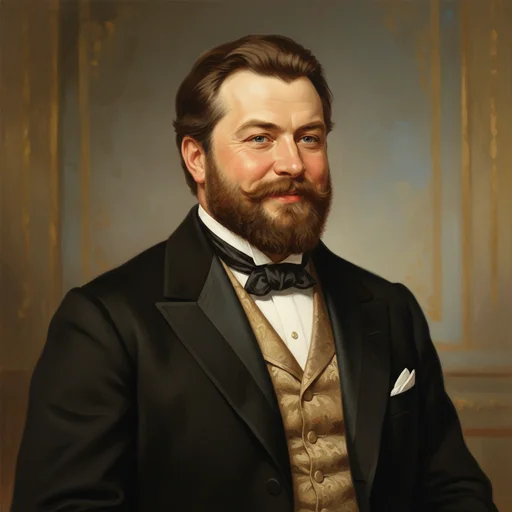
Stepan Oblonsky (Stiva)
He is Anna Karenina's brother and is one of the most endearing, carefree, and at the same time, selfish characters in the novel. He shakes his marriage with Doli right at the beginning of the novel by cheating on her with a governess. He prefers money, good dining, European-quality restaurants, and flashy, carefree friendships over everything else. He knows well how to cheer up even a man like Levin, who is tightly bound to ideals, by patting him on the shoulder or offering an appetizer, and how to gloss over crises with laughter and jokes. He is actually not interested in working or the serious tasks of the state, but he easily lands in bureaucratic positions thanks to his high-influence connections. During the main crisis points in the novel—Doli's forgiveness, the days when Anna is on the verge of suicide—he is always there, in the room, as a mediator with his pragmatic yet indifferent mind.