

Halid Ziya Uşaklıgil
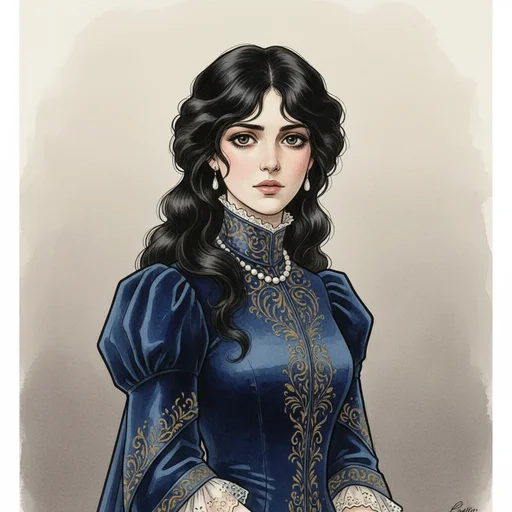
Aşk-ı Memnu is an iconic Turkish television series adapted from Halit Ziya Uşaklıgil's novel of the same name, revolving around forbidden love, passion, and betrayal within a wealthy family in Istanbul. The affair between young Bihter, who marries Adnan Bey, and her husband's nephew Behlül, concluded with a dramatic finale resulting in a great tragedy and Bihter's suicide.
Following a marriage of convenience between the young, passionate Bihter and the wealthy, much older Adnan Bey, the story follows Bihter's surrender to a forbidden desire for her nephew-in-law Behlül out of disillusionment, and how this betrayal drags everyone in the mansion—especially the innocent Nihal—into catastrophe.
İstanbul; especially the magnificent Adnan Bey villa on the Bosphorus, Firdevs Hanım's summer house, the Göksu excursion grounds, the shops of Beyoğlu, and Büyükada.
Late 19th century, the final period of the Ottoman Empire (the Servet-i Fünun era).
Melancholic and suffocating, filled with a sense of rot lurking behind luxury and splendor; a tense, enclosed seaside mansion atmosphere woven with secrets.
A third-person omniscient narrator using an aesthetic and ornate style that delves deep into the characters' inner worlds, psychological crises, and subconscious impulses.
In high society, appearance, prestige, and ostentation are everything. Emotions must be hidden, and the rules of the aristocracy must be followed. Women are expected to suppress their desires, and moral failings occurring behind closed doors must never come to light. Labels such as the 'Melih Bey faction' determine a family's fate.
A transitional Istanbul bourgeoisie era where French governesses raise children, fashion and luxury are imported from Paris, Western and Eastern cultures collide superficially, and the elite class aspires to a Western-style ('alafranga') lifestyle.
Characters are arranged at equal intervals on a circle; you can read the relationship type and dynamics by clicking on the lines.
Bir çizgiye tıklayarak ilişki detayını açın.
The relationship, initially sparked by Behlül's persistent womanizing, turns into a passionate affair upon Bihter's surrender. Over time, however, as Behlül grows bored and turns his attention toward Nihal, Bihter cannot accept this loss and tries to hold onto Behlül or destroy his new happiness out of maddening jealousy.
As Bihter said through gritted teeth, 'You wretch!... Just when everything could have ended so beautifully...', she felt a profound hatred and helplessness toward Behlül.
From the moment Bihter arrives at the mansion, Nihal harbors a secret hostility toward her. While Nihal feels her father has been taken from her, Bihter grows weary of this spoiled child's feigned illnesses. There is a silent, cold, and grating war between the two.
The life of torture that would begin for her after this marriage was so heavy that she had decided to sacrifice everything to prevent it from coming to pass.
Adnan Bey is deeply attached to Bihter with great love, trust, and paternal affection. Bihter, however, only tried to respect him, but the age gap and physical incompatibility between them quickly alienated her from the mansion and her husband, driving her toward betrayal.
Bihter would welcome him in her arms with the soullessness of an inanimate object and the numbness of a dead woman, and Adnan understood, as he felt it, that she did not love him.
Nihal, having grown up motherless, is pathologically attached to her father. Adnan Bey dotes on his daughter, but his marriage to Bihter creates a deep fracture in Nihal's heart. Adnan Bey finds himself helpless between two loves.
As she left in her father's arms, Nihal took a deep breath, and opening her eyes, she looked at her father with a long gaze.
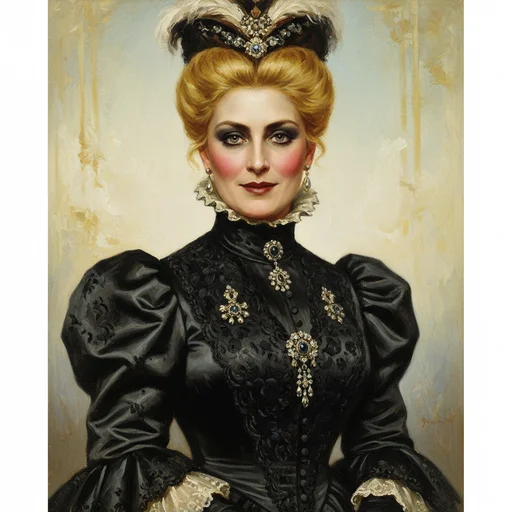
Firdevs Hanım is a woman who refuses to age and views her daughters as her rivals. Bihter marries Adnan to escape her mother's reputation and mistakes, but upon her mother's arrival at the mansion, she hates her as she sees her own fate beginning to mirror her mother's.
Bihter, this woman who went to her mother and confessed that sin, could execute her threat and go to Nihal, too, and tell her the truth.
Behlül, with whom she had bickered since childhood, begins to deceive Nihal as she steps into young womanhood. Nihal falls in love with him and dreams of marriage. Behlül, however, uses her only as a shield to escape Bihter and take refuge in a well-behaved life.
Behlül was saying, 'I love you, Nihal! Oh! I am sure of this; you must love me to have come tonight...'
Mademoiselle is the most constant and affectionate female figure in Nihal's life. She forgets her own loneliness by loving Nihal. Nihal tells her all her troubles, but toward the end of the events, distance grows between them as Nihal turns toward Behlül.
On this hot August day, Nihal was dazing her, bringing a scorching air from the deserts, pouring all her intimate troubles out to her governess.
The black servant Beşir harbors a distant, hopeless, and adoringly painful love for Nihal. To protect Nihal, he eavesdrops from every corner and keeps the secret of Bihter and Behlül at the cost of his own life.
Looking at her with his dull, white eyes, Beşir gave no answer; there was such animosity in this gaze of Beşir's that...