
Reşat Nuri Güntekin
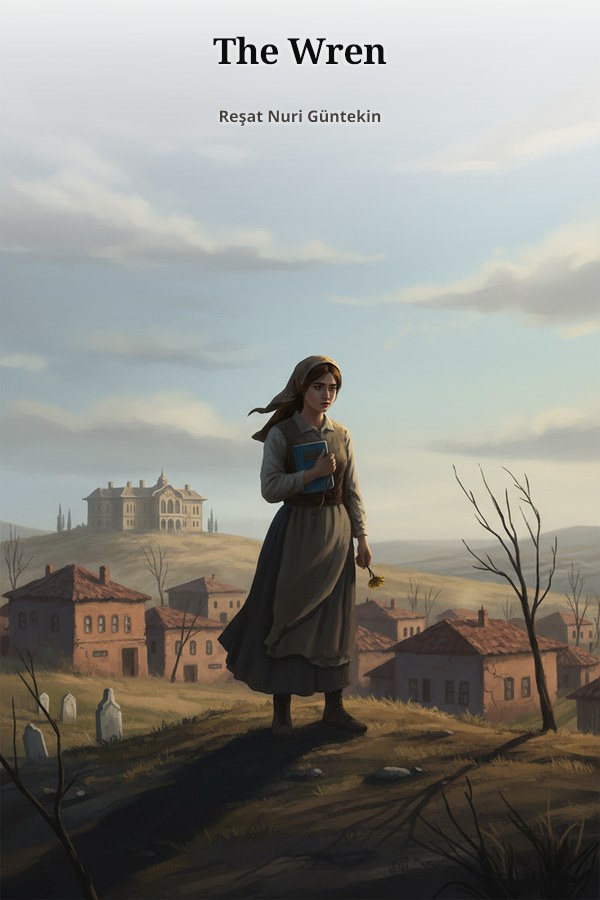
Reşat Nuri Güntekin's immortal 1922 work, Çalıkuşu (The Wren), tells the struggle for survival of Feride, the daughter of a prominent Istanbul family, who becomes a teacher in Anatolia after being betrayed by her fiancé, Kamran. Beyond themes of love, pride, and betrayal, it is a realist novel that critiques the social structure and bureaucracy of Anatolia.
The struggle for survival of Feride, who leaves home out of pride upon discovering Kâmran's betrayal, as she works as a teacher in Anatolia as a lonely young woman against poverty, ignorance, and the pressures of a male-dominated society. It is also an internal war between her love for Kâmran, whom she cannot tear from her heart, and her own wounded pride.
The wealthy mansions of Istanbul (Kozyatağı, Tekirdağ, etc.) and their complete opposite: poor and desolate Anatolian cities and villages (Zeyniler Village, City of B..., Town of Ç..., İzmir, Kuşadası).
The early 20th century, just before the First World War and the war years (the shadow of the war is felt in events such as the closing of the school and its conversion into a hospital).
An emotional atmosphere that, while appearing cheerful, daring, and full of life on the surface, harbors deep pain, melancholy, and loneliness within; it oscillates between the harsh, impoverished, and gossiping darkness of Anatolia and the bright, innocent ideals of a young woman.
Most of the novel is presented in the first-person perspective, written by Feride in her blue-covered school diary. In the final parts, the narrative shifts to the outside (third-person and Kâmran's perspective).
In the late Ottoman era, a young, beautiful woman living alone in the countryside and working as a teacher is constantly punished by both bureaucratic obstacles and bigoted provincial morality. Social gossip is the deadliest weapon and can instantly destroy a woman's reputation. To survive, one must either find great protection or harden their heart.
The late Ottoman period, where strict Islamic and traditional rules were sharply contrasted with the westernized, 'French-style' lifestyle in the mansions of pashas and beys. A provincial mentality prevails where it is considered a grave offense for women to walk without a veil or speak to foreign men.
Characters are arranged at equal intervals on a circle; you can read the relationship type and dynamics by clicking on the lines.
Bir çizgiye tıklayarak ilişki detayını açın.
While the power balance is initially between Kâmran's maturity and Feride's stormy childhood, Feride takes complete control after the betrayal and builds a thick wall of pride between them. During the long years of separation, both secretly love each other but suffer due to mistakes and pride.
"Kâmran, we are truly separating today. I am truly becoming a widow today... Despite everything that happened and passed, you were still a part of mine; I was yours with my whole soul..."
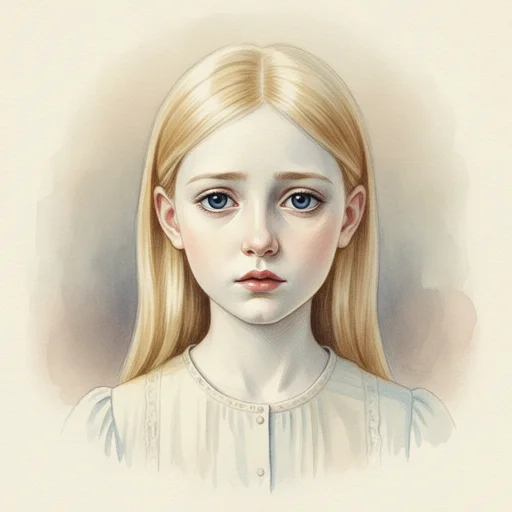
She is the only person to whom Feride directs her maternal affection and love. Munise worships Feride unconditionally and sees her as a saving angel. Feride, in turn, attaches her joy of living and broken hopes to this little girl.
"O God, how happy I would be if they left this child to me! Then I would have no fear of the night, the storm, or misery; nothing at all."
The doctor protects Feride like his own daughter, loves her with affection, and criticizes her mistakes in a fatherly manner. To save Feride from society's vile gossip, he enters into a selfless marriage that remains only on paper, aiming to reunite her with Kâmran.
"I am your lover; do not cover your face with your hands, on the contrary, keep your head held high. Only those whose actions are shameful do that... we are the two cleanest, best friends in the world, aren't we?"
Müjgân is, as the complete opposite of Feride, composed and patient. She is one of the few who can see the real, wounded woman inside Feride. There is a strong, sister-like bond of trust between the two.
"Müjgân, my sister, is my exact opposite. As wild and mischievous as I am, she is that composed."
Müjgân never truly forgives Kâmran for his betrayal of Feride and keeps his remorse alive by stinging him with harsh words at every opportunity.
"Ah! Kâmran, if only you could hear the desperate tears with which Feride said these things while in my arms!"
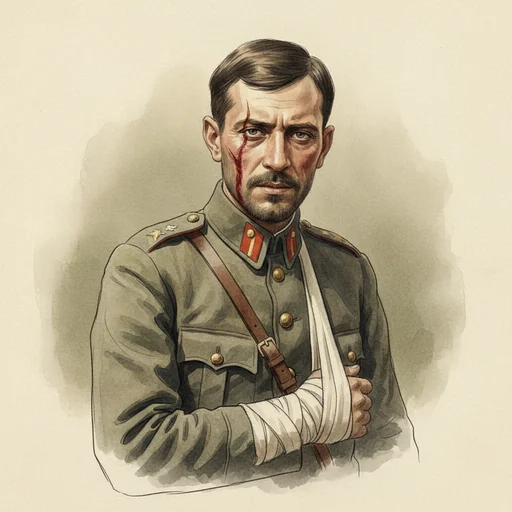
İhsan Bey loves Feride with a secret and proud love. After he is wounded, Feride proposes to him simply because she pities and feels mercy for him, but İhsan Bey is honorable enough to reject this pity-filled proposal.
"Ms. Feride, do you take me for a man so fallen and finished that he would accept an alms of love, a sentiment driven by nothing other than pity for a hopeless person?"
When Münevver ('Yellow Flower'), with whom Kamran had a weak-willed affair while in Europe, falls ill, Kamran marries her out of pity and cares for her until her death. This relationship is the reason Kamran ruins his one true love.
"A notebook that accidentally fell into my hands during an illness showed me how deep this wound was... Although my poor girl had died because of it, the love of a stranger would have been a sorrowful burden for her."
Hacı Kalfa, a hotel attendant in the city of B..., is a genuine Anatolian man whose pure and fatherly demeanor makes him the first to welcome Feride in exile, defending her and inviting her to his home. Although Feride playfully teases him about his lack of education, she holds him in high regard.
"Hacı Kalfa is the only person who enters my room, apart from a troubled neighbor I occasionally talk to. He jokes with me as if we were friends of forty years."
The sickly, delicate-souled, and artistic Sheikh Yusuf Efendi falls hopelessly in love with Feride's lighthearted beauty and the depth of her organ playing. Feride only realizes the extent of this love as he lies dying, and she is overcome with mercy and deep remorse.
"Was I to bestow my first kiss upon the extinguished eyes of a dead man!"
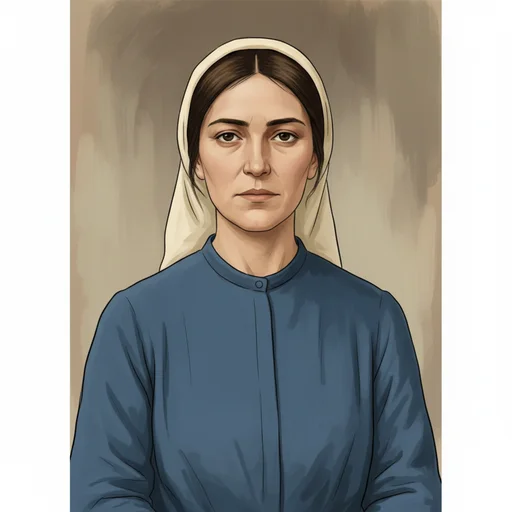
Hatice Hanım, the somber and pious former teacher of Zeyniler village, is initially disturbed by Feride's cheerfulness and fears she will be replaced by her. Over time, in the face of Feride's kindness, she begins to respect her and becomes attached to her.
"This poor woman had learned that the teacher's duty was to extinguish worldly desires in the hearts of others... I could see that the poor thing was afraid of me."