

Confessions — 6 karakter
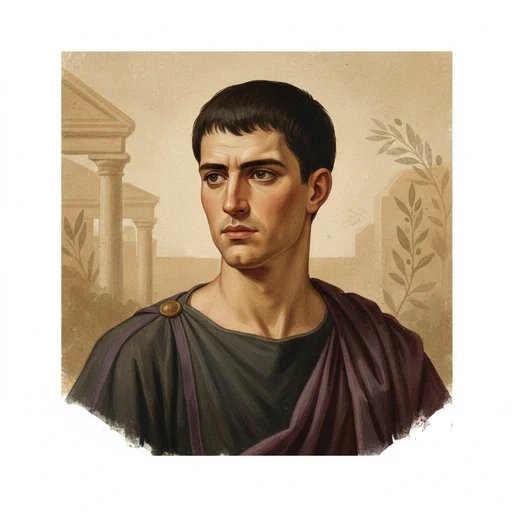
Alypius
Augustine's closest friend and student from the same province (Tagaste), belonging to one of the city's noble families. His ambitious temperament deeply influences Augustine. He is an intelligent, justice-loving, but flawed young man; his shameful passion for gladiator fights and circus games created an addiction, and although he recovered from this weakness for a short time through one of Augustine's sermons, he later succumbed to this passion again. However, because of his moral and principled nature, he laughed off large bribe offers while he was an deputy judge and did not bow down even to Roman senators. He bore spiritual pains together with Augustine, became a Christian at the same time, and eventually became a great theologian.
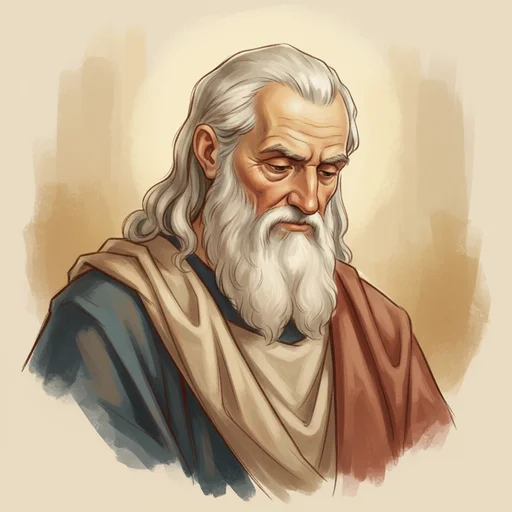
Ambrosius
Archbishop of Milan. A great spiritual figure who was very knowledgeable, held important administrative positions in the Roman Empire, and later became the leader of the church. Thanks to his sermons, which Augustine began to listen to out of curiosity about rhetoric, he shatters all of Augustine's prejudices about the Bible and Catholic thought. He interprets the verses in the Old Testament that seem harsh and incomprehensible with a mystical and philosophical background and metaphors. His inaccessible, spiritual, and magnificent life becomes a source of deep inspiration for Augustine.
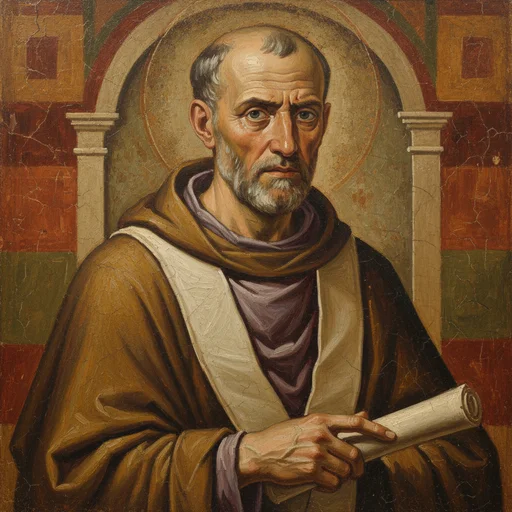
Aurelius Augustinus
He was born on 13 November 354 in Thagaste, a town in Numidia, Rome's North African province. His father, Patricius, was a minor local official who gave up his pagan faith only near the end of his life; his mother, Monica, was a Christian whose hold on her son never loosened. He studied grammar and rhetoric at Madauros and then at Carthage; in the great city the provincial boy discovered both his ambition and his waywardness. At eighteen he read Cicero's Hortensius, and it turned him towards philosophy. For some nine years he belonged to the circle of Manichaean "hearers", teaching rhetoric at Thagaste and Carthage. In Carthage the woman he lived with bore him a son, Adeodatus. In 383 he moved to Rome and from there to Milan, seat of the imperial court, where he became the city's salaried professor of rhetoric. In Milan the sermons of Bishop Ambrose and the writings of the Neoplatonists broke his ties with Manichaeism. In the summer of 386, in a garden, he heard a voice saying "take up and read" and opened Paul's letter: this was the turning point of his life. The following Easter, Ambrose baptised him. On the journey back to Africa he lost his mother at Ostia. At Thagaste he founded a quasi-monastic community; in 391 he was ordained priest at Hippo Regius and around 395 became its bishop. He wrote the Confessions between 397 and 400: addressed to God and probing his own past, the book changed how the inner life was written about in the West. After the sack of Rome in 410 he began The City of God, which took him years to finish. His way of interrogating memory, desire and time turned theological writing into a language of confession and self-examination. He died on 28 August 430 in Hippo, while the Vandals were besieging it.
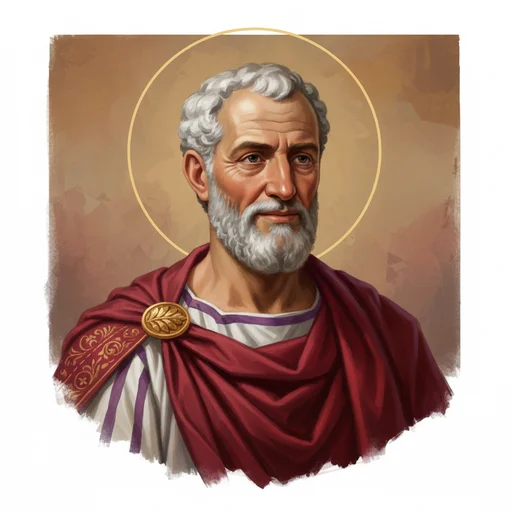
Faustus
A famous and master orator of Manichaeism who served as a bishop. For nine years, he was presented by his circle almost as a legendary wise savior to resolve Augustine's doubts regarding philosophical, religious, and especially astronomical matters. When he arrived in Carthage, although Augustine was impressed by the elegance and gentility of his rhetoric, he realized that in reality, he knew nothing about philosophy, mathematics, or astronomy. Faustus nobly confessed his ignorance; however, this situation caused the Manichaean belief in Augustine's mind to collapse completely.
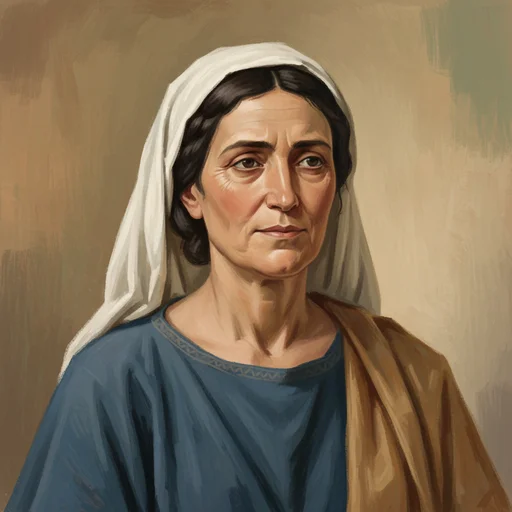
Monica
She is Augustine's pious, weeping, and patient mother. Raised with the traditions of the African Churches, despite having a difficult marriage with her irritable husband Patricius, she brought him into the Christian faith just before his death through her humility and patience. She tied all her life's hope to her son's conversion to the Catholic faith and his salvation. Although she grieved for a long time due to her son's Manichaean beliefs, she followed him like a shadow to Italy with the hope she received from her dreams. A few days after a philosophical-spiritual awakening she shared with her son in Ostia, she fell ill and died, filled with the peace of seeing her son enter the path of faith.
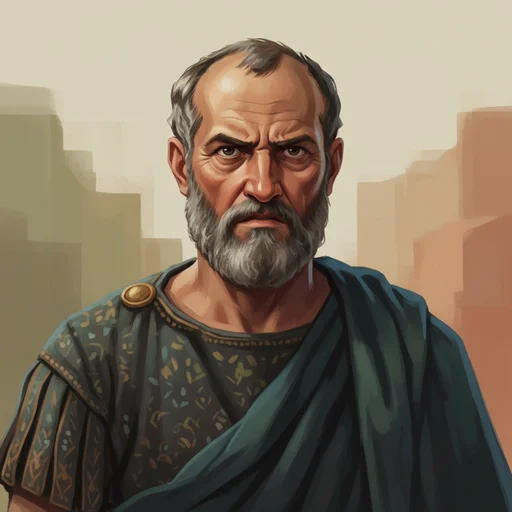
Patricius
He is Augustine's pagan (idolater) father, a poor small farmer who was extremely ambitious and hot-tempered. His sole purpose was for his son to one day attain a good position, respect, and money; to this end, he pushed his budget to the limits to send Augustine to the most prestigious schools (such as those in Carthage). Although he was occasionally unfaithful to his wife Monica, thanks to her wisdom and deep piety, he converted to the Christian faith and was baptized toward the end of his life. While he boasted of his son's intellectual virtues, he never cared for his son's closeness to God.