

Felatun Bey and Rakım Efendi — 9 karakter
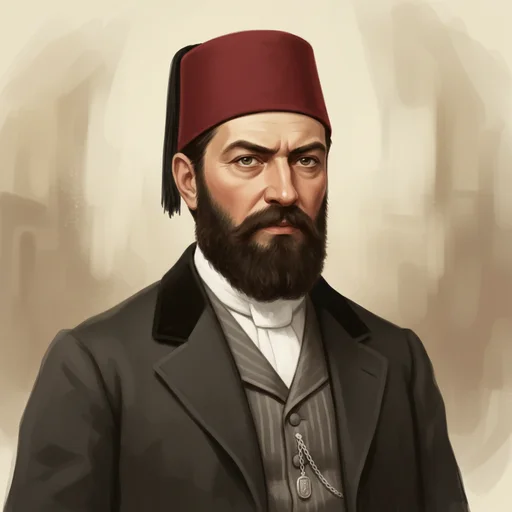
Ahmet Mithat Efendi
He was born in 1844 in the Tophane quarter of Istanbul. His father, Süleyman Ağa, was a cloth merchant; his mother, Nefise Hanım, had come from the Caucasus. Losing his father early, he went to work rather than to school, apprenticed to a herbalist in the Spice Bazaar. His elder brother's posting took him first to Vidin, then to Niš, where he finished middle school. Hired as a clerk in the offices of the Danube province, he caught the eye of Midhat Pasha, who gave him his own name. In Ruse he began writing for the newspaper Tuna and soon rose to chief editor. In 1869 he followed the pasha to Baghdad and ran the paper Zevrâ. Back in Istanbul in 1871, he set up his own press and launched the journals Dağarcık and Kırkambar. An article in Dağarcık brought accusations of irreligion, and in 1873 he was exiled to Rhodes, where he went on teaching. He returned to Istanbul in 1876. His work as a novelist opened in 1874 with Hasan Mellah and found its own stamp the following year in Felâtun Bey and Râkım Efendi. Tercüman-ı Hakikat, the newspaper he founded in 1878, became one of the longest-lived in the Ottoman press; it was he who brought Fatma Aliye into literature. He wrote plainly, as though leading the reader by the hand, never hesitating to break off the story and explain. With more than two hundred and fifty books to his name he was called “the writing machine” and held to be the people's first teacher. He carried the novel to a broad Turkish readership. In 1889 he attended the congress of orientalists in Stockholm. In his last years he taught at the Darülfünun, and on 28 December 1912 he died at Darüşşafaka, where he gave lessons as a volunteer.
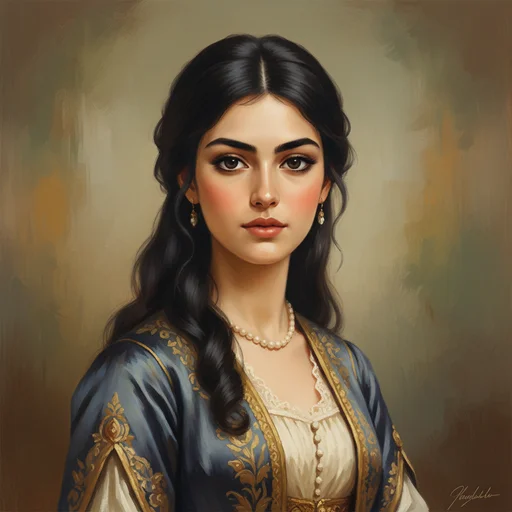
Canan
A white Circassian concubine brought from the Caucasus who, despite appearing thin and sickly, possesses an extremely beautiful face and well-proportioned features. She was purchased by Râkım for one hundred gold coins to assist the house nurse, but under Râkım's compassion and education, she soon learned French, Turkish, and the piano to an excellent level. She was raised not as a slave, but as the mistress of the house. With her intelligence and speed of learning, she fascinates everyone, including her English teacher, Josephino. She is tied to Râkım with great respect and an increasingly intense love; she is so loyal that even if she were offered freedom and great diamonds, or manumitted, she would only ever wish to remain a prisoner by Râkım's side. Ultimately, she conquers Râkım's heart with all her talents and love, and is rewarded with marriage.

Can (Jane Ziklas)
Mr. and Mrs. Ziklas's elder daughter. She is a perfect noble beauty with English grace and 'light, flaxen hair close to white.' She progresses rapidly in Turkish literacy and cultural lessons taken from Râkım, and through this, falls into a violent, platonic love, captivated by Râkım's dignified charm. Despite being a Western woman, she never behaves indiscreetly toward Râkım's boundaries and suffers in silence to the point of contracting tuberculosis (consumption). Once her illness is diagnosed by her doctor and family, and a proposal is taken to Râkım, she respectfully accepts Râkım's bond with Canan, appreciates Râkım's honest integrity as 'an example of virtue,' and accepts the situation. After recovering from a severe depression, she is sent back to her homeland (Alexandria) by her father.
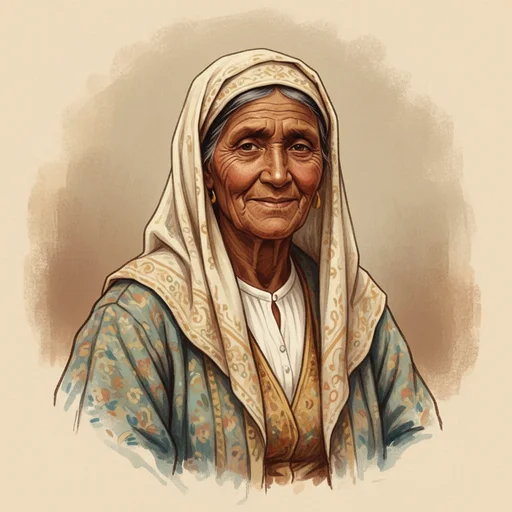
Fedai Kalfa
A loyal, veteran Arab servant who took on Râkım's care when he was orphaned at the age of one. After the death of Râkım's mother, she dedicated her entire life to raising Râkım honestly by performing hard labor such as laundry and house cleaning. Even when Râkım grew up and started earning money, she doted on him and always monitored his upbringing. When Canan arrived at the house, she initially wanted the girl to help with housework, but eventually loved her like her own daughter. Throughout the novel, she is a traditional, pure, compassionate, and intelligent woman who establishes dominance in managing the house and is respected by everyone as 'Mother' and 'Nanny'.
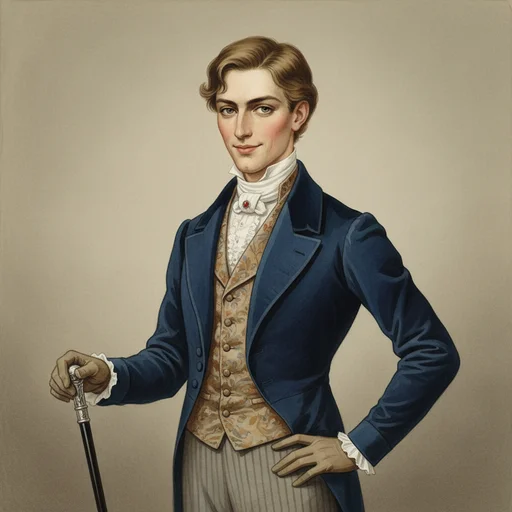
Felâtun Bey
The son of Mustafa Merakî Efendi; encouraged by his father, he is an extremely spoiled, uneducated type who thinks he is a highly cultured intellectual. He supposedly finished middle school (Rüştiye) and is an official at the bureau, but he rarely goes to work; he spends most of his time in Western-style theaters in Beyoğlu, at shops, and at flashy social invitations. He has adopted the name 'Platon' just for titles, but has no capacity to understand what he reads. He has books custom-bound and placed on shelves just for show. After his father dies, he wastes most of the half-million francs he inherited on harlots like the French actress Polini. By the end of the work, he falls into a pitiful state and is forced to leave Istanbul with the small remaining fortune and a simple district governorship (mutasarrıflık) title obtained from the state.

Josephino
Madam Josephino is an unmarried and intelligent French woman approaching her forties, familiar with the free lifestyle of Istanbul (Beyoğlu). She gives piano lessons in many houses and appears in social circles. Her first meeting with Râkım occurs at a gathering at her French friends' house. She is very interested in Râkım's patronage of Canan and his serious demeanor; she develops romantic feelings for Râkım in a short time and begins hosting him as a special guest. However, as Râkım's invisible bond with Canan and her own naive personality come to light, Josephino reins in her passion, shows maturity, and transforms into a loyal, close civil friend to Râkım and a dedicated piano teacher to Canan.
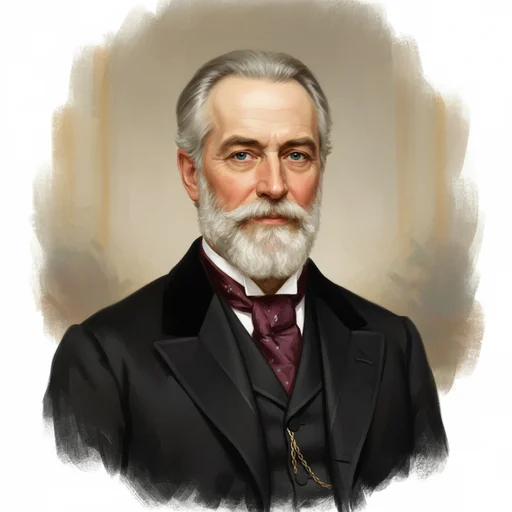
Mr. Ziklas
A serious, very wealthy, and quite polite English family man who came from England and settled in Asmalımescit Street. He hires Râkım as a Turkish teacher for his eldest daughter, Can (Jane), and his younger daughter, Margaret. As a family, they are enchanted by Râkım's morality and gentlemanly conduct. He never underestimates Râkım's luck or effort, holding him in higher regard than the English, Franks, and heirs to fortunes in his own circle. Upon learning of Râkım's noble stance and his situation with Canan regarding his daughter Can's platonic love—which had reached the stage of tuberculosis—he accepts the truth with fortitude and honors Râkım's honesty as 'the noblest of sentiments.'

Mustafa Merakî Efendi
Introduced at the beginning of the novel as the father of Felâtun Bey and Mihriban Hanım. He acquired the nickname 'Merakî' (the Curious/Whimsical) because whenever those around him asked about his strange and excessive endeavors, he would reply, 'It is just a whim!' While he was a content and very wealthy man in Üsküdar, Istanbul, he suddenly shifted to full Westernization, sold his home and property, moved into a Western-style stone mansion in the Beyoğlu district, and filled his house with Armenian and Greek servants. He considered his son’s knowledge of French to be sufficient as a perfect intellectual education. He is extremely careless and superficial in guiding the moral development of his children. His death leaves his son with an uncontrolled, massive fortune and a total lack of qualifications.

Râkım Efendi
Râkım was born as the son of one of the old Tophane janissary officers and was orphaned while still a year old, living in material deprivation. He was raised by Fedai Kalfa, one of the elderly maids in his mother’s retinue, who worked with her own hands as if he were her own child. Thanks to his extraordinary intelligence and ambition, after his primary education (rüştiye), he taught himself Arabic, Persian, and French, as well as various Western sciences. After starting work at the Foreign Ministry (Hariciye Kalemi), he earned his fortune through the sweat of his brow by giving Turkish lessons to foreigners and writing articles for newspapers. He does not spend the prosperity he achieved through work on ostentation, but rather on his library, the maintenance of his house, and his concubine Canan, whom he patronizes with compassion. He raised Canan as an impeccable lady and eventually opened his heart to her as a brother, a friend, and ultimately, a wife. He symbolizes the ideal Turkish intellectual of the Tanzimat era, who adopted the West through rational means without severing ties with the moral and virtuous roots of the East.