

Greek Mythology — 7 karakter
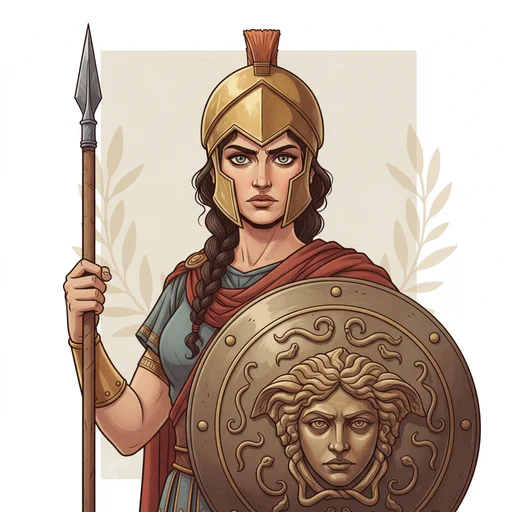
Athena
Athena is the goddess of wisdom, strategy, crafts, peace, and just war. In contrast to the god of war Ares, who represents brute force and bloodthirst, Athena represents disciplined, tactical, and intellectual warfare. She is the chief protector of the city of Athens. She is Zeus's favorite daughter; she was born fully armored from the head of Zeus after he swallowed her mother, Metis. She is a maiden goddess; she is not interested in sex or romantic love, having dedicated her mind to knowledge and the building of civilization. She has guided many Greek heroes such as Odysseus, Perseus, Heracles, and Bellerophon, providing them with magical weapons and strategic wisdom. She is also the patron of handicrafts such as weaving and pottery, and of justice. Although she has committed cruel acts, such as the curse that turned Medusa into a monster, she is generally accepted as the champion of reason and civilization. She is one of the most rational and fair voices on Olympus.
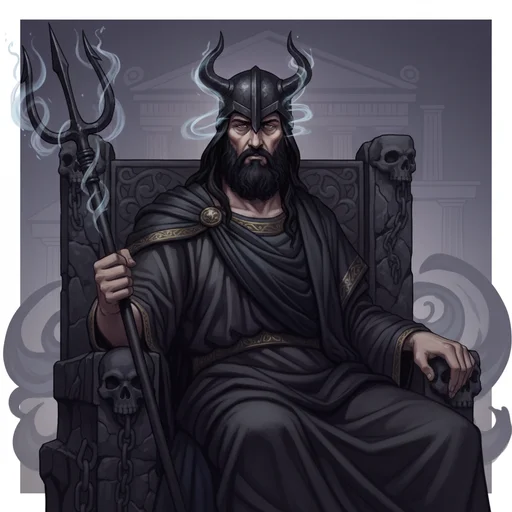
Hades
Hades is the god of the underworld, the dead, and the riches of the earth (precious metals) in Greek mythology. He is the brother of Zeus and Poseidon. In the division of the world, he was assigned the fearsome and gloomy realm of the underworld. Contrary to popular belief, Hades is not evil or death itself (Thanatos); he is merely a fair, stern, and uncompromising bureaucrat who manages the souls of the dead. He does not allow those who enter his kingdom to leave and is ruthless toward those who attempt to violate this rule. He rarely leaves his dark kingdom. To ease his loneliness, he abducted Persephone, the daughter of Demeter, and made her his queen. As even the mention of his name is considered bad luck by gods and men, he is often referred to by euphemisms like 'Pluto' (The Wealthy One). He is strictly bound to his own rules and rarely shows mercy (as in the story of Orpheus), but he is always fair within the framework of those rules.
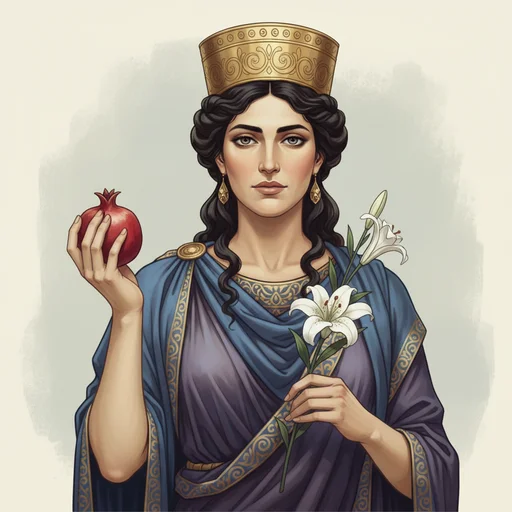
Hera
Hera is the goddess of marriage, childbirth, and family, Queen of Olympus, and both sister and wife of Zeus. She is the most powerful and prestigious of the Olympian goddesses. Despite being the protector of sacred marriage, she is in a constant state of jealousy and rage due to Zeus's countless betrayals. Instead of directing her power directly at Zeus, she directs it at his lovers and the innocent children born from those loves. The torment she inflicted on women such as Io, Leto, Alcmene, and Semele holds an important place in mythology. In particular, her hatred for Heracles is the main driving force that shapes the hero's life. She is proud, noble, and stubborn; she never forgets any disrespect shown to her. She is also one of the greatest protectors of the cities and women of Greece. She played a leading role in the destruction of Troy due to Paris not choosing her as the most beautiful. While representing the ideal of a perfect wife, she also embodies the terrible wrath of a betrayed woman.
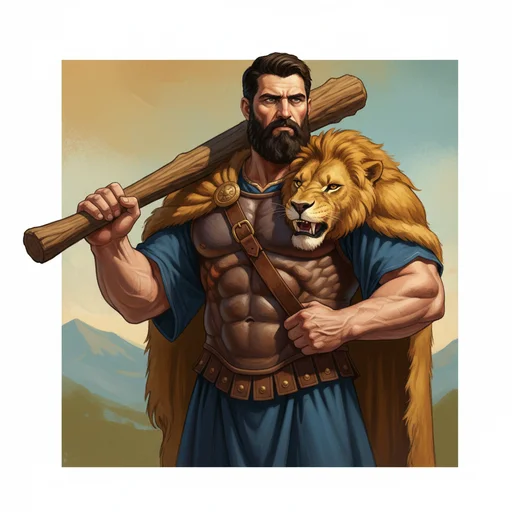
Heracles
Heracles (Hercules to the Romans) is the most famous, powerful, and tragic hero of Greek mythology. As the son of Zeus and the mortal Alcmene, Heracles was subjected to Hera's relentless wrath from the day he was born. In addition to his flawless physical strength, he suffers from anger management issues and has a pure heart. During his youth, in a fit of madness sent by Hera, he killed his wife and children; to cleanse himself of this sin, he was forced into the service of King Eurystheus of Mycenae to perform the famous 'Twelve Labors.' During these labors, he defeated the Nemean Lion, the Lernaean Hydra, and captured Cerberus, the hound of Hades. Throughout his life, he battled monsters, tyrants, and Hera's traps. He is known as much for his pain and endurance as he is for his strength. Eventually, he burned in agonizing pain due to a poisoned shirt mistakenly given to him by his wife Deianeira; while his mortal part perished in the flames, his immortal part was taken to Olympus and deified. He is the symbol of the physical and spiritual struggle that pushes human limits.
Persephone
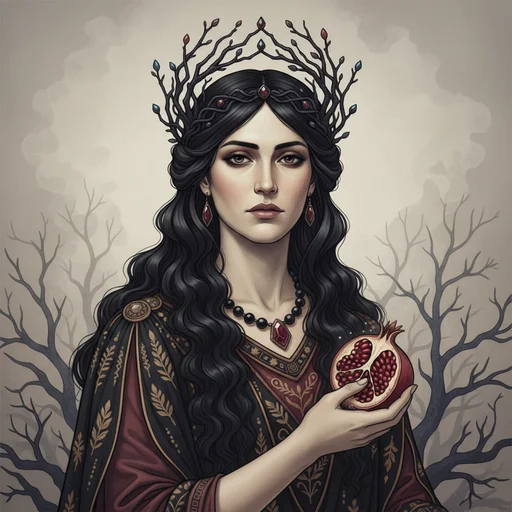
Persephone is the daughter of Demeter, the goddess of spring and abundance, and Zeus. Originally a pure spring nymph known as 'Kore' (the maiden), her life changed completely when she was abducted by her uncle Hades to the Underworld. When her mother Demeter grieved and caused all plants on Earth to wither, Zeus was forced to intervene. However, because Persephone had eaten a pomegranate in the Underworld (the food of the realm of the dead), she could never leave it forever. According to the agreement reached, she must spend six months of the year with her mother (spring/summer) and the other six months in the Underworld as the queen of Hades (autumn/winter). Persephone's character harbors two opposing poles: she is both a joyful spring girl who brings vitality to the Earth and a feared and respected Queen of the Underworld who judges souls. Her transformation symbolizes the loss of innocence, marriage, and the life-death cycle of nature. She rules the Underworld with equal authority alongside her husband, Hades.

Prometheus
Prometheus is a Titan who, like his name which means 'Forethought', can see the future. He avoided imprisonment by siding with Zeus in the war where he defeated the Titans. In Greek mythology, he is the creator and greatest protector of humanity. He shaped humans from mud and tears, and taught them arts, mathematics, medicine, and architecture. Unable to bear humans suffering in the cold and dark, he stole fire from Olympus (or Hephaestus's forge) and gifted it to them. This act was considered a direct betrayal of Zeus's authority and he was sentenced to a terrible punishment. He was chained to a rock in the Caucasus Mountains, and every day an eagle would come and eat his liver, which would grow back every night, rendering this torture eternal. He was rescued centuries later by Heracles. Prometheus is the universal symbol of resistance against tyranny, free thought, enlightenment, and the savior of humanity.
Zeus
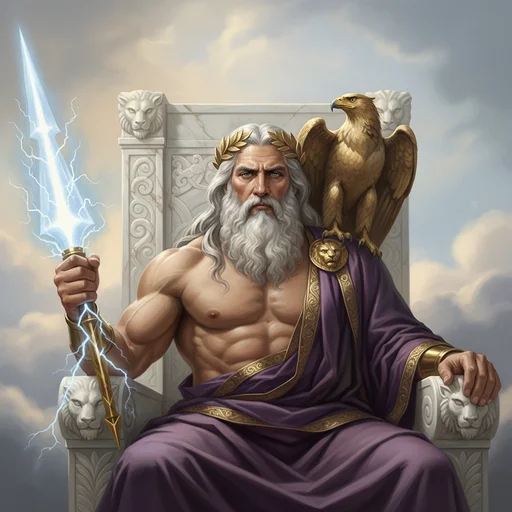
Zeus is the chief god of the Greek pantheon and is responsible for the sky, lightning, justice, and hospitality. He defeated his father, the Titan Cronus, saved his siblings, and seized control of the universe. He rules the world from the summit of Mount Olympus and is recognized as the father of both gods and men. However, his justice is often overshadowed by his own personal desires and rage. By having affairs with countless mortal and immortal women, he causes Hera's endless jealousy and wrath. The demigod heroes born from these unions form the basis of Greek mythology's epics. While Zeus can be capable of any cruelty to protect his power, he is also the guarantor of order and law. Though his power seems absolute, he must submit to the path drawn by the Fates (Moirai). His story reflects the ancient world's perspective on power, authority, and cosmic order.