
Cengiz Aytmatov
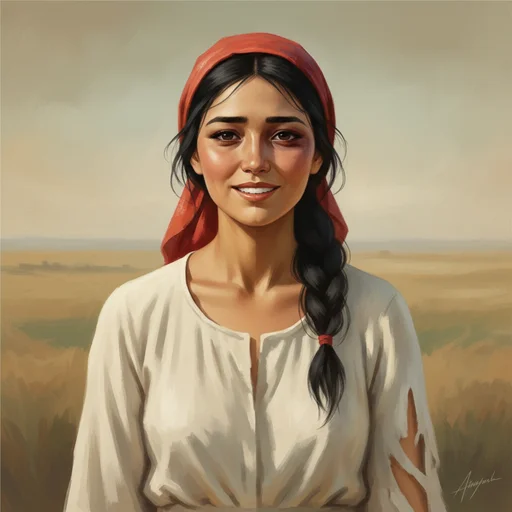
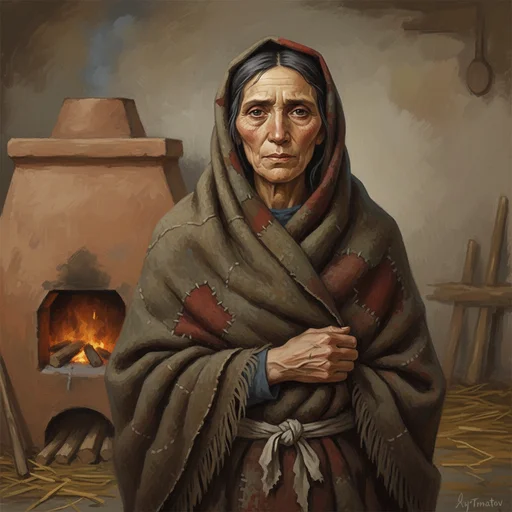
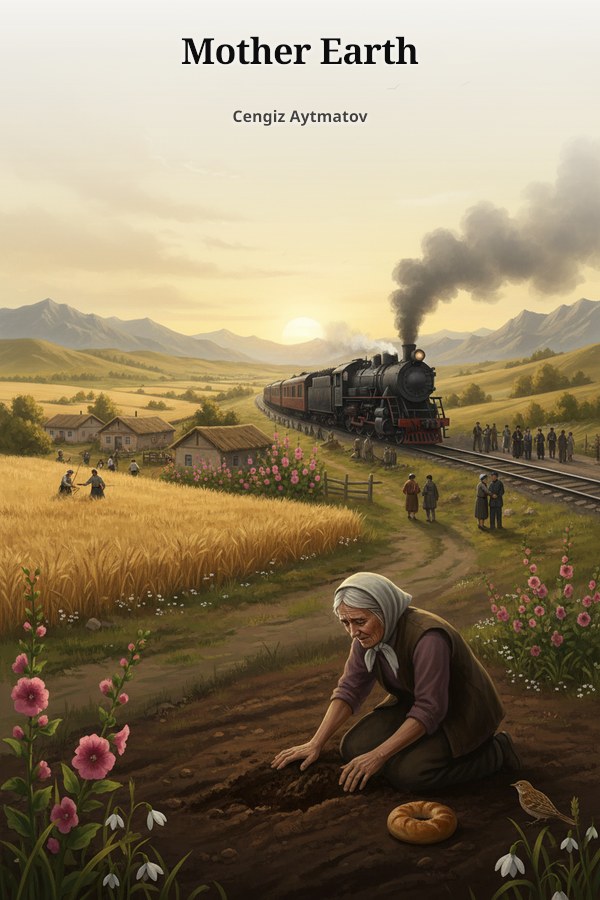
Cengiz Aytmatov's famous 1963 novel, Mother Earth, tells the painful life story of a mother named Tolgonay living in Kyrgyzstan during World War II, who loses her husband, three sons, and daughter-in-law, and narrates her intimate conversations with the land. Themes of the devastating effects of war, the human-nature relationship, and patience are explored.
The happy world built by ordinary, hardworking people with their own hands and the loss of a mother's children to war, a ruthless and irrational mechanism; the resulting physical and spiritual struggle for survival.
The steppes of Kyrgyzstan, the foothills of the Yellow Valley, the Saray collective farm, and the train station linked to the village.
Mid-20th century (the years of the Second World War and the subsequent period of recovery).
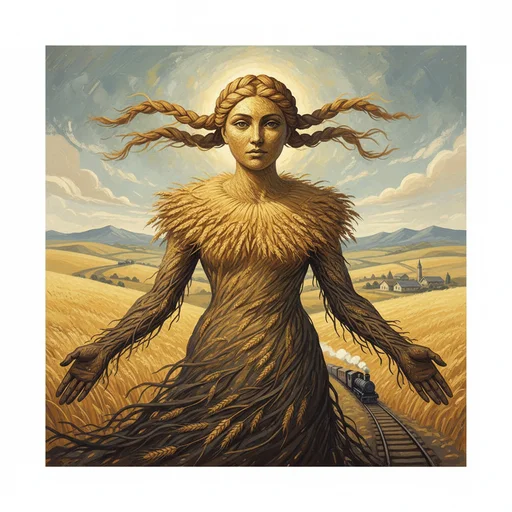
An atmosphere that oscillates between the golden, hopeful, and bountiful pastoral aura of the pre-war years and the cold, ruthless, desolate, and tragic reality of the war years; an atmosphere wrapped like a mother's embrace by nature, yet permeated by a deep, dirge-like melancholy that cuts to the core of the soul.
A lyrical, first-person (I) narrative, filled with flashbacks and sorrow, in which an elderly Tolgonay pours out her heart by speaking directly to Mother Earth.
Social life revolves around the kolkhoz system and the bond established with the land. No one can escape the rules of the soil and labor. When war breaks out, men go to the front without question; those left behind—the elderly, women, and children—must struggle against nature and history with superhuman effort to feed both the front and themselves.
The Soviet-era agrarian society of Kyrgyzstan, the culture of communal labor (imece), deep family ties, traditional values (the kokpar game, the culture of lamentation, respect for elders), and the powerful reflections of the concept of national defense among the people.
Characters are arranged at equal intervals on a circle; you can read the relationship type and dynamics by clicking on the lines.
Bir çizgiye tıklayarak ilişki detayını açın.
A passionate and solid marital bond based on great respect and mutual labor. It carries the deep sacrifice brought by building a life together from scratch and the strength to lean on each other in all conditions.
The moment they promised to become one body in the field with the joy of the first wheat harvested, and Suvankul calling her 'my lark'.
The land is Tolgonay's only support that does not judge but whispers the truth. Both look upon the lost with the same compassion and grief, and both bear the enormous burden of being a mother.
Tolgonay going to the field every Day of Remembrance to vent her sorrows aloud to Mother Earth.
After the death of her son, Aliman is the last branch Tolgonay clings to for life. Both wear the veil of widowhood and try to heal their pain through each other; Tolgonay loves and protects her like her own child.
When Aliman hugs Tolgonay's neck in agony and cries, 'We are both widows now!' while searching for soldiers returning from the front after the war.
A passionate bond woven with the fire of youth and great love, which flourished amidst the sounds of combine harvesters and was suddenly severed by war. Aliman can never get used to the loss of her husband.
Picking the pink hollyhocks by the edge of the field and secretly placing them on the step of Kasym's combine.
Boundless pride felt for a son curious about reading and teaching. As her quietest, most naive child, she always wanted to protect him from going to war.
Tolgonay screaming and running after the train as it passes through the station without stopping on its way to the front.
A tenderness filled with sweet reproaches that a mother feels for her restless young son. Caynak is so devoted to his mother because of his great love for her that he cannot bring himself to say goodbye.
Caynak's escape by secretly leaving a letter for the partisans to avoid the pain of separation and his mother's grief.
It is the solidarity between two peasant women sharing the same fate. Even if they occasionally get angry at each other in the face of disasters, they harbor an indescribable sense of mutual aid and compassion at their core.
When Aliman's labor pains began in the middle of the night, the first person Tolgonay ran to was Aishe, who then sent her son with a car to help.
Although he is a neighbor's child, he grew up before Tolgonay's eyes and took on the role of the family's protector and supporter after her own sons were martyred.
Bektash's act of spending days with great loyalty to repair Kasym's rusted bicycle for his grandson Canbolat years later.
This fugitive, who stole the kolkhoz's seed horses during the darkest times of the village, is a figure as disgusting and treacherous in Tolgonay's eyes as the war itself.
During the interrogation, Tolgonay looking Cen Shenkul in the face and crying out in court, "May the dead curse you, may the children curse you!"
Bektash lovingly passes on the memory of Kasym—whom he views as the brother he lost in the war—to Canbolat, Aliman's son, even though the boy was born out of wedlock.
While working on the combine harvester, he takes Canbolat with him to teach him the trade and encourage him, just as Kasym once did.