

Pride and Prejudice — 10 karakter
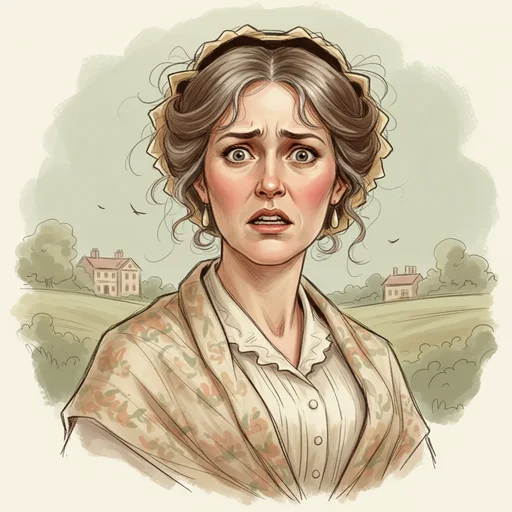
Mrs. Bennet
The mother of the Bennet girls. Although her beauty in her youth stole her husband's heart, it is revealed after marriage that she has a shallow, ignorant, and calculating mind. Since, according to the laws of that time, the house would be transferred to the only male, Mr. Collins, if her husband dies, she has become obsessed with handing her daughters—five of them—over to husbands. When she doesn't get what she wants, she has crises over her 'poor nerves,' talks constantly, and shows off. While she is saddened by the scandal caused by Lydia running away, the news that Lydia married Wickham covers up the disgrace and allows her to brag about her daughter's gain with a sense of triumph once again.
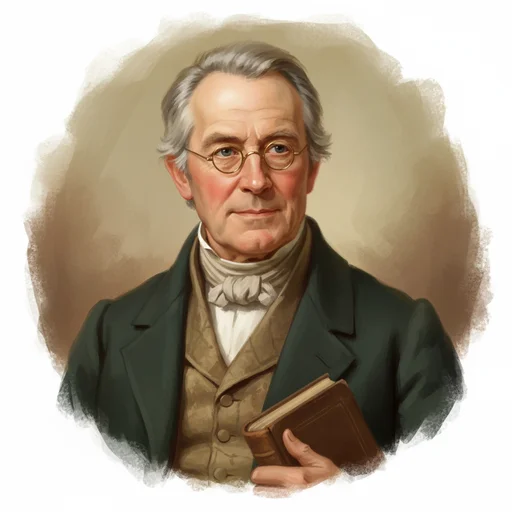
Mr. Bennet
Mr. Bennet, who owns the Longbourn mansion and estate, despite his logical nature, married a woman who was hollow and tactless in the heat of his youth, making perhaps the only mistake of his life, but he spent the rest of his life withdrawing from this mistake into his library. He is not very interested in his daughters' future, evaluating what happens like a theater scene by watching it only from his own ironic and sarcastic frame. However, he pays the price for his passivity very heavily with the scandal of his youngest daughter Lydia going down a bad path with Wickham and feels for once exactly how guilty he was; yet, he gets over it easily. Ultimately, he finds satisfaction in the happiness of Elizabeth, the daughter he respects the most and whose intelligence he praises.
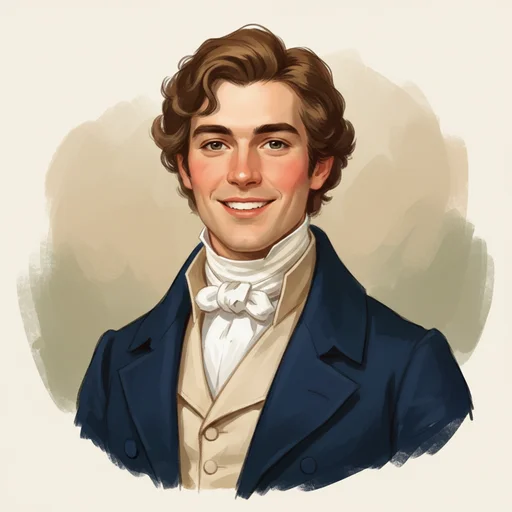
Mr. Bingley (Charles Bingley)
A friendly, charismatic young man who moves to Netherfield Park in Hertfordshire, with an income of four to five thousand pounds a year, who is wealthy but extremely humble. He is Darcy's best friend. He is so outgoing and polite in society that he makes himself loved very quickly by the rich and poor in the town he arrives in. He falls deeply in love with Jane Bennet, but due to his overly mild-mannered character, he suppresses the interest he has for the girl upon the advice of his sister Caroline and especially Mr. Darcy, returns to London, and falls victim to great heartlessness. However, when Darcy confirms the truth, he returns to Hertfordshire very happily and marries Jane.
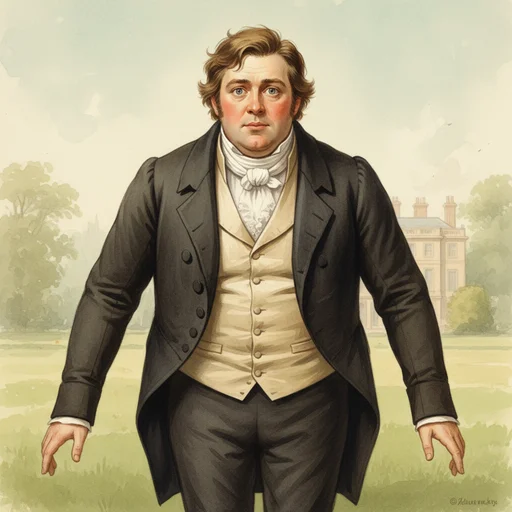
Mr. Collins (William Collins)
An obscure village clergyman serving in Hunsford, lacking intellect and appointed as the heir to Mr. Bennet's property. He is a comedic and stifling character who survives on the phony and sycophantic praises of his patron Lady Catherine de Bourgh, harboring a secret arrogance concealed behind absurd, false humility. Intending to marry, he first considers Jane, then on a whim Elizabeth; after being ruthlessly rejected, he immediately finds consolation in the intelligent but poor Charlotte Lucas.
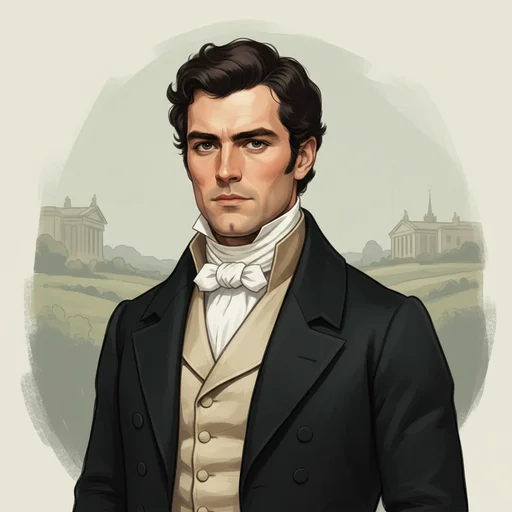
Mr. Darcy (Fitzwilliam Darcy)
The owner of the famous Pemberley estate in Derbyshire, a young man from one of the oldest and noblest families in England, who is very wealthy (with an income of over 10,000 pounds a year). When he comes to Hertfordshire with his friend Mr. Bingley, he wins everyone's hatred at first due to his arrogance, unapproachable stance, and refusal to mingle with anyone in society. He initially finds Elizabeth Bennet's appearance ordinary, but soon after, he falls in love with her, a slave to his own arrogance in the face of her sharp wit. As he overcomes the flaws of his character slowly with the shock he experiences when his proposal is rejected, he proves that true love should involve sacrifice rather than pride through the explanatory letter he sends to Elizabeth and the massive financial aid he provides from his own pocket to cover up the familial crisis Wickham created.
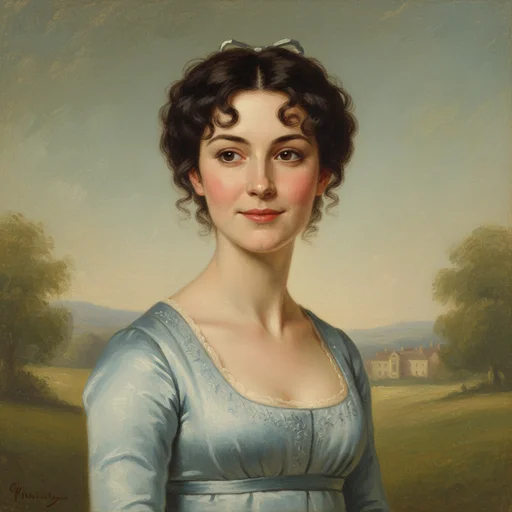
Elizabeth Bennet
The second of the five Bennet daughters and her father's favorite intellectually. With her observational skills, sarcastic character, and sharp wit, she has managed to rise above the strict boundaries of society at the time. Although she has no large fortune or high social status, her desire is to marry only a man she can respect and love. She has a habit of enjoying the flaws and stupidities of the people around her. Her most fundamental trait, her judgment, is tested when her pride is repeatedly struck by false truths, leading her into a major misconception (hating Darcy and trusting Wickham). At the end of the story, she admits her mistakes, her emotions mature, and she finds happiness by marrying Mr. Darcy, whom she once hated.
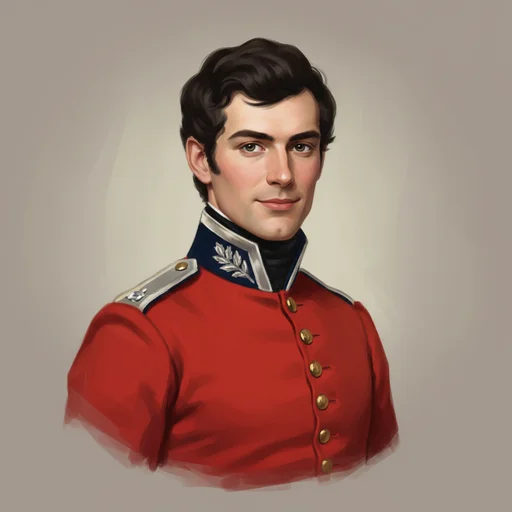
George Wickham
He is the son of the late Mr. Darcy's servant and a young army officer who grew up comfortably under his protection. In the countryside, he wins everyone's heart by using his charm, good looks, and fluent speech, creating a false image of a victim by slandering Mr. Darcy. In reality, however, he is an extremely unprincipled fraudster who gambles away money, takes no responsibility, attempts to elope with Georgiana Darcy for his own gain and financial gluttony, and later, finding himself penniless, elopes with Lydia Bennet to the brink of ruining her family's reputation. Ultimately, thanks to Mr. Darcy paying off his substantial debts, he is married to Lydia and transferred to another military post.
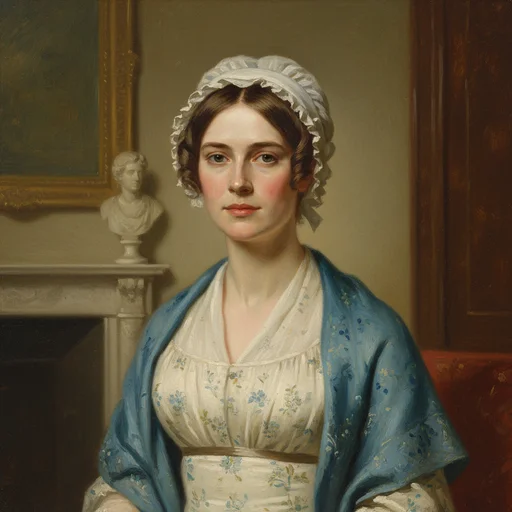
Jane Austen
Jane Austen was born on 16 December 1775 in the Hampshire village of Steventon, the seventh of the eight children of the rector George Austen and Cassandra Leigh. She grew up among her father's books and the novels read aloud in the evenings. The short burlesques she wrote as a girl to amuse the family were her first attempts; her sister Cassandra remained her closest confidante for life. In her twenties she wrote the first version of what would become Pride and Prejudice; the manuscript her father offered to a publisher was refused unread. In 1801 the family moved to Bath. A year later she accepted an evening proposal of marriage from a wealthy man she had known for years and withdrew her consent the next morning. Her father's death in 1805 left her, her mother and her sister dependent on the support of relatives. In 1809 her brother Edward opened a house at Chawton to them, and steady work became possible at last. Sense and Sensibility appeared in 1811, credited only to “A Lady” and printed at her own expense. Pride and Prejudice followed two years later, then Mansfield Park. Emma, published at the end of 1815, was dedicated to the Prince Regent; Walter Scott praised it in an unsigned review. She wrote the narrow world of country houses with an irony that slips into her characters' minds, turning the novel away from extraordinary events and towards the observation of daily life. Her name never appeared on any of her books in her lifetime. When the illness that began in 1816 worsened she went to Winchester for treatment and died there on 18 July 1817, aged forty-one; she was buried in the cathedral. Persuasion and Northanger Abbey came out after her death, her name disclosed at last.
Jane Bennet
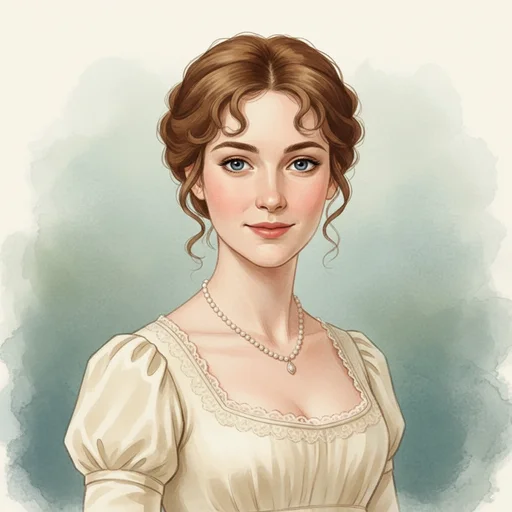
The oldest and arguably most beautiful of the Bennet daughters. She has a pure heart and an angelic nature that never suspects ill intent from any person in the world. As soon as Bingley arrives at the mansion, they fall deeply in love with each other. However, when Jane's nature of not showing her feelings and her mother's greedy ignorance intervene, this union is prevented by Darcy. After suffering the pains of love in the city, she bears the ugliness of her sisters and the hypocrisy of Caroline Bingley's appearance of friendship with composure. Her indomitable forgiveness is rewarded in the finale, and she builds a happy life with her sweetheart, Mr. Bingley, who comes back to her side.
Lady Catherine de Bourgh
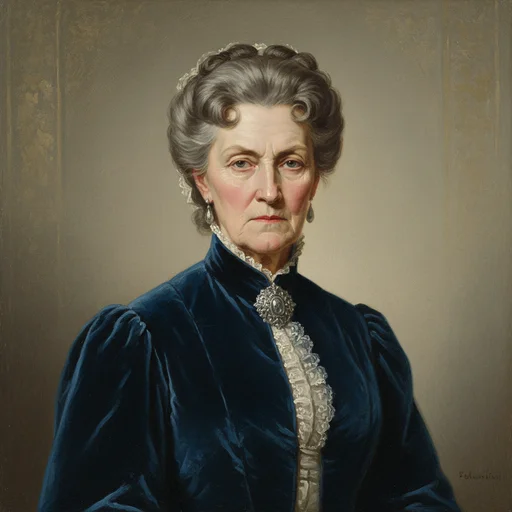
The absolute mistress of Rosings Park, a stern aristocrat who desires for her nephew Mr. Darcy to marry her daughter, Anne de Bourgh. She is also the obsequious patroness of Mr. Collins. She is known for her ruthless obsession with social rank, rules, and customs, as well as her tyrannical belief that everyone should obey her. She vehemently opposes her nephew's union with someone of a lower class like Bennet. However, her personal intervention at Longbourn to prevent this marriage did not end the love between them; on the contrary, it became the catalyst that ultimately united the destinies of Darcy and Elizabeth.