

The Clown and His Daughter — 7 karakter
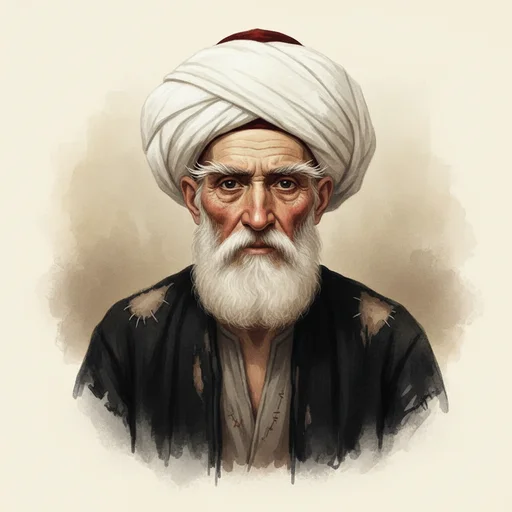
Hacı İlhami Efendi (Imam of Sinekli Bakkal)
The Imam of the Sinekli Bakkal neighborhood and Rabia's grandfather. He experiences and imposes religion entirely through concepts of hell, prohibition, fear, and sin. He raised his daughter (Emine) and his granddaughter (Rabia) with this mentality, through beatings and intimidation. He is essentially a very stingy man; he collects the money earned from Rabia's Quran memorization (hafiz) himself. He symbolizes the harsh, intolerant, and self-serving face of religion in society.
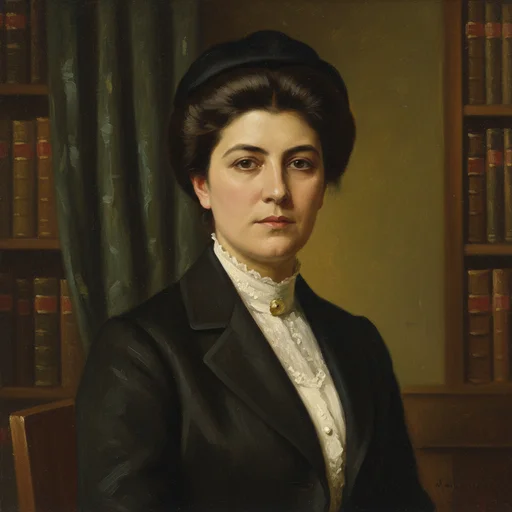
Halide Edib Adıvar
Halide Edib Adıvar was born in Istanbul in 1884. Her father, Mehmed Edib Bey, served as a secretary at the palace of Sultan Abdülhamid II; she lost her mother, Bedrifem Hanım, to tuberculosis while still very small. She spent her childhood in Beşiktaş, in her grandmother's house — the house she would later name in her memoir, Mor Salkımlı Ev (House with Wisteria). Private tutors taught her languages, literature and music, and in 1901 she graduated from the American College for Girls in Üsküdar. That same year she married the mathematician Salih Zeki; the marriage ended in divorce. After the Second Constitutional Era began she started writing for the newspaper Tanin, and her articles on women's education and rights drew fierce hostility; during the 31 March Incident she had to leave for Egypt for a time. Back home she worked as a teacher and school inspector and founded the Society for the Elevation of Women. In Seviye Talip and Handan she pushed the inner lives of her heroines to the front. In 1919, after the occupation of İzmir, the speech she gave at the Sultanahmet rally made her name known across the country. The following year she crossed into Anatolia, took up a post at the headquarters of the Western Front and was given the rank of corporal. Those years mark Ateşten Gömlek (The Shirt of Flame) and Vurun Kahpeye. In 1926 she left the country with her husband Adnan Adıvar and lived fourteen years in England and France; she wrote Sinekli Bakkal first in English, as The Clown and His Daughter, publishing the Turkish version in 1936. She returned in 1939 and founded the chair of English philology at Istanbul University; between 1950 and 1954 she sat in parliament as a deputy for İzmir. She gathered her testimony of the years of the National Struggle in Türk'ün Ateşle İmtihanı (The Turkish Ordeal). In her novels she joined psychological analysis to social observation, giving the Turkish novel women who stand inside politics. She died in Istanbul on 9 January 1964.
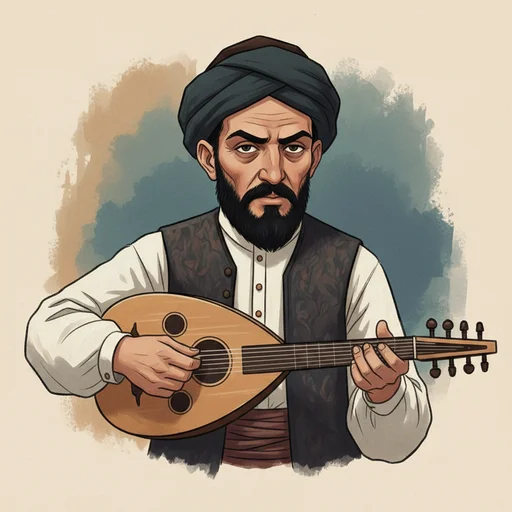
Peregrini (Osman)
The son of a noble Spanish mother, Peregrini is a musician who was once a priest in the Catholic Church, but after rebelling against dogmas and being excommunicated, he settled in Istanbul. He carries the skepticism, rationalism, and artistic passions of European culture. He meets Rabia during his musical and philosophical conversations with Vehbi Dede; he falls in love with her crystal-like voice and the resignation characteristic of the East. To marry her, he converts to Islam, takes the name Osman, and submits to the persistence of Rabia, who insists that they live in Sinekli Bakkal.
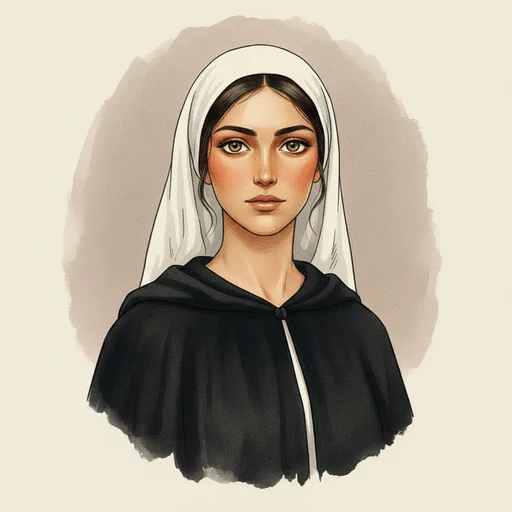
Rabia
The only daughter of Tevfik and Emine. Raised under strict religious pressure by her mother and grandfather (the Imam), she became a hafiz at a very young age. She secretly inherited the artistic soul and zest for life of her father, Tevfik. She takes her art to its peak by taking music lessons from masters like Vehbi Dede and Peregrini. She lives in two different worlds, between Selim Pasha's mansion and the street of Sinekli Bakkal. Her deep love for her exiled father and her dedication to her values form the foundation of her character. By marrying Peregrini, a Western pianist, she personalizes the cultural synthesis of East and West in her own life.
Selim Pasha
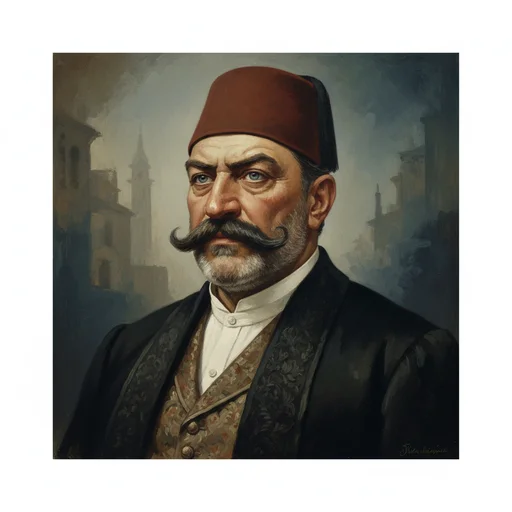
The feared Zaptiye Nazırı (Minister of Police) of the Abdulhamid II era. He is bound with absolute loyalty to the state and the Sultan. As a protector of the oppressive regime, he has tortured and exiled many people (including Tevfik). However, behind his savage and terrifying political face, there is a cultured, just, and elegant Pasha within his own mansion. Upon learning his only son Hilmi is a Young Turk (a constitutionalist rebel), he is a stern statesman who does not hesitate to report even his own son.

Tevfik (Kız Tevfik)
A grocer in the Sinekli Bakkal neighborhood, whose true profession is that of an Orta Oyunu performer (playing female roles/zenne) and Karagöz puppeteer. Due to his unruly, nonconformist nature, his marriage to the Imam's daughter Emine failed. Because he was carrying the political documents of Hilmi Bey, who was involved with the Young Turks, he was unknowingly dragged into politics and sent into exile (to Damascus). With the declaration of the Second Constitutional Era, he returns to the neighborhood as a 'hero of liberty.' His daughter, Rabia, is the apple of his eye, and he feels infinite compassion for her.
Vehbi Dede
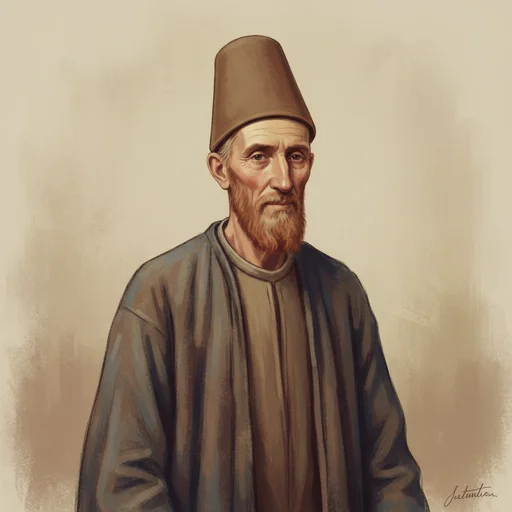
A member of the Mevlevi order, a reserved, soft-spoken master of music and a dervish. He discovers Rabia while giving music lessons at Sabiha Hanım's mansion. He is the person who transforms the understanding of religion Rabia received from her strict grandfather into one of love and tolerance. He has a deep friendship with Peregrini; he represents the East's understanding of tolerance, unity, and mysticism. He is always a soothing, guiding light during the crises in Rabia's life.