
Halide Edib Adıvar
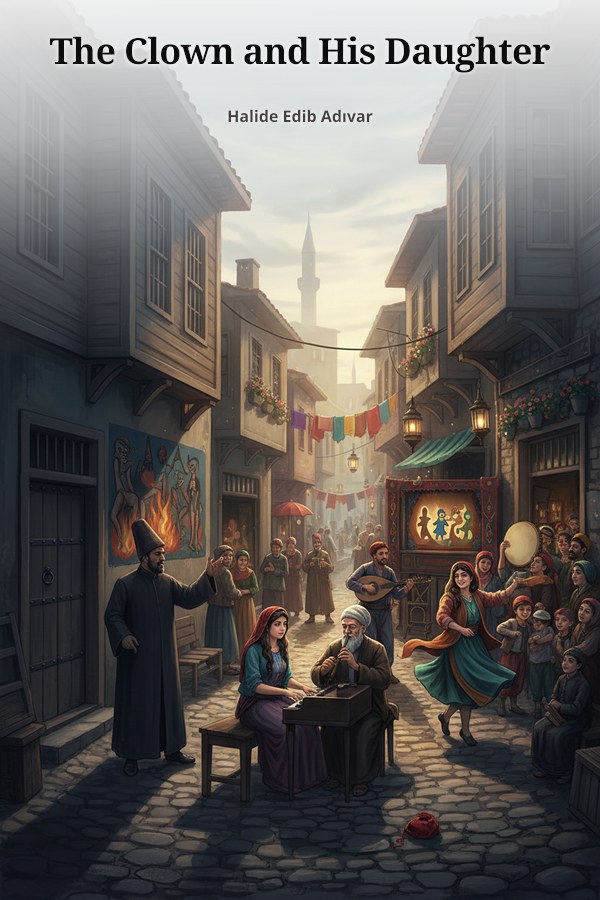
Halide Edib Adıvar’s most famous work, Sinekli Bakkal (The Clown and His Daughter), published in 1936, is a social novel that depicts the social, political, and cultural fabric of Istanbul (Aksaray/Sinekli Bakkal neighborhood) during the reign of Abdul Hamid II within the atmosphere of a suburban district. It conveys the East-West synthesis, the conflict between tradition and modernity, and neighborhood culture through the life of Rabia the hafiz.
The conflict between traditional, oppressive, and fearful authority (the Neighborhood Imam and the Chief of Police Selim Pasha) and the innovative, forgiving, humanistic, and libertarian spirit (Rabia, Tevfik, and Vehbi Dede). In parallel, there is a search for mutual acceptance and synthesis between Eastern and Western cultures.
Istanbul; primarily the Sinekli Bakkal neighborhood, the Selim Pasha Mansion on the Bosphorus, Damascus, and various places of exile.
The late 19th and early 20th centuries (the era of Abdul Hamid II and the proclamation of the Second Constitutional Era in 1908).
It possesses a dual atmosphere that is simultaneously gloomy and oppressive, while reflecting the sincere, joyful, and colorful life in the backstreets of Istanbul. On one side prevails the fear brought about by the sultan's tyranny and religious bigotry, while on the other, there is a bright state of mind created by art, music, and human compassion.
Observational, analytical, third-person omniscient narrator that penetrates deeply into the inner worlds and psychology of the characters.
Society is divided into classes: those living in wealthy mansions and the poor people struggling to survive in narrow streets like Sinekli Bakkal. The strict surveillance and censorship rules of the Abdulhamid II era apply. Religion and traditions hold absolute authority in neighborhood life; the boundaries between men and women are sharp, though art and talent can stretch these limits.
A transitional period where the Ottoman Empire's efforts toward Westernization faced traditional Islamic/Eastern values. The fascination with the West among intellectuals after the Tanzimat, the traditional life of the common people, the contribution of Mevlevi dervish lodges to art and tolerance, and the culture of sycophancy and informers around the palace form the fabric of the text.
Characters are arranged at equal intervals on a circle; you can read the relationship type and dynamics by clicking on the lines.
Bir çizgiye tıklayarak ilişki detayını açın.
A deep love, devotion, and protectiveness. For Rabia, her father represents the joy and human side of life; for Tevfik, his daughter is the only meaning and joy he clings to in his vagabond life.
When Tevfik is to be exiled, Rabia clings to his neck, sobbing, and later manages the Sinekli Bakkal shop to keep his memory alive.
Initially, it carries the tension of master-apprentice dynamics and being people from different worlds. Over time, it turns into love under the influence of music and deep philosophical attraction. Rabia's solemnity belonging to the East and Peregrini's exuberant skepticism belonging to the West complement each other.
Peregrini accepting Islam, taking the name Osman, and choosing to live in Sinekli Bakkal, as well as Rabia inspiring him to find the melody for the 'Enchanted Well'.
A relationship based on fear and self-interest. The Imam suppresses Rabia spiritually and uses her talent to make money. Although Rabia fears him, she develops a rebellion within herself and eventually declares her independence.
The Imam sending Rabia to Selim Pasha's mansion so as not to lose her earnings, and Rabia rejecting the Imam firmly upon her father's return.
A great respect, compassion, and spiritual devotion. Vehbi Dede heals Rabia's wounded soul through Sufism and music; he teaches her divine love instead of the fear of hell.
Rabia kneeling at the Dede's feet to find peace and seeking refuge in his serenity during her most troubled moments.
A destructive tension created by completely opposite characters. Emine's dogmatic and joyless attitude suffocated Tevfik's playful and free spirit, eventually turning the relationship into hatred once Tevfik fled from her.
Emine cursing Tevfik for the rest of her life and refusing to even tolerate hearing his name.
A conflict of generations, ideology, and politics. There is an unbridgeable gap between the father, who is the authority of the state and a loyal servant of the sultan, and the rebellious son, who is a constitutionalist and sympathizer of the Young Turks.
When Selim Pasha learns that his son possesses incriminating documents, he has him exiled to Damascus, leading the son to refuse the purse of money offered by him.
Selim Pasha feels a tenderness and admiration for Rabia that he does not feel for his own daughter. While Rabia appreciates the Pasha's fatherly demeanor in the mansion, she is horrified by the ruthlessness he displays as a statesman.
The Pasha takes Rabia under his wing in his mansion, but when he exiles Tevfik, Rabia breaks away from the mansion, shouting at him, 'You tyrant, have you killed my father?'
Two great artists representing two different worlds: one stands for submissive compassion and spirituality (East), while the other represents rebellious curiosity and inquiry (West). They respect each other's genius but are in constant philosophical conflict.
While Peregrini praises the devil as the symbol of human rebellion and reason, Vehbi Dede interprets everything as parts of a single divine beauty.
Rakim acts like an uncle and a guardian angel in Rabia's life. There is an intimate affection between them based on informal, neighborhood-style warmth.
Rakim lives with Rabia in 'The Clown and His Daughter' (Sinekli Bakkal) and defends her against all external threats, including her psychological crises during pregnancy.
Bilal tries to impress Rabia by relying on his looks and the status he hopes to achieve. However, Rabia finds his superficiality and thirst for power (his desire to be like Selim Pasha) repulsive.
When Bilal tries to approach Rabia in the garden and talks about his goals, Rabia treats him with sarcasm and coldness.
Traditional Ottoman elite family dynamic. Sabiha Hanım is inwardly bothered by her husband's political cruelty and his conflict with their sons, but to the outside world, she is a respectful wife who manages the household.
During her son Hilmi's exile, Sabiha Hanım silently blames her husband and seeks solace in Rabia's compassion.
Two young women who breathed the air of the same mansion, one a servant and the other a poor neighborhood girl. Even though Kanarya goes to the palace and rises in status, the sincere and classless bond between them remains.
Even after Kanarya is married into the Palace, she calls for Rabia to confide in her with her old simplicity and seeks to help her.