
Lev Tolstoy
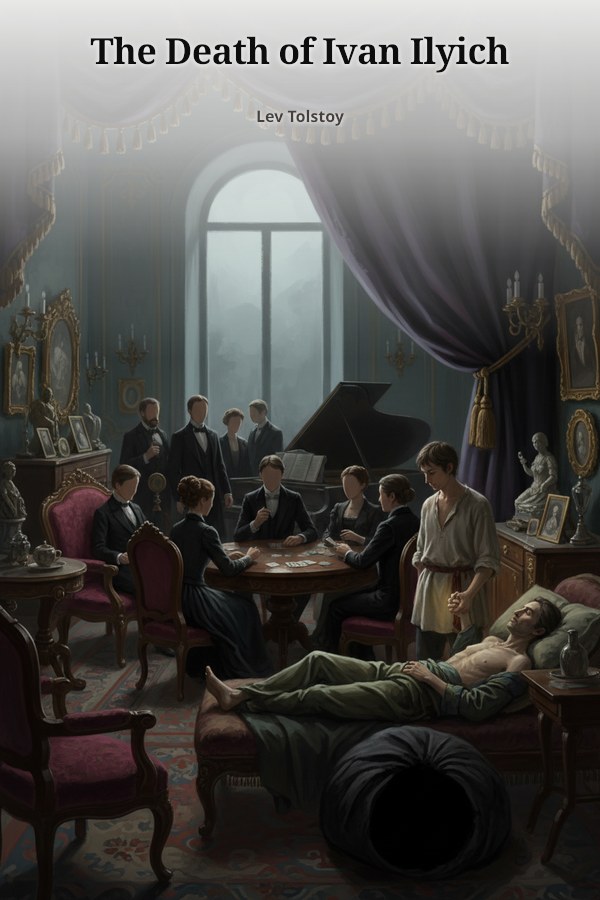
Leo Tolstoy's The Death of Ivan Ilyich is the story of a high-ranking judge who, after contracting a terminal illness, experiences a profound inner reckoning with death, reflecting on an ordinary, artificial life lived according to social norms.
The conflict between the shallow, materialistic, and status-driven life that Ivan Ilyich has led, as imposed by society, and the brutal, inevitable reality of death that suddenly confronts him. Against this external decay and insincere concern, the central conflict arises from him asking the question in the depths of his soul, 'Did I not live as I should have?' and his struggle to come to terms with death.
Tsarist Russia. St. Petersburg, various provincial centers, and primarily the house that Ivan Ilyich furnished with great care and ambition.
The last quarter of the 19th century (The story begins with the death notice in February 1882 and extends into the past).
The atmosphere of the story is gloomy, heavy, suffocating, and profoundly artificial. Ivan Ilyich's opulent and meticulously furnished home transforms into a dark prison—a tomb—that becomes restrictive alongside his illness. A formal and cold air of death and illness prevails, where everyone lies to each other and genuine emotions are concealed.
An omniscient third-person narrator who enters the narrative and possesses complete mastery over the characters' inner worlds. The narrator often deciphers the artificiality and ironic situations of the characters with a critical tone.
In the created universe, the formalistic rules of the bureaucratic elite, who emulate the aristocracy, apply. People do not evaluate each other by their feelings, but by their social and financial positions. While politeness, gentility, and appearing 'refined' are considered the greatest virtues, sincerity, illness, death, or suffering are accepted merely as uncomfortable details that should be covered up or ignored. Crying or showing signs of weakness is considered 'unseemly'.
The sociocultural norms of the status-obsessed Russian upper-middle-class civil servant/bureaucrat, striving for Westernization, prevail. Using French words, following Sarah Bernhardt's theatrical performances, buying expensive furniture, and 'trying to look like the wealthy' are the highest priorities of this class.
Characters are arranged at equal intervals on a circle; you can read the relationship type and dynamics by clicking on the lines.
Bir çizgiye tıklayarak ilişki detayını açın.
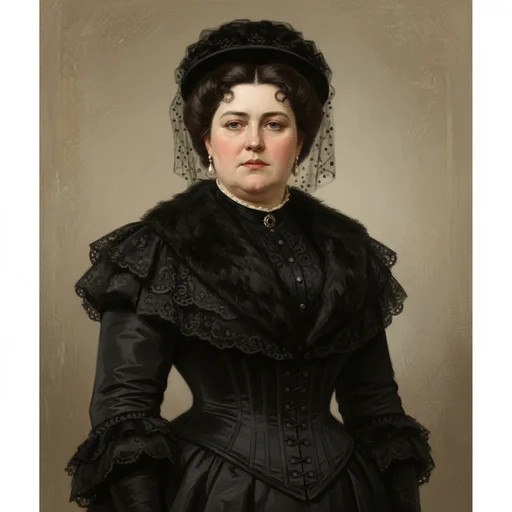
The passion that existed at the beginning of their marriage has quickly given way to mutual intolerance and a cold struggle for self-interest. When Ivan falls ill, his wife complains, attributing this illness to her husband's stubbornness; deep down, she wishes he would die soon, but she also dreads it because his salary would be cut off.
She decided that her husband was a malicious, troublesome man; she began to pity herself, to hate her husband, and to want him to die. But she did not want that either, because their salaries would be cut off.
Against the artificiality in the house, Gerasim is the only genuine bond. Gerasim is not disgusted by Ivan Ilyich's illness or the odor emanating from him. Because he does not lie and accepts mortality as natural, the bond between them becomes a pure contact of a suffering soul with an honest heart.
Only Gerasim did not lie. It was clear that only he understood the truth of the matter, saw no need to hide it, and openly pitied his wasting master.
Although they hold the status of 'best friends' in public, it is a bond based on habit rather than feelings. When the news of death is received, all that remains between them is the funeral formality and the calculation of job promotion.
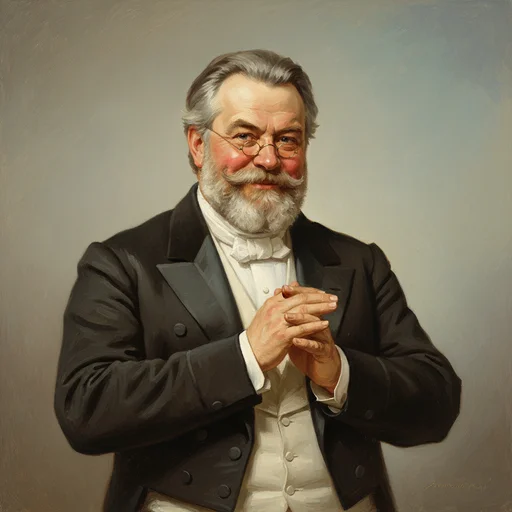
Pyotr Ivanovich was a friend of the deceased from the School of Jurisprudence... But the nearby death made him wonder what effects it would have on the transfers or promotions of his colleagues.
Within his family, his son is the only one who approaches his father's tragedy with his heart rather than his interests. A dynamic of silent compassion is established; Ivan draws his enlightenment before death from the pure helplessness and affection of this child.
He tapped his hand on the little schoolboy's head. The boy caught it, pressed it to his lips, and began to cry.
A cold and detached relationship. For his daughter in the prime of her life, her father's death is merely an annoying difficulty that disrupts her social life, her engagement phase, and her enjoyment of the theater.
His daughter entered the room, dressed up, her young body on full display. While Ivan Ilyich's body caused him infinite agony, she was flaunting her own.
They play a ceremonial game without explicit rules. Though they stage a scene over a widow's grief and the loyalty of a dear friend, their true concerns are pensions or card games to be attended.
In the course of conversation, she also spoke of the things she wanted to discuss with Pyotr Ivanovich. She wanted to know how she could receive money from the state upon her husband's death.
They represent the lightness of elite social life in contrast to the coldness of death. Schwartz's relaxed manner encourages Pyotr to escape the gloom of the setting and engage in a game (vint).
Schwartz was waiting for him... His posture and appearance said, 'Ivan Ilyich's funeral is not enough reason to disrupt the normal course of things.'
A hypocritical relationship centered on power and judgment. The doctor, just as Ivan Ilyich treated the defendants in his court, looks down upon his patient and uses formalistic lies to steer him away from the real issue, which is 'death.'
Everything was exactly as Ivan Ilyich applied so brilliantly to the defendants. The doctor, with equal success, summarized his 'reasoned judgment'; he looked at the 'defendant' over his spectacles with a triumphant... glance.
A practical alliance formed by two women tired of the father's whims and the atmosphere of illness enveloping the house. Both perceive this death as an injustice and a punishment meted out to them.
Liza asked her mother for the opera glasses. A slight argument broke out between mother and daughter over where they had put them.
A modern, shallow passion fed by youth, health, and worldly joys. With the reality of death on one side, their indifferent youth creates a bitter contrast to the tragedy of the dying man.
In a frock coat, hair curled, tightly held by a white collar... Fyodor Dmitrievich also entered, top hat in hand.