
Anonymous (Taketori Monogatari)
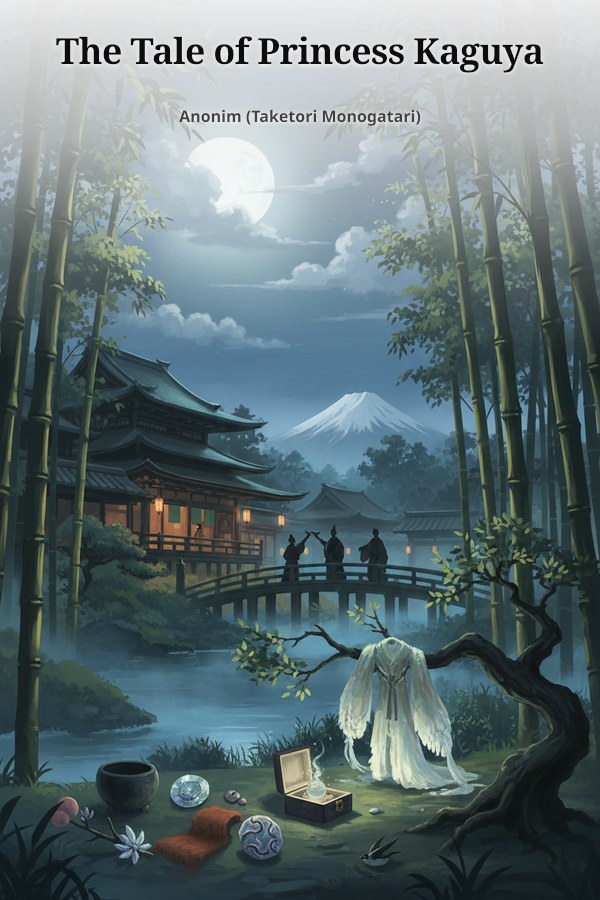
While working in the forest, an elderly bamboo cutter finds a palm-sized girl of extraordinary beauty inside a glowing bamboo stalk. Raised with love by the old man and his wife, the child grows into a young woman of unparalleled beauty within just three months, and she is named Kaguya-hime, meaning 'Shining Princess.' With Kaguya's arrival, gold begins to appear inside the bamboo the old man cuts, bringing great wealth to the family. Upon hearing of Kaguya's legendary beauty, nobles, including the five highest-ranking princes and ministers, line up to marry her. However, as Kaguya does not desire a worldly marriage, she sets impossible mystical tasks for her suitors. Some suitors resort to deception, while others lose their lives in pursuit of the quests; in the end, even the Emperor of the country fails to win Kaguya's love. Over time, Kaguya's secret is revealed: she is a princess from the Moon people, exiled to Earth as a punishment. When her sentence expires, she is forced to return to the celestial kingdom, leaving behind her beloved earthly family and memories.
The deep and insoluble tragedy between Kaguya's attachment to the earthly family who raised her with love and her necessity to obey her celestial origins and the laws of the Moon.
Japan; the Heian capital (Kyoto), the surrounding rural bamboo forests, and the imperial court.
Heian Dönemi başları (yaklaşık 9. yüzyıl)
A mystical, melancholic, poetic, fairytale-like atmosphere, with intermittent satirical undertones that expose the flaws of human nature.
An omniscient third-person narrator that at times uses a sarcastic tone to critique the flaws of characters, particularly the arrogant nobles, yet remains deeply empathetic and poetic when conveying Kaguya's sorrow.
Earth is subject to the rules of early Japan, where Shinto and Buddhist philosophies intertwine, and magic and supernatural events can occur. Moon inhabitants are free from pain, illness, and worldly emotions, but when they commit a sin, they can be exiled to Earth, where these emotions and pain exist. When celestial beings descend to Earth, they cannot be resisted, and once the 'Hagoromo' (feathered robe) is worn, all worldly memories are erased.
Heian period court culture, marriage rituals, the tradition of men courting women through written poetry, and the Monogatari (tale-like narrative) structure common in early Japanese literature.
Characters are arranged at equal intervals on a circle; you can read the relationship type and dynamics by clicking on the lines.
Bir çizgiye tıklayarak ilişki detayını açın.
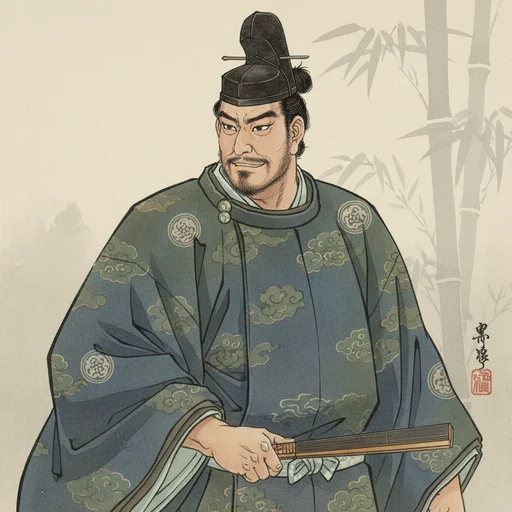
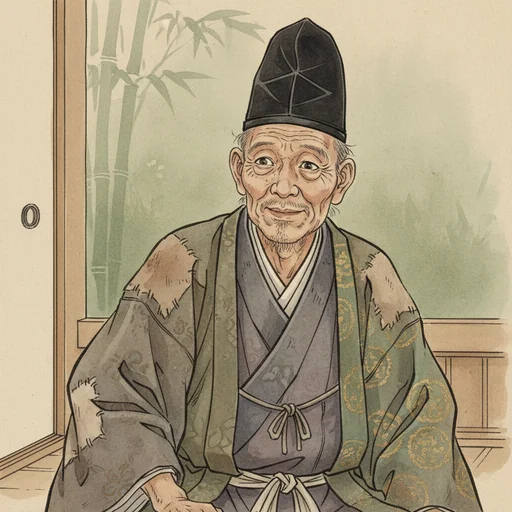
The old man loves his daughter more than anything on Earth, but he believes her well-being depends on status and a wealthy marriage. Kaguya resists these traditional pressures from her father but tries not to hurt him because of her love for him.
When Kaguya reveals she will return to the Moon, the bamboo cutter weeps blood and begs the celestial beings not to take her away.
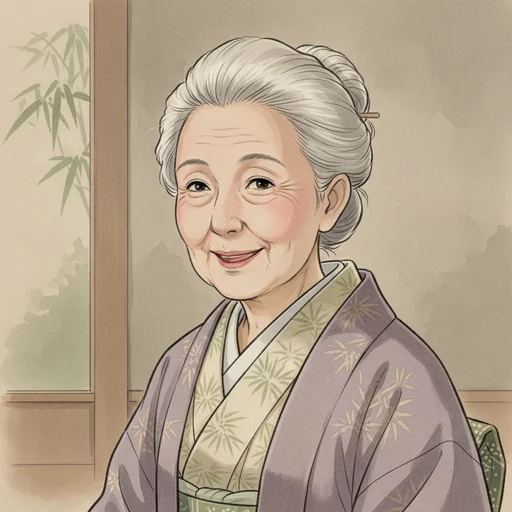
An extremely affectionate and unconditional bond. Ōna cradles and cherishes Kaguya like a mother from her infancy, prioritizing her daughter's happiness and health over palace intrigues.
When the envoys arrive from the Moon, Ōna hugs her daughter, trying to shield her from the celestial beings while sobbing uncontrollably.
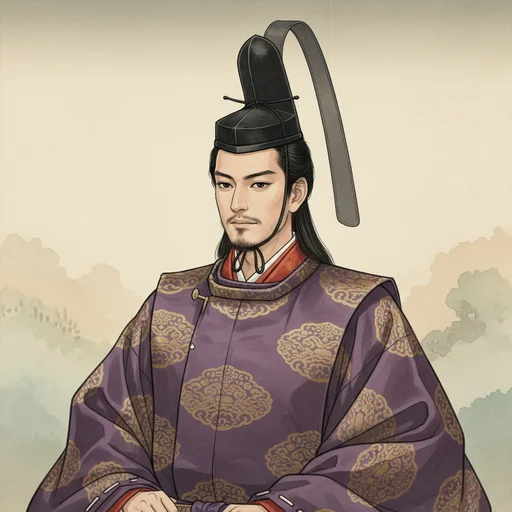
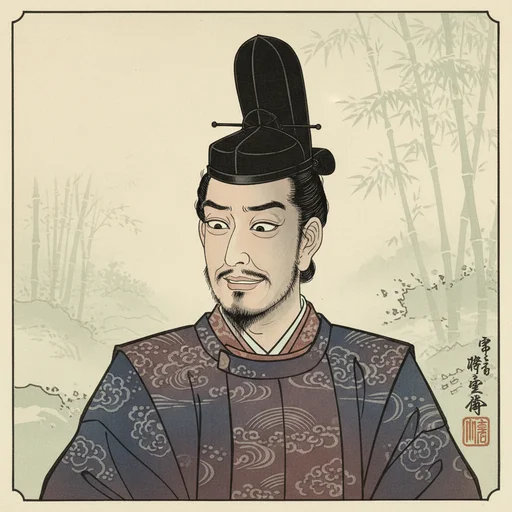
Due to his love for Kaguya, the Emperor wishes to bring her to the palace, but when rejected, he respects her will rather than using force. A years-long, poetic, and spiritually respectful correspondence begins between the two.
Kaguya leaving a farewell letter specifically for the Emperor and the elixir of immortality just before her departure.
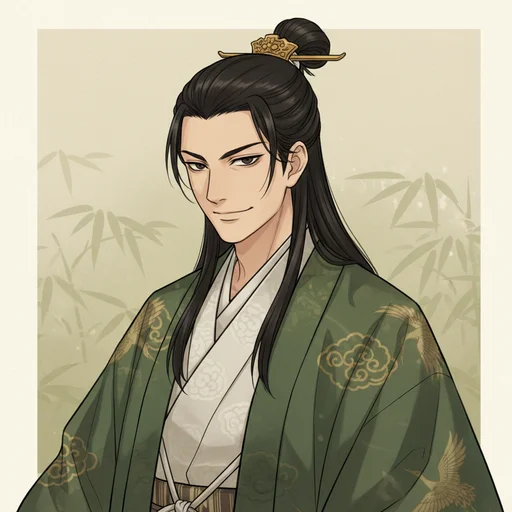
Kaguya senses his insincerity from the very beginning and assigns him an insurmountable task. When the prince tries to deceive her with a forgery, Kaguya takes pleasure in unmasking him and exposing his lie to the entire court.
When the jewelers come to the Prince's palace demanding payment, Kaguya joyfully returns the fake branch.
Ishitsukuri's laziness and dishonesty lead Kaguya to adopt a completely cold and contemptuous attitude toward him. Even though the prince shamelessly tries his luck again, Kaguya ignores him completely.
Kaguya noticing that the soot-covered bowl lacked the sacred light of Buddha and returning it with a poetic mockery.
Marotari is not a fraud like the other suitors; he dies tragically while truly attempting to fulfill his quest. Kaguya feels genuine sorrow for his death and realizes the danger of worldly ambitions.
After receiving the news of Marotari's death, Kaguya writes a mournful poem commemorating his efforts and fate.
Minister Abe no Miushi is an arrogant nobleman who believes he can solve any problem with money. Kaguya throws his purported fire-rat skin into the fire, turning both the skin and the man's pride into ash.
Kaguya ordering that the fur be thrown into the flames and rejecting the man as it instantly burns to ash.
The Emperor offers the old man rank and nobility in exchange for bringing Kaguya to the palace. Although the old man submits to the Emperor's authority and tries to convince his daughter, he remains helpless against Kaguya's resistance.
The Emperor coming unannounced to the old man's house, attempting to capture Kaguya under the guise of a hunting trip.