

The White Ship — 8 karakter
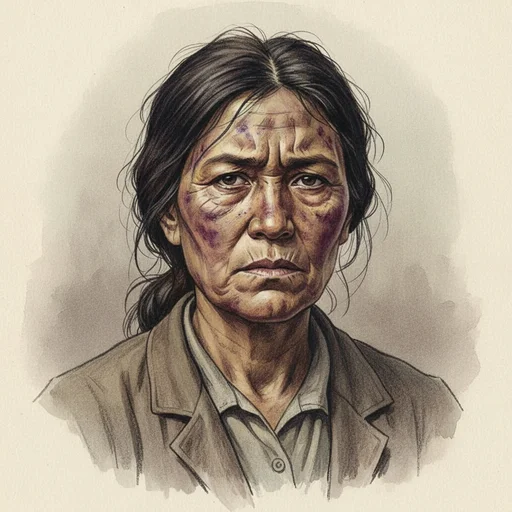
Bekey Teyze
She is Mümin Dede's own daughter and Orozkul's wife. Her soul has turned dark due to the humiliation of not being able to have children for years, the 'barren' label in the traditional Kyrgyz structure, and the relentless beatings she receives from her husband. She cannot manage to escape the miserable life she leads; day by day, she becomes accustomed to her husband's tyranny and becomes a partner in evil by participating in his crimes through alcohol.

Cengiz Aytmatov
Chinghiz Aitmatov was born on 12 December 1928 in the village of Sheker, in the Talas valley of Kyrgyzstan. His father, Torekul Aitmatov, was one of the first Kyrgyz communists and a party official; his mother, Nagima, was of Tatar origin. Part of his childhood was spent in Moscow, where his father was studying. In 1937 his father was arrested as an “enemy of the people” and shot in 1938. The family returned to the village, and during the war years, at barely fourteen, the boy worked as a clerk at the village soviet. In 1946 he began training as a veterinarian, graduated from the agricultural institute in Frunze in 1953 and worked for a time as a livestock specialist. His first stories appeared in 1952. Between 1956 and 1958 he studied at the Gorky Literature Institute in Moscow; Jamila, which came out of those years, made his name overnight. From 1959 he served as Pravda's correspondent in Kyrgyzstan. In 1963 a volume gathering his tales of the mountains and the steppe brought him the Lenin Prize; Mother Earth appeared the same year. With The White Ship (1970) he brought to maturity a manner of telling in which legend and reality are woven into one another. In The Day Lasts More Than a Hundred Years (1980) he tied the legend of the mankurt, the slave whose memory has been erased, to the forgetfulness of his own age. At the end of the eighties he became one of Gorbachev's advisers, and later served as ambassador in Luxembourg and Brussels. He wrote in both Kyrgyz and Russian and often translated himself. He carried the legends, laments and animal tales of the oral tradition into the modern novel, turning an ordinary life on the steppe into a universal question of conscience. He died in Nuremberg on 10 June 2008 and was buried at the Ata-Beyit cemetery, which he had helped to found and where his father's remains lie.
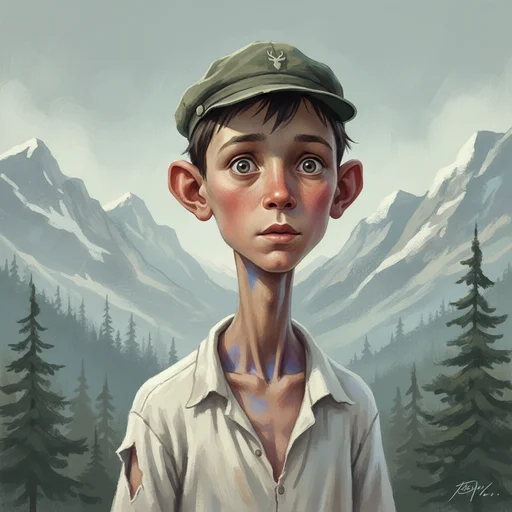
The Child
A forsaken child who has finished his seventh and entered his eighth year, left by his parents to live with his grandfather in the remote San-Tash valley. His greatest passion is looking into the distance with his binoculars and building a world for himself by talking to rocks and plants. Defying the loveless, selfish adults of the three families around him, he keeps his innocence and the legends told by his grandfather alive in his soul. With the abuse shown to his grandfather and the tragic slaughter of the Mother Deer legend, he rejects the real world. Staying true to his dream of becoming a fish to reach a white ship, he chooses his own tragic rebellion in the stream waters.

Kulubeg
He is one of the truck drivers who come to transport stone to the mountains. A proud, honest, and strong young man who has completed his military service, Kulubeg represents a new generation loyal to the 'Bughu' (Mother Deer) lineage. By surviving difficulties after being stranded in a storm, his honesty, and his imaginary (and partially real) scenes of putting Orozkul in his place, he has become the ideal hero in the child's mind.

Grandfather Mumin
He is an old man known to the village elders as 'Nimble Mumin,' recognized for his quick hands, industriousness, and endless good intentions. He has taken the child into his care. Despite all his goodwill and hard work, he submits unconditionally to Orozkul's bullying so that his daughter Bekey's unhappy marriage will not end. He pays the price for a lifetime of allowing himself to be crushed; in the final scene, under the threats of bullies, he kills the Horned Mother Deer—the cultural myth he believes in most—with his own hands. This becomes the irreversible collapse of his dignity and soul.

Nine
Mümin Dede's second wife, a sour-tempered, loveless woman. She takes every opportunity to make the child feel that she is not his real mother. With her constant nagging and anger at home, she corners Mümin Dede completely. She selfishly ignores Orozkul's bullying and the oppression of his daughter just to keep the household order (Mümin working and bringing in money) running.

Orozkul
He is the boss/head guard of the San-Tash protected area. He is an immoral, tyrannical, and rude man who legally represents the state but acts as a lawless feudal lord in practice. He tries to suppress the void and lack he feels in his inner world due to not having children by beating his wife and terrorizing those around him. Nature is for him merely an object to serve his own position; he brutally destroys the forest and the deer representing the legend just to fawn over his guests and demean his father-in-law.
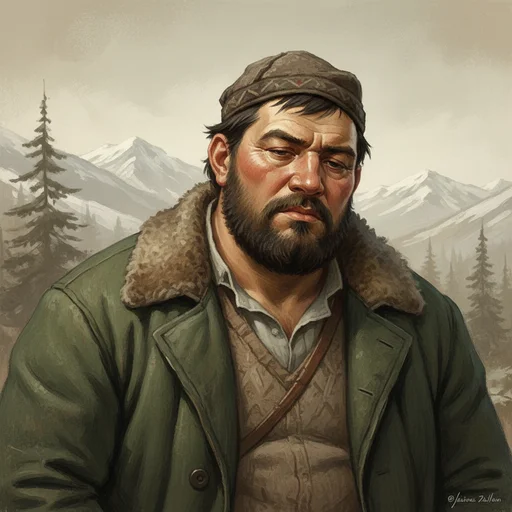
Seydahmet
He is the head of the other woodsman family in the house, a man who loves to shirk work, physically strong but lazy and indifferent. He just flows with the situation; he satisfies his ego by fawning over Orozkul while mocking Mümin.