
Cengiz Aytmatov
In Chingiz Aitmatov's work of the same name, "The White Ship" symbolizes the innocence and hope of a young boy who seeks refuge in his dreams to escape from lovelessness and tyranny. The work is a tragic masterpiece that explores modernization, the corruption of traditions, and the conflict between humanity and nature.
The inevitable clash between the child's pure, moral, and imaginative world and the savage, greedy, and loveless real world represented by Orozkul. This conflict reaches its peak when Old Mumin is caught between good and evil and chooses to submit.
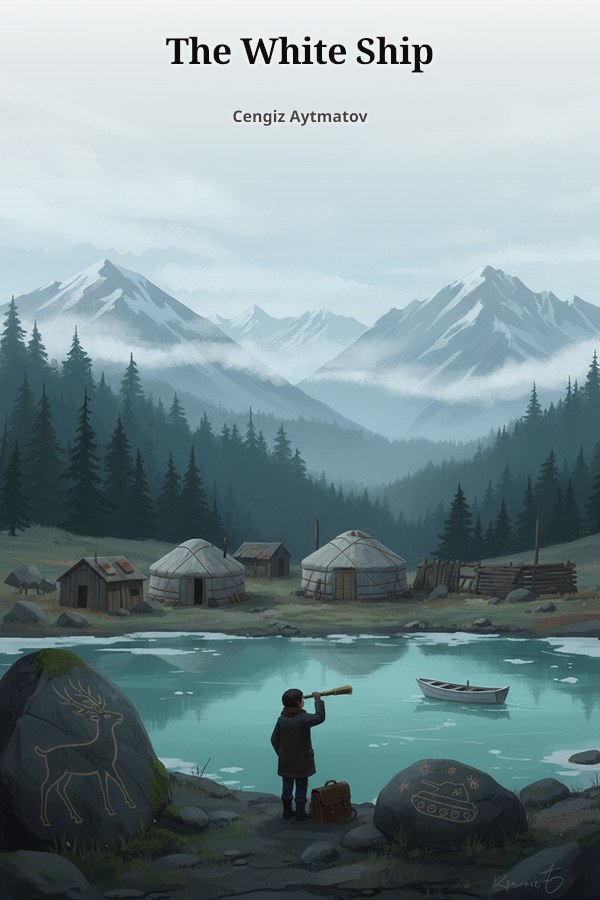
The desolate San-Tash valley near Issyk-Kul in Kyrgyzstan, as depicted by Chingiz Aitmatov, surrounded by steep mountains and pine forests, where only three families live.
Mid-20th century, the Soviet Union era (the years of collective farms, state farms, and references to Magnitogorsk).
A sad, lonely, melancholic, and increasingly suffocating atmosphere where a nature filled with fairy-tale and poetic beauty clashes with a cruel and corrupted adult world.
A third-person omniscient narrator, filtered largely through the rich, legendary, and innocent inner world of the 'Child'; an epic tone that occasionally offers direct advice to the reader (such as during the legend of the Horned Deer Mother).
In the San-Tash valley, life is governed by the seasons, the harsh conditions of nature, and the tyrannical rules of forest ranger Orozkul. A ruthless hierarchy prevails, where the strong crush the weak and self-interest triumphs over legend and virtue. Yet, in the eyes of the child, the world is also subject to the compassionate rules of the meadow grasses, the clouds, and the Horned Deer Mother.
A transitional period where the nomadic and nature-integrated cultural roots and legends (the Bugu tribe) of the Kyrgyz people intersect with the bureaucratic, opportunistic structure of the Soviet system; a time when people begin to forget the names of their ancestors and their own consciences.
Characters are arranged at equal intervals on a circle; you can read the relationship type and dynamics by clicking on the lines.
Bir çizgiye tıklayarak ilişki detayını açın.
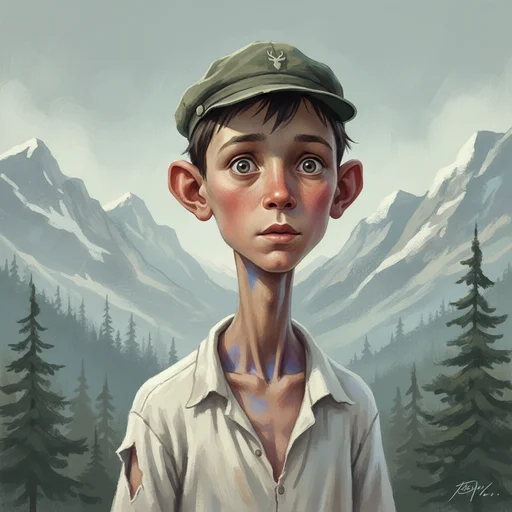
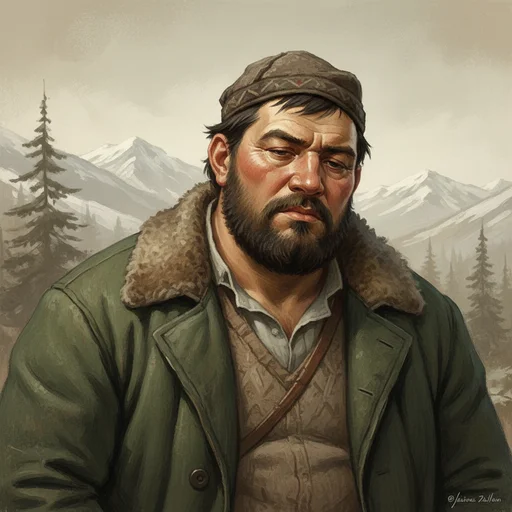
The child feels great love and gratitude toward his grandfather; the grandfather is his only protector and his only hope in life. However, the grandfather's spinelessness before Orozkul and his ultimate betrayal of the legend (the Horned Deer Mother) creates an irreparable disillusionment in the child.
The old man had gently placed his calloused, heavy hand on the boy's head. The boy suddenly felt something lump in his throat.
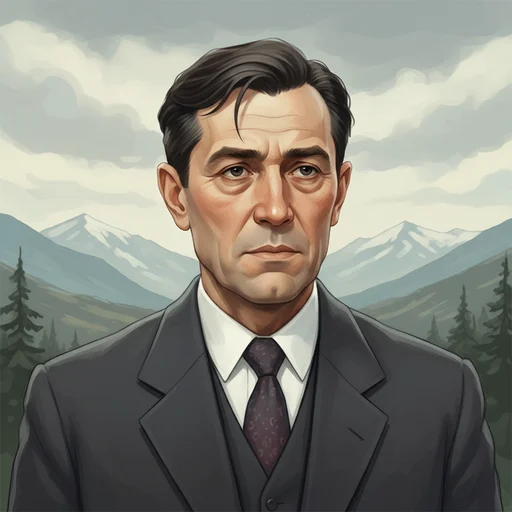
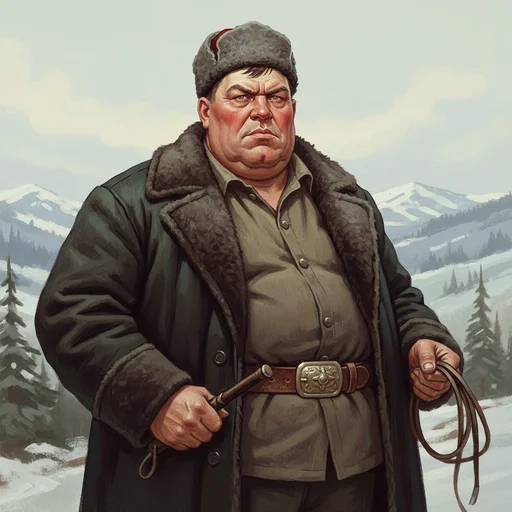
Orozkul views the child as surplus, a burden of his infertile wife and wretched father-in-law. The child, in turn, is terrified of him and attempts to suppress the helpless rage he feels against Orozkul's abuse by punishing him in his own imaginary world.
To hell with these mountains, these forests... and that brainless old codger, and that little runt he never lets out of his sight!
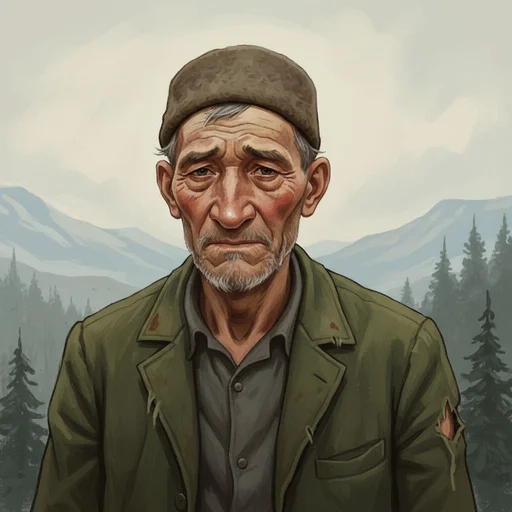
Orozkul holds the rank of superior, while Mumin is an elderly employee working like a slave. Mumin silently submits to all of Orozkul's insults, injustices, and cruelty so that his daughter Bekey's marriage does not fall apart; he tramples upon his own personality and beliefs.
Orozkul did not consider him a human being at all; he would insult him and humiliate him by saying, 'I'm firing you!'
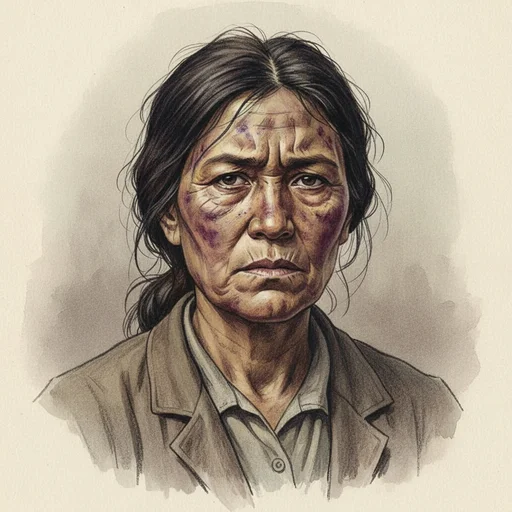
Because they have no children, Orozkul constantly blames his wife, gets drunk, and beats her mercilessly. Aunt Bekey is an unhappy woman who has submitted to her fate and, even after being beaten, brings him vodka to appease her husband.
The man would beat her until she was battered to a pulp. After receiving the beating, she would set another half-liter bottle in front of him.
Mumin breaks his heart over his daughter's misfortune. For the sake of his daughter not being left alone and not being kicked out of her husband's house, he disregards the pride of a whole lifetime and becomes a slave to Orozkul.
If he could just raise her before he died, that happiness would be enough for him... He endured everything because his daughter was barren.
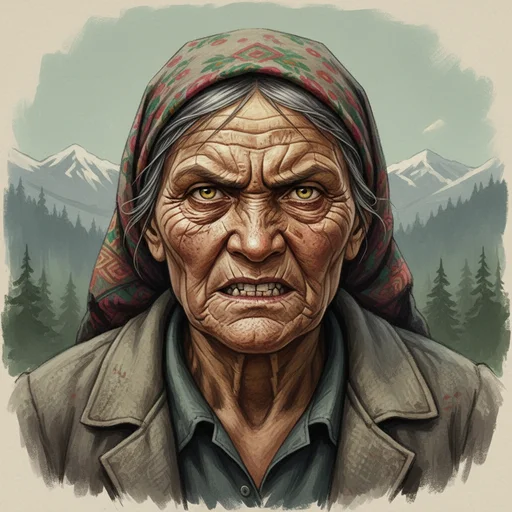
The step-grandmother sees the child as a 'stranger' who is not of her own blood. The only reason she tolerates him is because of her husband, Mumin; she constantly scolds the child, unable to bear his school bag or his existence as the cause of their poverty and burden.
His grandmother would say he was a stranger, a nobody. No matter how much you fed a stranger, he would remain a stranger.
Bikey is an authoritarian and loveless woman who constantly interferes, nags, and both despises her husband's excessive submissiveness toward Orozkul while simultaneously supporting his servility so that his salary is not docked.
You foolish husband, you don't know how to act sensibly toward people, at least keep your mouth shut. Your life is in his hands.
Kulubeg, a young and handsome truck driver, is the reflection of legendary heroes in real life in the child's eyes. The child admires his strength and kindness, and imagines him as the only force capable of defeating Orozkul.
He began to dream that if only he had an older brother like him, he would not be afraid of anyone or anything.
Seydahmet is lazy, shirks work, and survives by fawning over Orozkul as a display of power. Orozkul turns a blind eye to Seydahmet's laziness because he validates his own authority.
Orozkul could not fire him. Because he was obedient. He did not interfere with anything, nor did he argue with anyone.
With the arrogance born of his youth and physical strength, Seydahmet mocks Grandpa Mumin. He equates the old man's good intentions with being a fool.
Seydahmet was laughing heartily. The thought of Mumin sitting in the same row as his grandson seemed very funny to him.