

Turkic Mythology — 7 karakter
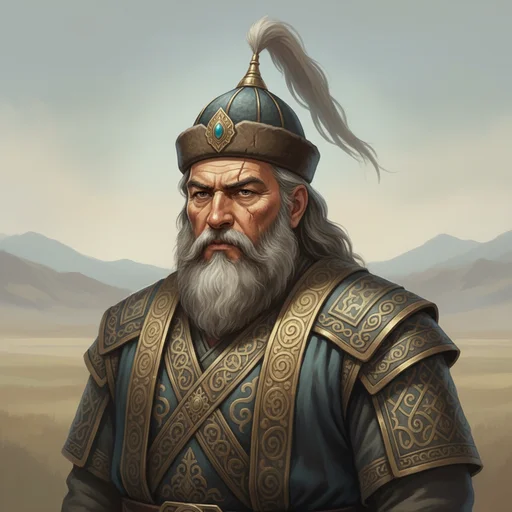
Alp Er Tunga
Alp Er Tunga is one of the greatest Turkic khans, commanders-in-chief, and national heroes, holding a place in both historical reality and mythological legend. In his time, he united the scattered Turkic tribes to build a massive empire, instilling in them a sense of justice, prosperity, and invincibility. In historical sources, he is known for his epic wars against the Iranians (as Afrasiyab in the Shahnameh) and for his military genius and courage. He is a leader who instilled fear in his enemies and confidence in his friends; he was as wise in his decisions at the assembly (toy) as he was in his brilliance on the battlefield. Throughout his life, he represented virtue, honor, and patriotism. However, his life did not end with a heroic death on the battlefield, but tragically through a treacherous and cowardly poisoning trap set by his enemies. His death was not merely the passing of a king; it was mythologized as the end of an era, the darkening of nature, and the weeping of the heavens. The famous 'Lament for Alp Er Tunga' in the Divan-ı Lügati't-Türk became a monument that has carried the cosmic devastation caused by his death, the despair of the tribes, and the loss of a great value from tongue to tongue for centuries. He is the most magnificent pinnacle of the archetypes of the just ruler, the invincible warrior, and the tragic loss in Turkic culture.
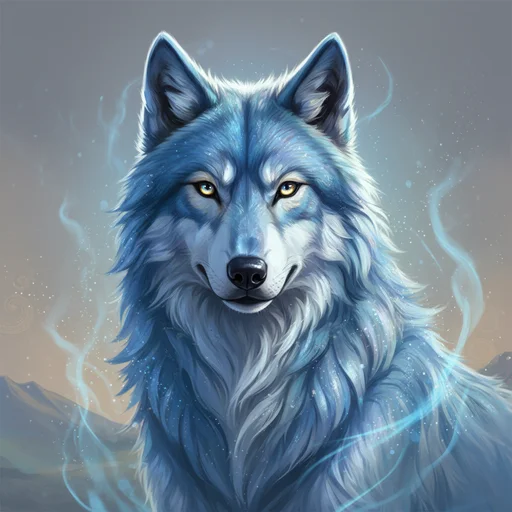
Bozkurt Asena
Asena, the Grey Wolf, is a sacred mother, a protective spirit, and a divine guide in Turkish epics, particularly in the legends of the Creation and Ergenekon, who ensures the survival and resurrection of the Turkic race. According to the legend, the only survivor of a Turkic tribe that was suddenly raided and entirely massacred by an enemy clan is a ten-year-old boy whose arms and legs were severed and who was abandoned in a swamp to die. Asena, a female wolf who descended from the heavens as a blessing from Sky Tengri, finds the child, feeds him with meat and milk, and heals his wounds by licking them. When enemy soldiers try to find and kill the boy, Asena takes him and escapes to a paradise-like valley (or a cave in some accounts) within the Altai Mountains where no one can reach them. As the boy grows, she mates with him and gives birth to ten sons. These children grow up, marry outside women, and become the founding ancestors of future great Turkic states, especially the Göktürk khans. Asena is not just a biological ancestor; she is the embodiment of survival in harsh natural conditions, of freedom, of wildness, and of the protective will of Sky Tengri. Whenever Turkic tribes are trapped in narrow passes, she always returns as a blue light or a pioneering guide.
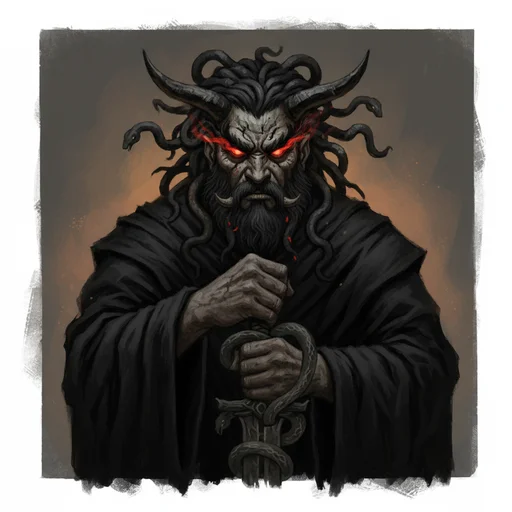
Erlik Khan
Erlik Khan is the absolute ruler of the underworld, darkness, diseases, sins, and evil in Turkish and Altai mythology. Initially flying over the waters of creation with Ülgen (or Kayra Han) and playing a role in the process of creating the world, he was punished and deprived of the source of light due to his self-worship, arrogance, and belief that he was equal to Ülgen. After this fall, he established a dark kingdom in his gigantic palace made of black mud and iron at the bottom of the nine-layered underworld. He rides a black horse or ox. He constantly sends diseases, droughts, and disasters to humans; he releases countless evil spirits and demons (tricksters) to the surface to drag the souls of the deceased to his dark realm. He has never forgiven humanity and has sworn to lead them astray from the right path, using their vulnerabilities to drive them to catastrophe. Shamans often have to make dangerous bargains with him to cure fatal diseases or save lost souls, descending into the underworld to offer him bribes and sacrifices (usually animals with black blood). Behind his frightening appearance lies a cunning intelligence, insatiable jealousy, and eternal tragedy.
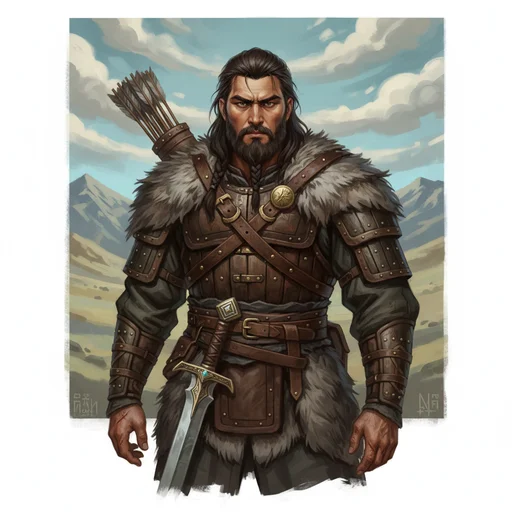
Er Töstük
Er Töstük is the protagonist of one of the most ancient heroic epics of Turkish-Altai mythology. Born as the youngest of nine brothers, he embarks on a dangerous journey alone to find the herds his father lost years ago. This physical search inevitably leads him to the underworld, the dark realm of Erlik Khan filled with demonic creatures. He undergoes countless tests in the underworld, fighting tooth and nail against giant snakes, dragons, and demons. His journey is less of an ordinary heroic tale and more of a shamanic initiation, a ritual of death and rebirth. When stranded in the underworld, he earns the absolute loyalty of the legendary bird Karakuş by saving its young from a dragon. While riding on Karakuş's back to reach the earth, he demonstrates a sacrifice so great that he cuts and feeds his own flesh to the bird. He symbolizes humanity's will, resilience, and longing for light in the face of supernatural evil.
Tepegoz
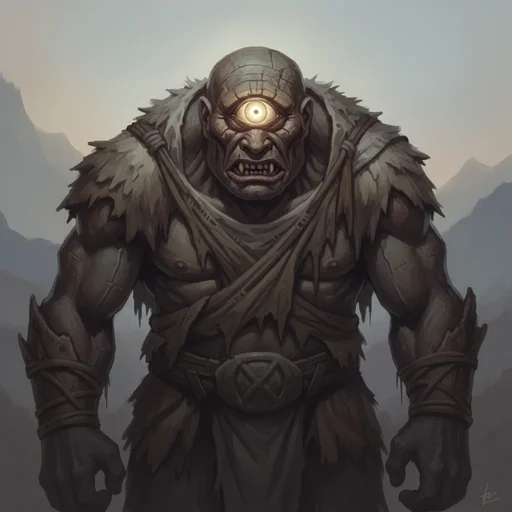
Tepegoz is a single-eyed, giant cannibal monster from the Book of Dede Korkut who brought great destruction to the Oghuz clans. He was born from a forced and illegitimate union between a shepherd and a fairy in the forest; his fairy mother abandoned him to nature after cursing him to be a plague upon humanity. When he was first born, he was merely a formless lump of flesh, out of which emerged a terrifying creature with a single eye in the middle of its forehead. Although adopted by Aruz Koca, one of the Oghuz lords, and brought into human society, his dark and savage nature prevailed; he was ostracized from society for eating the noses and ears of children. Retreating to the mountains, he transformed himself into a figure of invincible terror. With skin that no arrow could pierce or sword could cut, he terrorized the Oghuz land by demanding two people and hundreds of sheep as tribute every day. He is both a victim of his own dark origin and exclusion, and the embodiment of an unstoppable, wild nature. Ultimately, he is killed by his milk-brother Basat—who was also raised in Aruz Koca's house—by having a red-hot iron rod driven into his eye, his only weak point, due to his arrogance and gluttony.
Ülgen
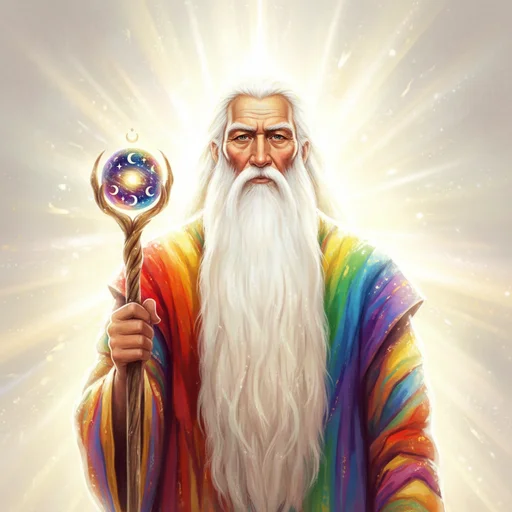
Ulgen is the supreme god of goodness, light, life, and the sky in Turkish and Altai creation mythologies. He sits upon a golden throne that shines on the Golden Mountain, on the sixteenth floor of the Sky, which is the highest layer of the universe. In some accounts, he is the son of Kayra Han, and in others, he is the creator supreme god himself. He taught humans how to ignite the fire of life and offered them the wisdom, abundance, and protection needed to survive. It is told that he shaped the world alongside Erlik in the early stages of creation, but after Erlik grew arrogant and rebelled, he exiled him to the underworld. He governs the cycle of the sun, moon, stars, and weather phenomena; he is the guardian of justice and divine order. However, instead of interfering directly in worldly affairs, he helps humanity through his messengers, guardian spirits, and heroes. He is the final destination of the spiritual journeys of shamans and the source of absolute light to whom prayers and sacrifices are offered. He serves as a divine shield that prevents evil from completely taking over the world.
Umay Ana
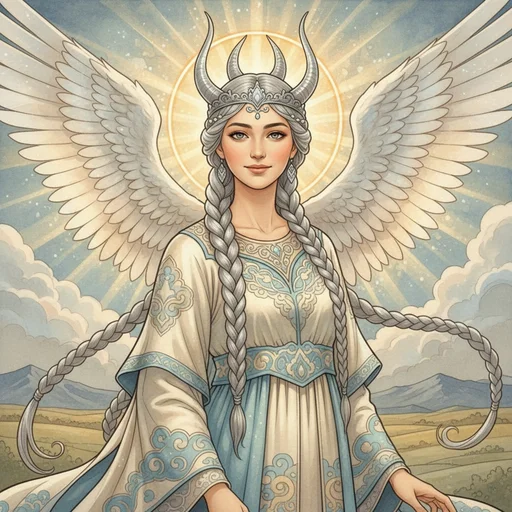
Umay Ana is the protector goddess of fertility, innocence, children, mothers, and domestic animals in Turkish and Altai mythology. She is the most important and beloved feminine power of the Sky Tengri belief, and the cosmic symbol of the source of life and compassion. She is depicted as a radiant, winged, and extremely beautiful woman; she is believed to roam the branches of the World Tree (Bay Terek), in the sunbeams, or in the moonlight. She breathes a soul (kut) into babies while they are still in their mother's womb, and after they are born, she stands by them like an invisible guardian, protecting them from illnesses, evil spirits, and accidents. According to legend, if a baby smiles in their sleep, it is a sign that Umay Ana is playing with them and showing them love; however, if Umay abandons the child, it is believed the child will become defenseless, fall ill, and be stolen by Erlik's spirits. She protects not only humans but also the awakening of nature, the sprouting of seeds, and the multiplication of herds. She approaches warriors with maternal compassion and, in epics, appears to heroes in their difficult moments to provide strength, direction, and hope. She is the purest representation of the sanctity of womanhood, motherhood, and life energy in Turkish culture on a mythological plane.