

Homeland or Silistra — 4 karakter
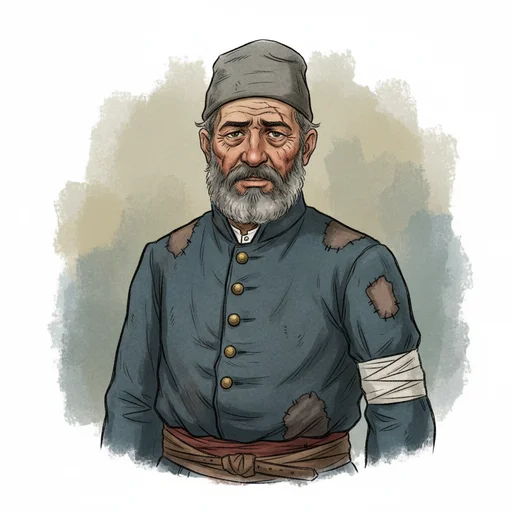
Abdullah Çavuş
An elderly sergeant who has seen it all in the army, serving under Miralay Sıdkı Bey. As a man who tore down the veils of solemnity regarding death years ago, he has become completely hardened to the horrific conditions of the front. During the biggest explosions or life-threatening situations, he takes the dramatic weight out of the environment and inspires courage with his famous line, 'Will the apocalypse strike?'. He accompanied the volunteer İslâm Bey during the infiltration operation and saved him from the brink of death.
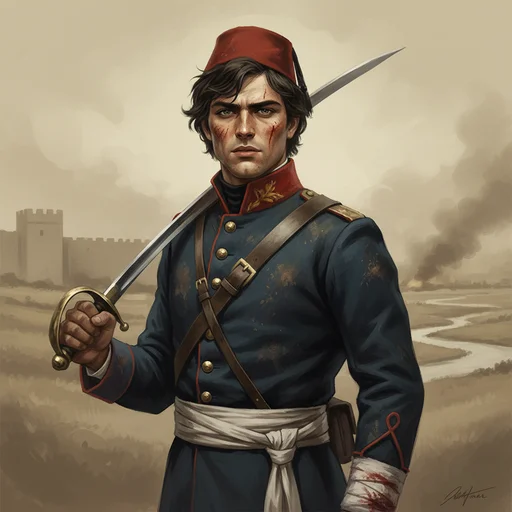
İslâm Bey
İslâm Bey is an idealistic young gentleman who sees that the homeland is in danger and rushes to war as a volunteer. Despite the great love he feels for his beloved Zekiye Hanım and having just bid her farewell, he considers it dishonorable to sit at home while the enemy waits at the border. Under cannonballs and bullets, he instills love for the homeland in his friends with the flair of an orator. Leading dangerous missions as a volunteer and not hesitating to blow up the enemy arsenal at the cost of his life, he is the main hero who bears the patriotic mission of the play. His place in the story is to teach that the homeland is more precious than any personal attachment.

Sıdkı Bey (Ahmed Bey)
He is the highest commander with the rank of Miralay (Colonel) at the siege of Silistre fortress. His real name is Ahmed. He was sentenced to death for killing the son of a disgraceful nobleman to protect his honor, and escaped thanks to his friend. Even though he is a deserter from the martial court, in order not to avoid defending the homeland, he rejoined the army as a rankless private (under the name 'Sıdkı') and climbed back to the rank of colonel thanks to his many years of sacrifice. Throughout the front, he conveys his unwavering willpower and wisdom to the youth. He encounters the girl (Zekiye) he believes to be the family he thought had died years ago, without realizing it at the front.
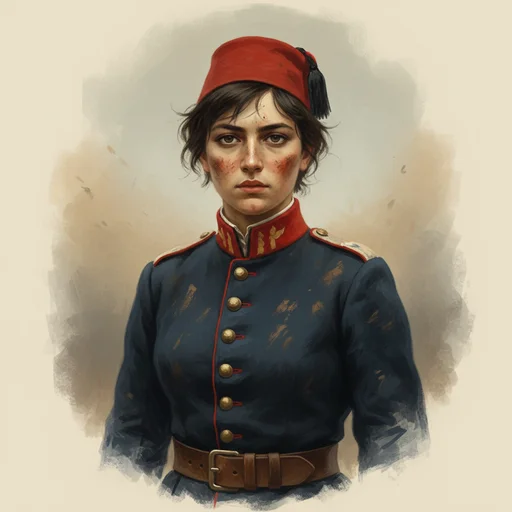
Zekiye Hanım
She is a fragile young girl who knows her father to be dead and was raised in a protected home by a nanny. However, her intense love for İslâm Bey and her patriotic feelings take her beyond the boundaries of her home. When İslâm Bey goes to war, instead of staying behind and living in passive mourning, she cuts her hair, wears men's clothing, calls herself 'Âdem', and joins the volunteers. She cares for the wounded on the battlefield and wants to follow İslâm when he is in danger. Throughout the play, the character shatters the passive limits of Ottoman women and evolves into a warrior symbolizing that the defense of the homeland is the duty of everyone, regardless of gender.