

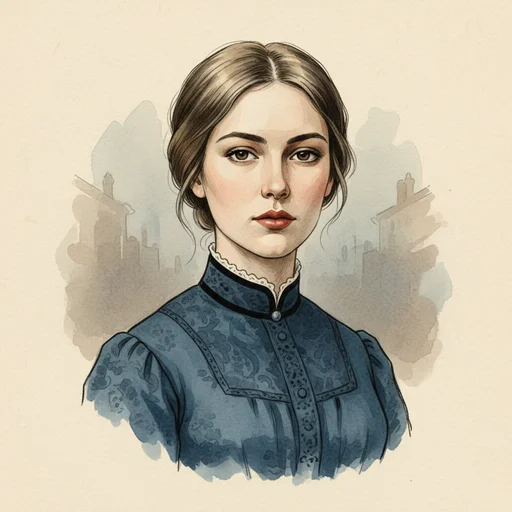
Dunya, Raskolnikov's sister, stands out for her beauty, high character, unwavering virtue, and deep love for her brother. She is selfless enough to agree to a loveless marriage with the arrogant and despicable Lujin to save her family from poverty and ensure Raskolnikov can continue his education. A statue of pride that resisted Svidrigaylov's dark obsessions and slanders, Dunya is strikingly similar to Raskolnikov in her intelligence and rebellion against injustice. At the end of the book, she rids herself of the trouble caused by her self-sacrifice by declaring her independence and turning toward the honest love of Razumihin. She symbolizes the honorable woman who does not sell herself, but resists for the sake of those she loves.
She grew up in a relatively poor background and worked as a governess in households. While working at Svidrigailov's mansion, she was slandered due to his dishonorable and immoral propositions, her honor was unjustly stained; later, she was vindicated when the truth was understood by his wife, Marfa Petrovna.
Tall, extremely well-proportioned, and healthy. She has dark auburn, shiny hair; and dark, proud eyes that brim with infinite kindness and intelligence. Her face displays a magnificent, arrogant beauty, characterized by its resemblance to Raskolnikov and her slightly protruding, lively reddish lower lip.
Pyotr Petroviç Lujin
Her future husband, whom she loathes because he treats her like a slave bought with money.
Dmitri Prokofiç Razumihin
Her husband, in whom she found love and whom she views as her brother's loyal guardian.
Rodion Romanoviç Raskolnikov
Standing like her reflection, her greatest disappointment and at the same time her only passionate family bond.
Arkadiy İvanoviç Svidrigaylov
The nightmare who disparaged her honor, but whom she faces with his own deadly obsession.