
Fyodor Dostoyevski
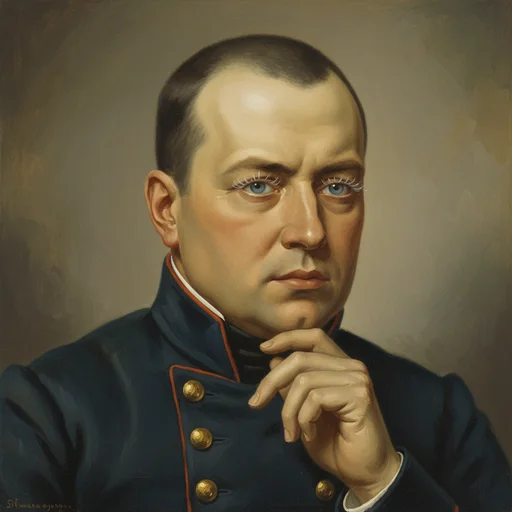
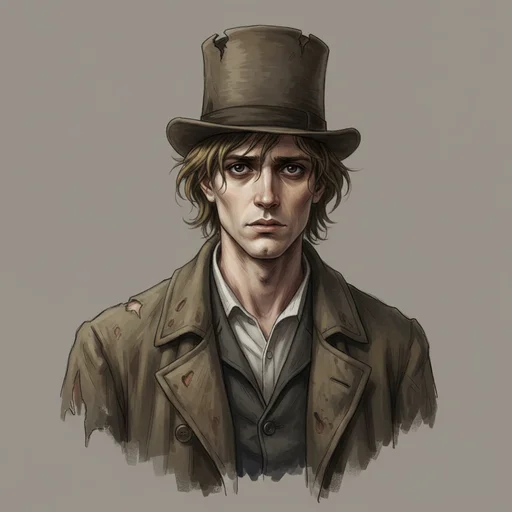
Fyodor Dostoevsky's world-famous masterpiece, Crime and Punishment, explores the murder committed by Raskolnikov, a poor former law student, based on his "superman" theory, and the subsequent deep remorse, psychological crisis, and moral dilemmas he experiences. Set against the backdrop of Saint Petersburg, the novel deals with themes of individual guilt, justice, morality, and conscience.
At the center of the work lies the story of a proud young man who murders a pawnbroker to prove that he is an 'extraordinary man' not bound by ordinary rules. This crime, committed by purely rational justification, drags the character into a moral deadlock and paranoia. As Raskolnikov collapses under the conflict between theory and human nature, he can only achieve spiritual salvation by accepting suffering and repenting under the guidance of Sonya, the pure representative of love, sacrifice, and faith.
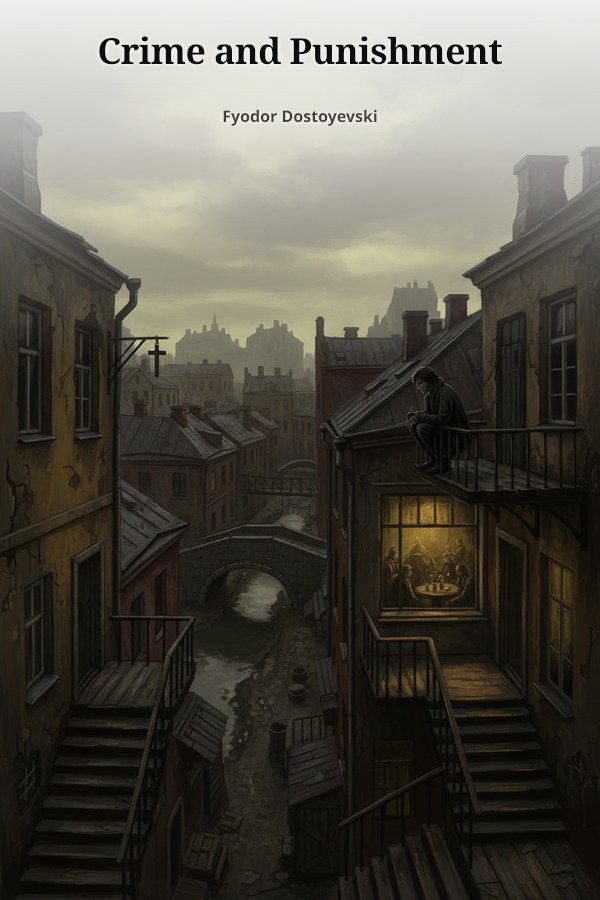
Tsarist Russia; the gloomy city of Petersburg with its narrow streets, filthy courtyards, bridges, embankments, and taverns. In the epilogue, a prison and the steppe in Siberia, on the banks of a vast and desolate river.
The second half of the 19th century (the 1860s), a period stretching from a stifling hot July to a year and a half later, culminating in the arrival of spring in Siberia.
A dark, suffocating, wretched, and malodorous atmosphere of Saint Petersburg. Gloomy attics, narrow and dirty staircases, and the oppressive, intoxicating air of taverns create an intense, sickly environment that reflects the characters' internal constriction and spiritual crises.
The book is written by an omniscient third-person narrator; however, the story is conveyed to the reader with deep psychological realism almost entirely through the mind, delusions, monologues, and the limited/distorted perspective of the protagonist, Raskolnikov.
Theories designed by logic and pure reason are doomed to fail against the reality of human nature, which is rooted in mercy and conscience. No noble goal can justify shedding innocent blood or sacrificing human life. A soul that has fallen into the mire can only be purified and find peace by suffering, taking responsibility for its crimes, and paying penance through the path of love.
The sharp class divisions following the emancipation of the serfs (1861) in Russia and the chasm between the intelligentsia and the people. A period of socio-cultural transition where rationalist, nihilist, and utilitarian ideas from the West clash deeply with the traditional, faithful, and spiritual structure of Russian society.
Characters are arranged at equal intervals on a circle; you can read the relationship type and dynamics by clicking on the lines.
Bir çizgiye tıklayarak ilişki detayını açın.
Sonya represents Raskolnikov's conscience through her oppression and faith, in contrast to his rational pride. Although Raskolnikov initially finds her weak and tests her with an intimidating superiority, he eventually kneels before her moral resilience. The relationship is a dynamic where the balance of power shifts toward a moral victory for Sonya as she forces him to confess his crime and bear his suffering, ultimately providing resurrection through infinite love.
The moment Raskolnikov kisses Sonya's feet and says, 'I did not bow down to you, I bowed down to all the suffering of humanity,' demonstrates the nobility of this relationship.
Porfiry wears down Raskolnikov's nerves with psychological pressure and ambiguity rather than direct incriminating evidence. Although Raskolnikov knows Porfiry's objective, he cannot help but be drawn into this trap and feels both immense rage and a timid respect for him. The tension constantly escalates through the challenges of two superior intellects who understand each other too well, hidden behind coded words.
The scene where Porfiry forces Raskolnikov into mental submission by saying, 'Even if you run away, you will come back yourself. You cannot do without us.'
Razumikhin is cheerful, extroverted, and full of life, in contrast to Raskolnikov's dark, isolated nature. Raskolnikov often pushes his friend away, acts rudely, and keeps his distance, but Razumikhin never leaves him, seeing the noble and intelligent aspects within him. Razumikhin is Raskolnikov's only healthy bridge to the outside world and his family.
Despite Raskolnikov jumping out of his sickbed and trying to escape him, Razumikhin persistently buys him new clothes and waits by his bedside for days.
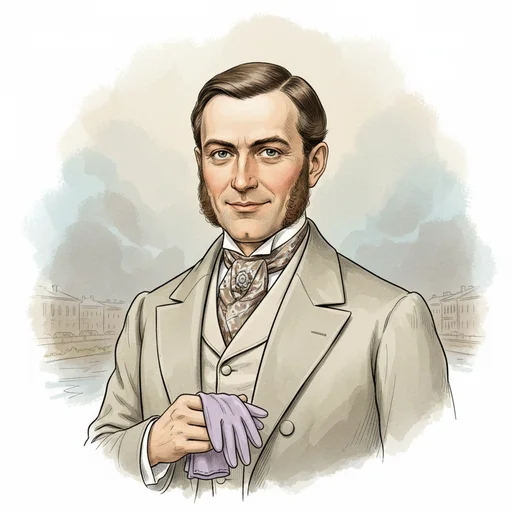
While Luzhin desires an obedient slave by marrying a woman who is poor and grateful, Dunya is sacrificing herself for the prosperity of her family. The relationship between the two is filled with power struggles. However, with Raskolnikov's intervention and the exposure of Luzhin's hypocritical, vile character, Dunya declares her independence and regains authority.
The moment Dunya, disgusted after the slander Luzhin directed at Sonya, tells him, 'You are a very wicked, very despicable person! Get out!'
Svidrigailov represents the corrupt awakening that Raskolnikov could turn into if he chose immorality and apathy. While Svidrigailov understands Raskolnikov very well, Raskolnikov, despite feeling disgusted by him, finds some of his own shadows in him. They are two men of the abyss who decode each other's weaknesses.
The bond in Svidrigailov's words as he grins at Raskolnikov: 'I told you from the moment we first met that I was like you; didn't I say we would understand each other?'
Svidrigailov harbors a boundless desire for Dunya’s integrity and unyielding character; Dunya, conversely, feels only disgust and fear toward him. Although power constantly seems to reside physically with Svidrigailov, moral strength and willpower always remain with Dunya. Dunya considers him enough of an enemy to fire a gun at him, while Svidrigailov accepts his tragic downfall once he realizes Dunya will never love him.
The scene in the locked room where, desperate yet determined to escape him, Dunya draws a gun and shouts, 'I will kill you!'
As Katerina Ivanovna drifts toward death, caught in delusions of nobility far removed from reality and prone to fits of nervous rage, she both unfairly berates Sonya and feels a profound, hidden debt of conscience toward her. Sonya, ignoring her stepmother's illness, burdens, and hurtful words, feels endless mercy for her with a pure, disobedient devotion, as if she were her own child.
The moment Katerina Ivanovna kisses Sonya’s hands and cries, 'How the wretches have crushed you,' and Sonya embraces her not as a madwoman, but as a sacred trust.
Luzhin uses Lebezyatnikov, whom he finds superficial and foolish, to gain status in St. Petersburg by appearing open to modern ideas. Lebezyatnikov, for his part, considers Luzhin a convert to his principles. They secretly despise one another, and their alliance of convenience collapses when Luzhin’s base slander is exposed by Lebezyatnikov himself.
The moment Lebezyatnikov, caught up in a sudden, honest rebellion fueled by all his so-called modern ideas, shouts at Luzhin, 'You are a fraud, you put the money in her pocket yourself!'