

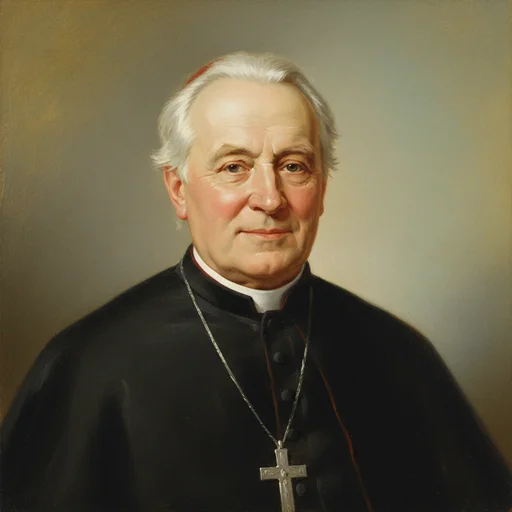
As the Bishop of Digne, this noble and wise figure is the philosophical backbone of the novel. He has moved away from the luxury and noble French tradition of his youth, dedicating himself entirely to the poor, orphans, and the sick. He spends almost all of his high salary on social aid for the poor and prisoners, and he never locks the doors of his house. He invites the accursed Jean Valjean—whom no one in society dares to welcome—to sit at his table. He is the miraculous and holy figure who, instead of turning him in after his silver is stolen, gives Valjean a chance at spiritual resurrection by saying, 'You forgot to take the rest of it.'
He is the son of a family from the Aix Parliament. In his youth, during the French Revolution, he was forced to emigrate with his wife. After the death of his wife, who succumbed to tuberculosis, he underwent a kind of traumatic awakening and renounced all worldly pleasures. Upon returning from Italy, he appeared as a truly devout man, caught Napoleon's attention with his sharp wit, and was appointed bishop.
Not tall, but approaching 75 years of age, he is a very charming, round-faced, and delicate nobleman. His cleanliness is always impeccable. His bright, pure face instills a radiance and trust that reminds one of paradise.
Jean Valjean
The protagonist whose conscience and new life he sparked; his spiritual son.
Madam Magloire
His worldly, elderly housekeeper who is constantly obsessed with keys and security.
Matmazel Baptistine
His angelic sister who is blindly loyal to him and reveres his spirituality.
Eski Konvansiyonel G.
A wise man who, even as an atheist revolutionary, revealed God and goodness to him at the end of his life, shattering his prejudices.