

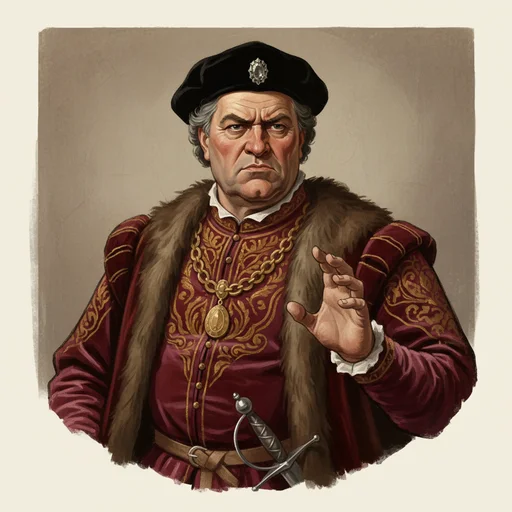
Verona's supposed champion of virtue, the aged master of the noble house of Capulet, and Juliet's ill-tempered father. The blood feud with the house of Montague runs so deep that he himself can utter sentences suggesting that peace should be easy to maintain. Though advanced in age, he is unable to shake his stubbornness to pick up a sword when necessary. Early in the story, he appears as an understanding father who advises Count Paris to wait two more summers before marrying his thirteen-year-old daughter, whom he treasures like a princess, and suggests he should win Juliet's heart. He even encourages tolerating his enemy Romeo with respect at the ball to avoid causing a disturbance. However, after Tybalt's death, things go off-script, and he becomes monstrous in response to Juliet's rebellion. His violent and cruel nature makes him the very person who dictatorially demands a total family consensus over the Prince's order, threatening to disown his daughter and leave her to beg on the streets.
A tribal leader who has built his existence on power, lineage, and wealth. An old sovereign, with an age gap between him and his wife, who does not allow his authority to be questioned.
Magnificent, richly dressed, flashy despite his old age; an imposing gentleman who shakes stiffly and raises his hand when his temper is lost.
Karı
The noble wife onto whom he shifts responsibility and whom he manages.
Paris
The dignified noble suitor prototype he finds worthy and approves of completely.
Juliet
The rebellious child whom he sees as a piece of property or a princess-ward, valuable only through obedience.