

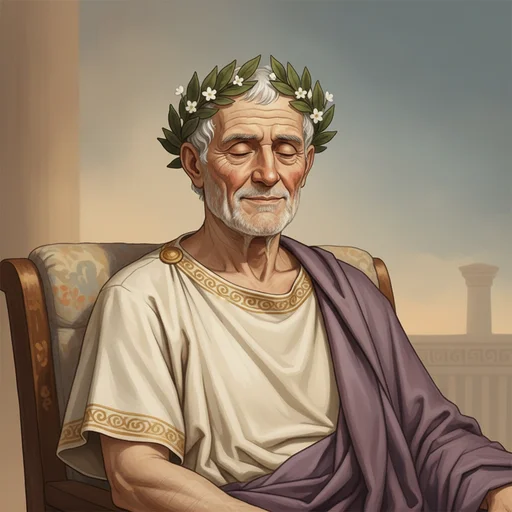
The figure encountered upon arriving at the house in Piraeus at the beginning of the dialogue, which leads to the discussion. An old and very wealthy man, Cephalus represents the generation that is about to die and fears the torments of Hades (the afterlife) with traditional religious belief. He sees the benefit of money as being able to die in peace without owing anyone and being able to worship. Socrates shakes his deduction that 'justice is returning what is entrusted'. Cephalus smiles and returns to the stage of religious rituals.
A wealthy and experienced businessman of Syracuse origin. An elder who inherited from his father but multiplied it in logical ways, lived with respect for the Greek polis order, and whose religiosity increased with the fear of death as he aged.
An elderly and religious figure with a ceremonial wreath on his head, sitting in a comfortable armchair with cushions, bearing the marks of experience and a peaceful life.
Sokrates
A family friend and sage he respects.
Polemarkhos
The son to whom he transferred his legacy (and the argument).