

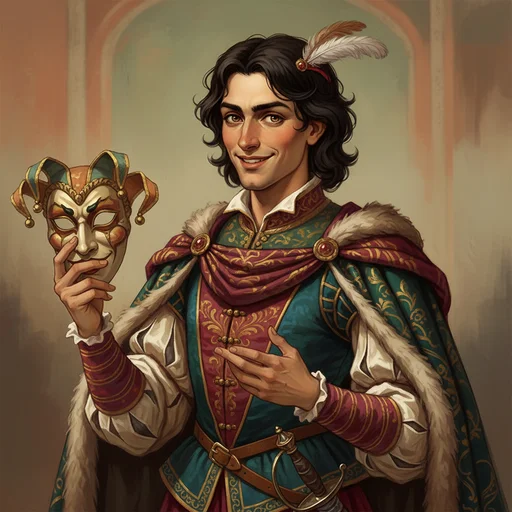
A kinsman to the Prince of Verona and Romeo's dearest, liveliest friend. Because he is not tied to any noble family, he moves freely between both households. He is the symbol of wit in the play, hovering at the edges of reason and madness. He has no tolerance for love, women, dreams, or pure romanticism, constantly satirizing them with sharp witticisms and erotic/sarcastic innuendos. Enraged by Tybalt's provocation of Romeo and Romeo's submissiveness, he enters the duel of honor himself. Even when mortally wounded, he does not lose his humor, but the curse he levels at both the Capulets and the Montagues—'A plague o' both your houses!'—as he dies engraves the turning point of the play into the heart of the tragedy.
He possesses the privilege of being the Prince's kinsman, which grants him freedom in Verona. He is a free-spirited character who prefers mocking the stereotypes of master duelists rather than admiring the passionate Italian sword arts.
His attire is cheerful, comfortable in masquerade balls, an image of a flashy and highly dynamic rogue nobleman.
Romeo
The friend he admires and tries to save, whom he believes only shows his true capacity when he is not in love.
Tybalt
The enemy he calls the 'Prince of Cats,' whom he finds utterly unbearable and despises.