

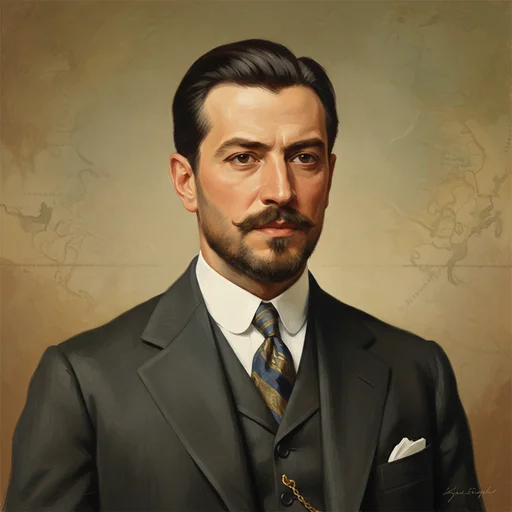
An influential soldier and statesman who set out with Mustafa Kemal at the beginning of the National Struggle and signed the Amasya Circular. He served as the Minister of War during the final days of the Ottoman Empire and was forced to sign the Armistice of Mudros. However, as events unfolded, his conservative identity took precedence when he faced the reality that Mustafa Kemal would abolish the Sultanate and Caliphate and proclaim the Republic. His oath to the Sultan and personal fears pushed him to the position of an opposition leader against the revolutions. Even while he was the Chairman of the Council of Ministers (Prime Minister), he engaged in opposition against Ankara behind closed doors.
Despite his heroism as a naval officer and a respectable career, being the person who signed the Armistice of Mudros caused him to develop an irreparable complex. He is a person who openly stated that he grew up on the Sultan's bread and could not break his family's ties with the Ottoman palace.
A neat, measured, and elegant style of dress characteristic of the respected civil and military statesmen of the era; a dignified and diplomatic appearance from the outside.
Mustafa Kemal Atatürk
The eternal chief, with whom he was diametrically opposed in terms of political rivalry and vision, and whom he struggled to accept as an authority.
Kâzım Karabekir Paşa
A natural comrade-in-arms in the opposition group they formed in parliament by opposing the reforms.
İsmet Paşa (İnönü)
A colleague toward whom he harbored intense jealousy and political distrust, as he could not exert influence over him while he served as head of government in Lausanne.