

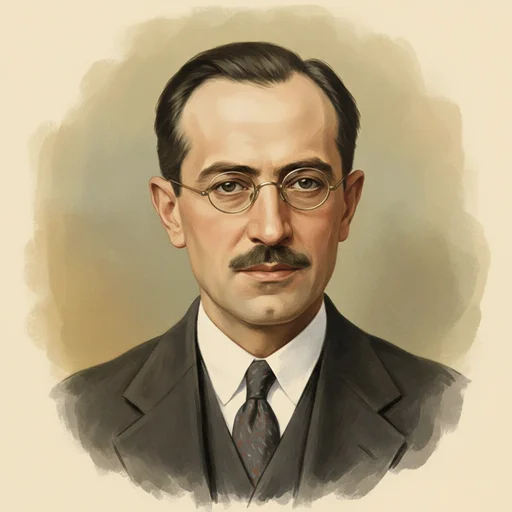
Reşat Nuri Güntekin was born in 1889 in Üsküdar, on the Asian shore of Istanbul. His father, İbrahim Nuri Bey, was an army physician; his mother was Lütfiye Hanım. As his father was posted from one town to another, the boy’s childhood moved with him: he began primary school in Üsküdar and finished it in Çanakkale, then continued his secondary studies in Çanakkale and İzmir. In 1912 he graduated from the literature department of the Darülfünun in Istanbul, today’s Istanbul University. He started out teaching French in Bursa and later taught literature and composition in Istanbul schools. Criticism and short stories published in magazines under pen names drew him into writing. He had first written Çalıkuşu (The Wren) as a play titled İstanbul Kızı (The Girl from Istanbul); when it could not be staged, he turned it into a novel. Serialised in a newspaper in 1922, the book made his name known overnight to a wide readership. His appointment as an inspector for the Ministry of Education in 1931 set the course of the rest of his life; the Anatolian towns he travelled through for years supplied the material both for Anadolu Notları (Anatolian Notes) and for his novels. In Yaprak Dökümü (The Fall of Leaves), published in 1930, he told of a civil servant’s family coming apart under a changing way of life. He sat as deputy for Çanakkale from 1939 to 1946, returned to inspection work, and in 1950 went to Paris as Turkey’s representative to UNESCO. He wrote a plain Turkish close to everyday speech. He drew the people of Anatolia from within rather than from a distance and set his social criticism inside an affecting story; he is counted among the writers who opened the Turkish novel to the provinces. He retired in 1954. He died on 7 December 1956 in London, where he had gone for treatment for lung cancer, and was buried in Karacaahmet Cemetery in Istanbul.
Early to mid-20th century, Turkey, wearing a modest suit with a necktie, spectacles, thinning hair, scholarly demeanor.