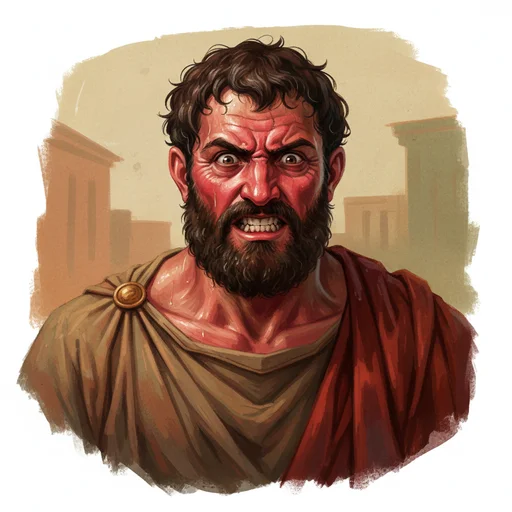
The famous Sophist who presents the greatest ideological obstacle to Socrates in the opening part of the Republic (Book 1). Diving into the discussion with a fury that could stir heaven and earth, he destroys all moral definitions under the umbrella of cunning. He defines justice as 'what serves the interest of the strong' and injustice as 'what is truly smart and worthy of a man'. His philosophical pragmatism is built on power, politics, and trickery; he claims that people secretly envy tyrants. He loses to Socrates, gets angry, and sweats, but does not essentially give up his belief; the deep cynical realism he reveals is the real wound that causes the remaining 9 books of the text to be constructed by Socrates.
An itinerant teacher from Chalcedon and a master of words (Sophist). He travels from city to city and teaches rich young men rhetoric, the art of persuasion, court politics, and ways to maintain power for money. He has heartfully believed that morality is just a fairy tale invented by the weak.
A tense body language reminiscent of a large, red-faced, wild, and uncontrolled creature (a wolf or lion). Someone who sweats profusely in the heat and speaks as if deranged from a high position.
Glaukon
The person who will continue the argument later but is on Socrates' side against him.
Sokrates
The intellectual rival toward whom he harbors hostility and a hidden sense of defeat.