

Mansion for Rent — 8 karakter
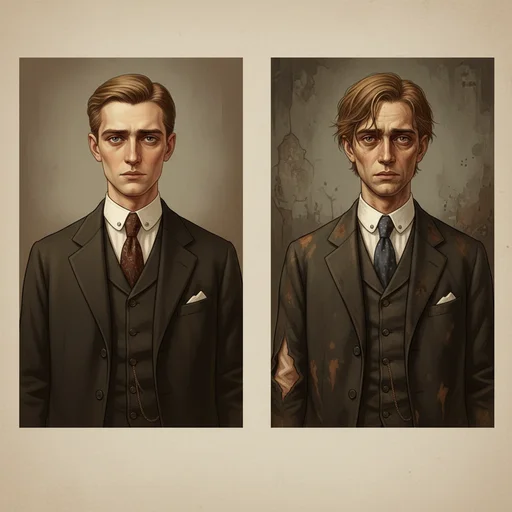
Faik Bey
The son of Kasım Paşa and one of the famous and womanizing young men of the era. He is a shallow salon man who has lived in Europe, is stylish, spoiled, and popular among women. Although he initially wins Seniha’s heart with his charm and experience, he crumbles under his own lack of willpower, gambling addiction, and Seniha’s dominant personality. By the end of the game, he ends up being the hunter hunted; he turns into a pathetic, shattered, and helpless man vowing revenge after Seniha carelessly uses and discards him, crushing his pride.
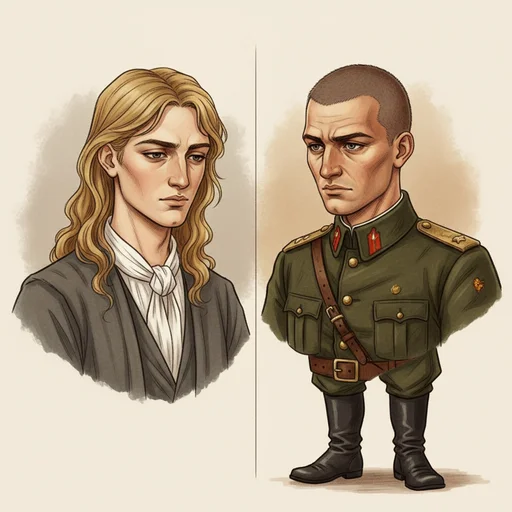
Hakkı Celis
Hakkı Celis, the nephew of Naim Efendi, is a romantic, timid, and introverted young poet at the beginning of the novel, an admirer of Baudelaire and Verlaine. He is attached to Seniha with a platonic and morbid love. However, Seniha’s flight to Europe, her vulgar affair with Faik, and the general moral decay cause Hakkı Celis deep disappointment. Emerging from these crises, he gradually leaves behind poetry, individual emotions, and sick love. With the outbreak of the Çanakkale War, he discovers a love for his homeland and nation, and his individual sorrows are replaced by the suffering of society. He gradually transforms into a resolute soldier and evolves his individual idea of 'death' into a noble belief in 'martyrdom' for the sake of the country.
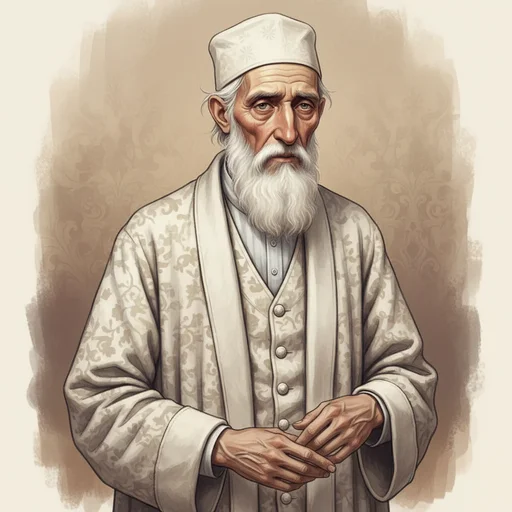
Naim Efendi
He is a loyal, polite, and sensitive old-school gentleman, one of the prominent statesmen of the Second Abdulhamid era. Since his youth, he has carefully guarded the inheritance left by his father but has not added anything to it. Having retreated into obscurity with disgust for government affairs, he is among the last representatives carrying the refinements of the 'Istanbulin' era of the Ottomans. Although he tries to ignore the corruption in his mansion and the shallow, Western-obsessed lives of his daughter, son-in-law, and grandchildren, he eventually ends up confronting total material and spiritual bankruptcy. He symbolizes the withering existence of an empire collapsing with fatal and painful hiccup fits.
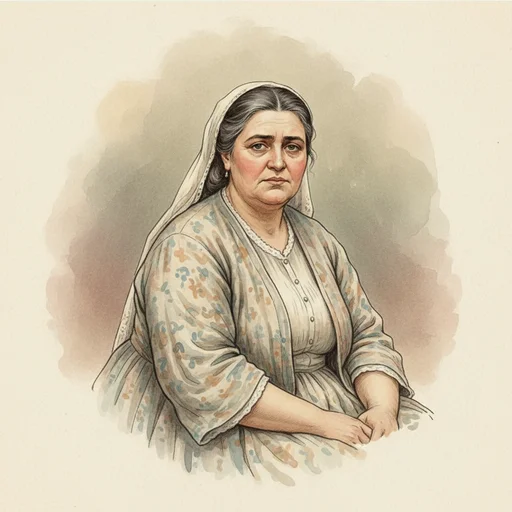
Sekine Hanim
The daughter of Naim Efendi and Nefise Hanim, and the wife of Servet Bey. Entirely crushed between the 'old' side of the mansion and the 'new' side imposed by her husband, she is a spineless, naive, and passive woman. With her large frame and lazy nature, she cannot intervene in anything that is happening. She only sheds tears and complains, but always bows to the demands of her authoritarian husband and grumpy children. She is insufficient in preventing the disintegration of the family and the collapse of her father.
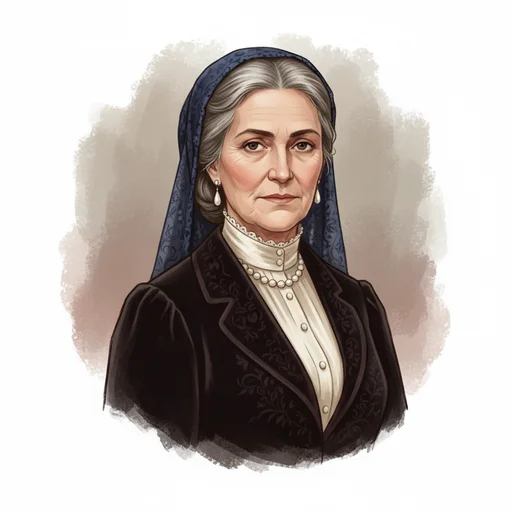
Selma Hanimefendi
Naim Efendi's sister; an authoritarian, outspoken Istanbul lady with strong ties to her traditions and common sense. She constantly criticizes her brother's weakness and openly condemns from the start the corruption in the mansion and the Western-obsessed grandchildren and son-in-law. She does not shy away from throwing the truth in Naim Efendi's face and ultimately tries to save her brother from the disastrous end encompassing the family by taking him under her own wing (to her own home).

Seniha
Naim Efendi’s granddaughter is an ambitious, insatiable, and boundary-pushing young woman who admires Europe. She builds her life on dreams of living completely free in European chateaus and salons, far removed from the narrow, traditional patterns represented by her grandfather. She views even love as a power game, a matter of pride, and a means of conquest. Although she appears novice and helpless in the beginning of her destructive relationship with Faik Bey, she later crushes the man like a wild cat playing with its prey. Eventually, severing all moral and familial ties, she flees to Europe as the mistress of a wealthy deputy. Seniha symbolizes the rudderless, materialistic new generation, severed from the roots of a collapsing empire.
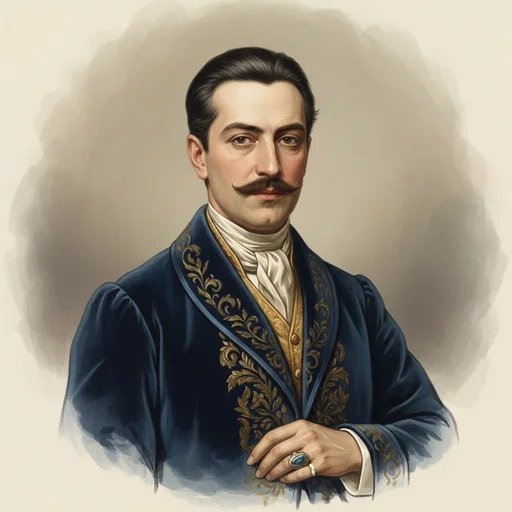
Servet Bey
Naim Efendi's son-in-law and an inspector of the Public Debt Administration. He is a rootless, Westernized bourgeois who hates everything Turkish, Muslim, and Eastern, and tries to imitate the French in every aspect. After taking control of the house, he discarded all sorts of old furniture and traditions in the mansion, establishing a completely Western-style life. With his gluttonous ambition, snobbery, opportunism, and finally by abandoning his father-in-law and moving to a new apartment in Şişli, he reflects the most caricaturized and repulsive sides of the pre-Republican Istanbul bourgeoisie.
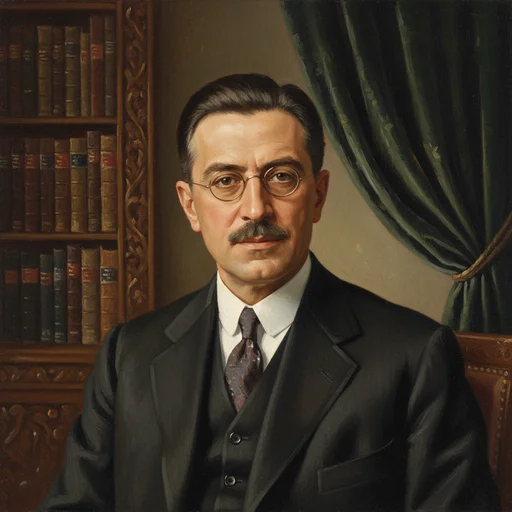
Yakup Kadri Karaosmanoğlu
Yakup Kadri Karaosmanoğlu was born in Cairo on 27 March 1889. His father, Abdülkadir Bey, belonged to the Karaosmanzade family, long established among the notables of Manisa; his mother was İkbal Hanım. When he was six the family settled in Manisa, where he began school before continuing at the high school in İzmir. After his father's death they returned to Egypt, and he finished his education at a French school in Alexandria. He came to Istanbul in 1908 and enrolled in law, though he never took a degree. The following year he was among the founders of the Fecr-i Âti literary circle, and his first pieces appeared in its magazines. Tuberculosis kept him in Switzerland for three years. On his return he wrote for the newspaper İkdam and published Kiralık Konak (“The Mansion for Rent”), which traces the empire's collapse through three generations of one household; he also gathered his prose poems in Erenlerin Bağından. In 1921 he toured western Anatolia with the commission investigating wartime atrocities and saw the villages the fighting had ruined; the journey changed the direction of his writing. Under the Republic he sat in parliament for Mardin and then Manisa, and in 1932 helped found the journal Kadro. These years produced Yaban (“The Stranger”), on the gulf between intellectual and peasant, and Ankara, which follows the birth of the new capital. From 1934 he served as ambassador in Tirana, Prague, The Hague, Bern and Tehran. His prose was plain and built on observation; he treated the novel as an instrument of social analysis and gave Turkish fiction a historical spine. In Panorama he drew up the balance sheet of the generations that passed from empire to republic, and in his memoirs he set down his own contradictions as well. He returned to parliament in 1961 and left politics in 1965. He died in Ankara on 13 December 1974 and was buried in the Yahya Efendi Cemetery in Beşiktaş.