
Author · 2 works
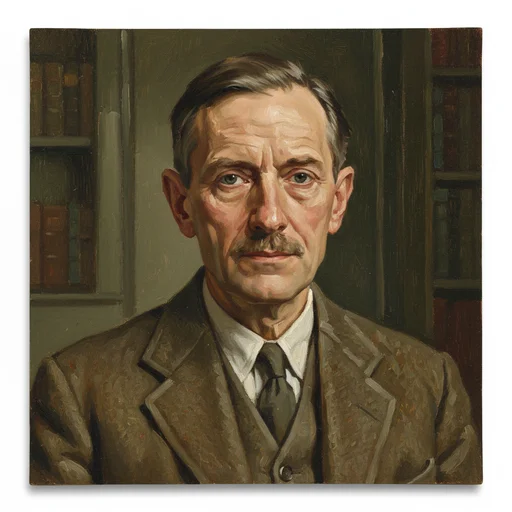
Eric Arthur Blair was born in 1903 in Motihari, a small town in British India. His father was an official in the colonial opium department; when the boy was one, his mother, Ida, took the children back to England. He grew up between two sisters, in a civil servant's household of narrow means. At the boarding school that took him on reduced fees, and later at Eton, he learned early what it meant to be the poor boy among the wealthy.
Instead of going to university, at the end of 1922 he joined the Imperial Police in Burma. After five years, sickened by the order he himself had to enforce, he resigned and decided to write. He washed dishes in Paris and lived among the tramps of London; out of the notebooks of those years came Down and Out in Paris and London, published in 1933 under the name George Orwell.
In 1936 the weeks he spent in miners' houses in the north of England showed him poverty at close range; at the end of that year he went as a volunteer to the Spanish Civil War, was shot through the throat, and returned fleeing the purges within his own camp. Homage to Catalonia is the book of that rupture: from then on Orwell wrote against Stalinism as harshly as against fascism. During the war he worked on the BBC's broadcasts to India, then wrote a column for Tribune.
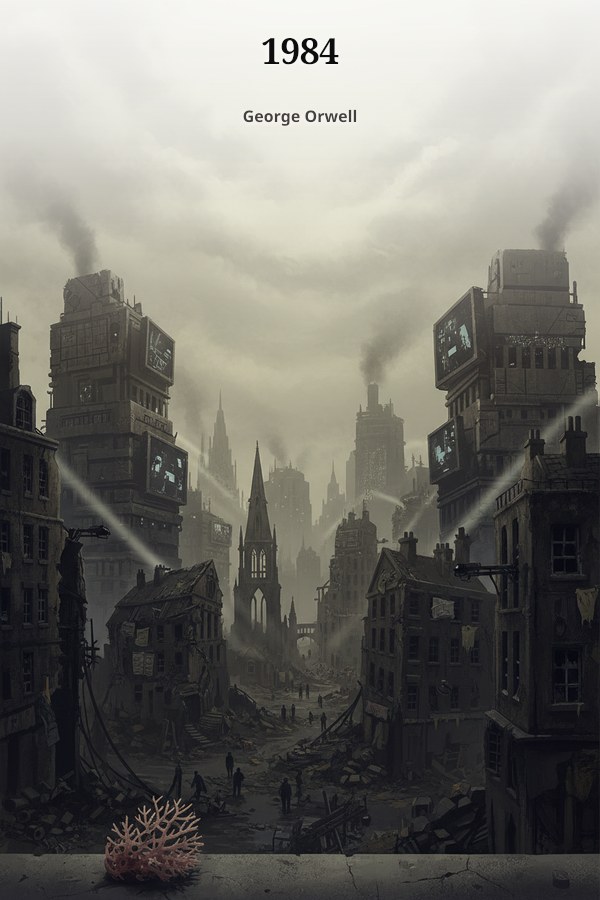
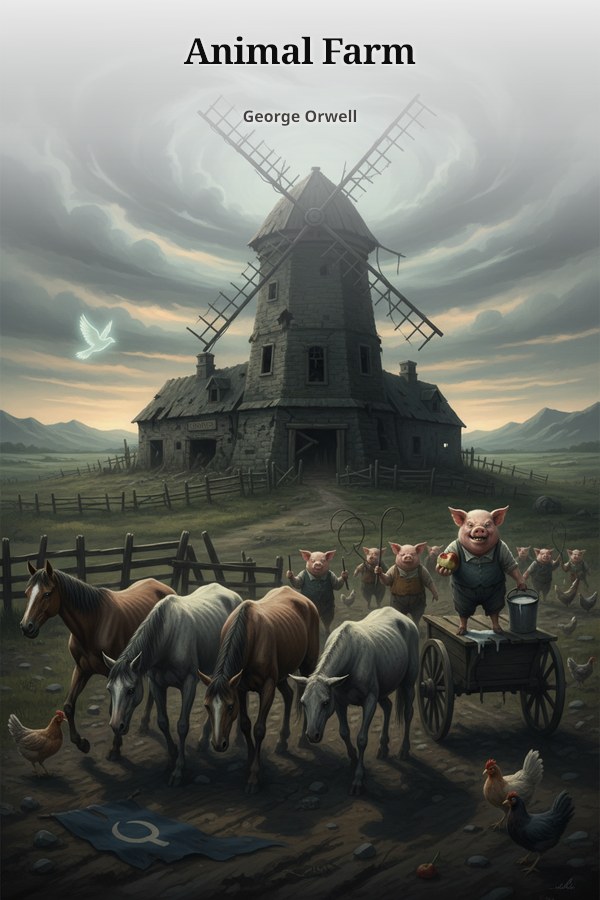
He wanted prose as clear as a windowpane and treated plainness as a weapon against everything that muddies political language. He lost his wife, Eileen, in 1945, the year Animal Farm appeared. Nineteen Eighty-Four, written on the Scottish island of Jura as tuberculosis advanced, came out in 1949. He died in London in January 1950, aged forty-six; “Big Brother” and “Newspeak” entered everyday speech along with him.
Orwell wrote in the Britain of the 1930s, between industrial towns left jobless by the Depression and the fascism rising across Europe. The literature of the decade leaned towards documentary; writers went down into the mines and out to the picket lines. On the left the real argument was the Soviet Union: the Moscow trials and the purges in Spain forced a choice between defending Stalin and condemning him. Orwell stood with the minority that rejected the Soviet model without giving up socialism; the Second World War and the threshold of the Cold War set the atmosphere of his books.