

Crime and Punishment — 8 karakter
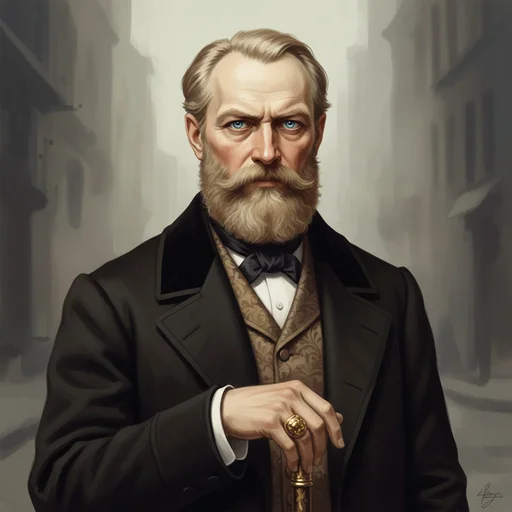
Arkady Ivanovich Svidrigailov
He is Dunya's former employer and the dark twin representing the possibility of Raskolnikov's moral decay. He is an ex-convict and, according to rumors, kept the murder of his wife Marfa Petrovna, whom he allegedly poisoned, in the shadows. He is a hedonist and a nihilist without limits; he has crossed all boundaries between good and evil (at times harming a little girl, while at other times gifting all his money to Sonya's orphaned siblings). He harbors a morbid love for Dunya and tries to win her through blackmail after secretly eavesdropping on Raskolnikov's secret. However, when he realizes with certainty that Dunya will not love him at any cost, he commits suicide at the final stage of his internal nihilism and darkness, at the end of ghosts, delusions, and a cold St. Petersburg night.
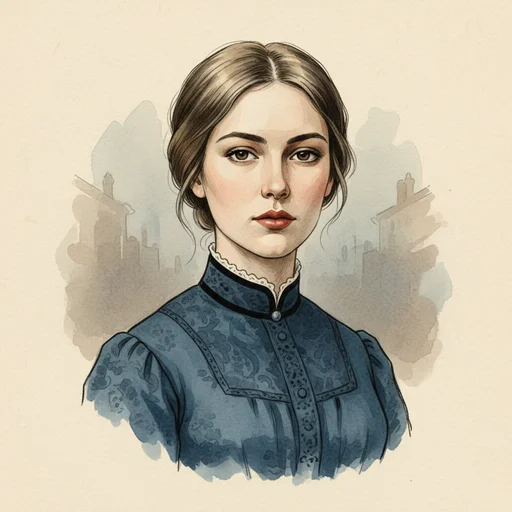
Avdotya Romanovna (Dunya) Raskolnikova
Dunya, Raskolnikov's sister, stands out for her beauty, high character, unwavering virtue, and deep love for her brother. She is selfless enough to agree to a loveless marriage with the arrogant and despicable Lujin to save her family from poverty and ensure Raskolnikov can continue his education. A statue of pride that resisted Svidrigaylov's dark obsessions and slanders, Dunya is strikingly similar to Raskolnikov in her intelligence and rebellion against injustice. At the end of the book, she rids herself of the trouble caused by her self-sacrifice by declaring her independence and turning toward the honest love of Razumihin. She symbolizes the honorable woman who does not sell herself, but resists for the sake of those she loves.
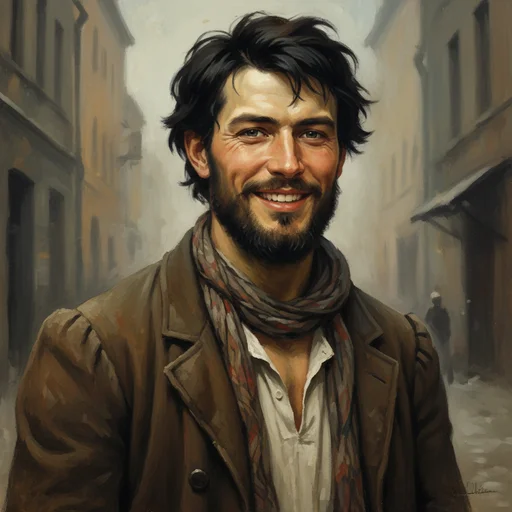
Dmitri Prokofyich Razumikhin
Raskolnikov's friend from university, Razumihin, is an optimistic, strong, and stubborn character who understands the practical side of life very well despite hardships and poverty. He protects his friend without expectation during his lonely and paranoid crises, finds him work, provides new clothes, and oversees his care. In the ensuing process, he looks after Raskolnikov's mother Pulcheria and his sister Dunya, becoming a part of the family. Combining his intellect with the realities of practical life, Razumihin acts as a balancing element against the madness brought on by pure reason (Raskolnikov's condition), and by finally marrying Dunya, he establishes an honest, protective home for Raskolnikov's family.
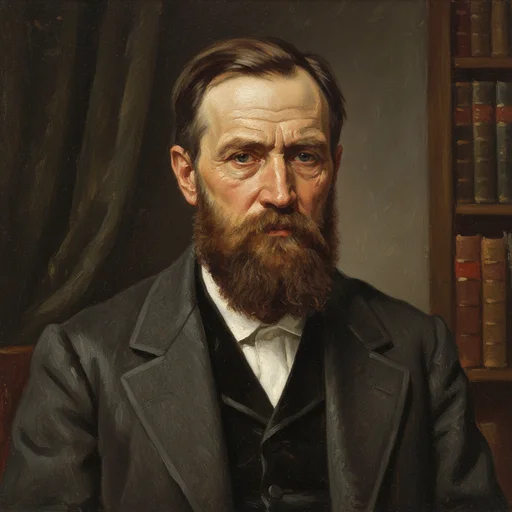
Fyodor Dostoevsky
Fyodor Mikhailovich Dostoevsky was born in 1821 in Moscow, in the staff quarters of the Mariinsky Hospital for the poor, where his father served as a doctor. He grew up as one of seven children, in a household ruled by severity. His mother died of tuberculosis in 1837; the following year he enrolled at the Military Engineering School in Petersburg. His father died in 1839. He completed his training as an engineer, but soon left the service, determined to live by his pen. His first published work was a translation of Balzac's Eugénie Grandet. Poor Folk, which appeared in 1846, won the praise of the critic Belinsky and made his name overnight. The rise was short-lived: in 1849 he was arrested for belonging to the Petrashevsky circle, where banned texts were read aloud. That December he was led out to the square to be shot; the execution was halted at the last moment by a decree read out on the spot. He spent four years at hard labour in Omsk; his epileptic seizures began in those years. In 1859 he returned to Petersburg and ran journals with his elder brother Mikhail. In 1864 he lost his wife and, a few months later, Mikhail; debts and a gambling habit pursued him for years. To meet a contract he dictated The Gambler in twenty-six days; the stenographer who took it down, Anna Snitkina, became his wife the following year. In Crime and Punishment, The Idiot, Demons and The Brothers Karamazov he tested how far an idea can carry a person, leaving the argument to his characters: whoever defends a thought and whoever demolishes it speak with equal force inside the novel. His speech at the unveiling of the Pushkin monument in Moscow in 1880 was widely echoed. He died in Petersburg on 9 February 1881; an immense crowd followed his coffin.
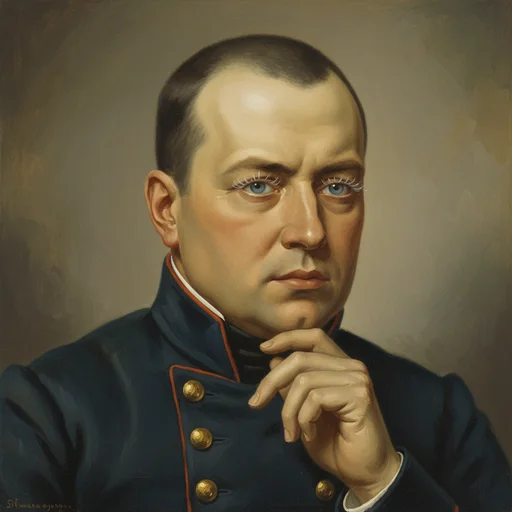
Porfiry Petrovich
He is the magistrate in charge of the murder investigation. Despite a physical profile that may seem insignificant to society, he is a genius who destroys the subconscious of his victims by using psychological science like a work of art. From the moment he reads Raskolnikov's article, he suspects that he could be the killer. Even without definitive physical evidence (the items under the stone, stains, etc.), he forces Raskolnikov to internal exhaustion—leading him to tear down his own logic and pride toward confession—by circling him like a fly through dual-character games. While he represents justice, he also derives a sadistic yet philosophical pleasure from playing a mental game of cat and mouse.
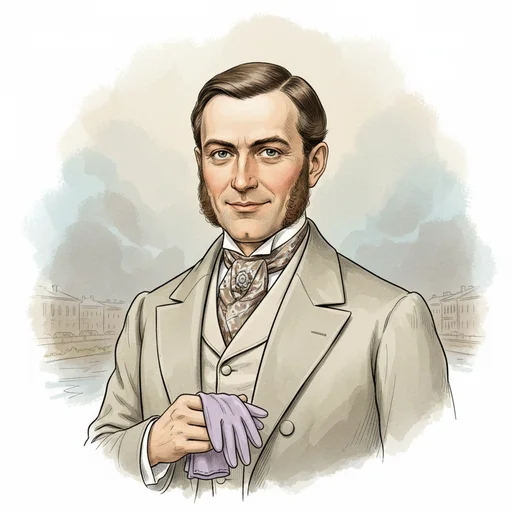
Pyotr Petrovich Lujin
A forty-five-year-old businessman and lawyer who wants to maintain a place in society as a respectable bourgeois with high pretensions and his money. He dreams that his future wife should be poor and crushed enough to see him as a savior, yet beautiful and educated like a queen. This is why he becomes engaged to Dunya. The moment his self-constructed fantasy of power is interfered with by Raskolnikov, he goes mad with vanity and concocts base slanders to ruin that family. He even secretly hides his own one-hundred-ruble note in Sonya's pocket to frame her for theft in order to drive a wedge between Raskolnikov and his family and assert dominance.

Rodion Romanovich Raskolnikov
A former law student. Increasing poverty pushed him to leave university and isolate himself in the cramped, lonely attic rooms of St. Petersburg. In this dark solitude, he adopted the idea that the world's people are divided into 'extraordinary' beings who act by their own rules and 'ordinary' herds that exist only to obey. With reasonable excuses like purifying society and saving his family, he kills a pawnbroker with an axe mainly to test whether he is a Napoleon who belongs to this extraordinary class. However, after the murder, his nature and conscience defeat his rational theory, leading him into profound alienation, illness, and paranoia. By revealing his secret to Sonya Semyonovna, he sees in her a reflection of his conscience and Christianity. His main function in the story is to prove that man cannot defeat his nature with pure reason alone, and that every criminal carries within their subconscious the need for punishment and repentance. Throughout the book, he runs from crisis to crisis, finally shedding his vanity and finding salvation through love on the road to Siberia.

Sonya Semyonovna Marmeladova
The daughter of Marmeladov, a drunken former civil servant. To feed the little children of her stepmother, Katerina Ivanovna, who is dying of tuberculosis, and to combat her father's misery, she was forced to begin selling her body on the streets (the 'Yellow Ticket'). Although she has defiled her body, she has kept her soul, her purity, and her faith in God astonishingly clean. In this wretched world, instead of rebelling, committing suicide, or becoming desensitized through madness, she considers it a virtue by the light of the Bible to submit and live her fate by suffering. She is the one who listens to Raskolnikov's confession, does not fear him, but on the contrary, pities him and convinces him that he must cleanse his crime by paying penance. Finally, by coming to exile with Raskolnikov, she establishes a bond of compassion between the prisoners and Raskolnikov, and revives the sick man's soul.