
Jules Verne
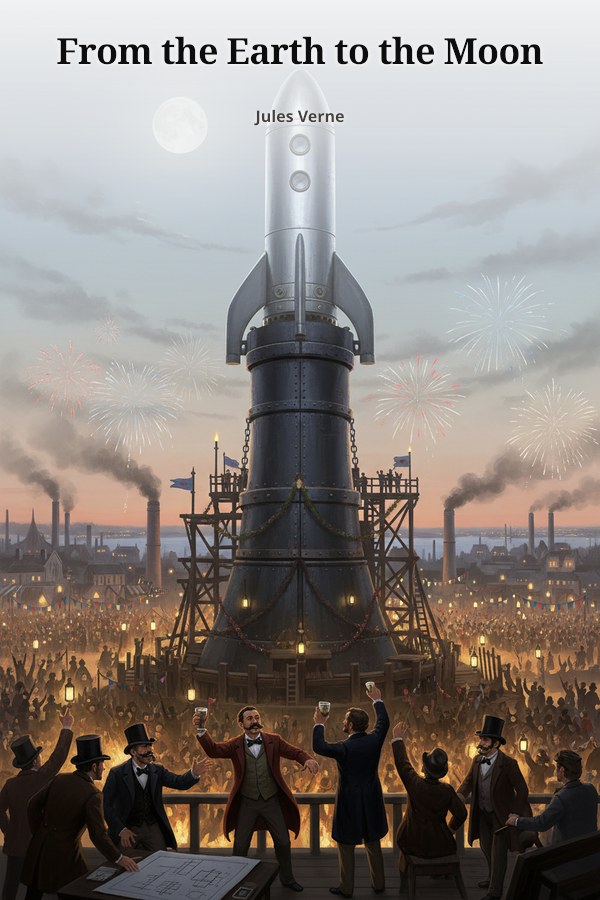
From the Earth to the Moon (De la Terre à la Lune), written by Jules Verne in 1865, is a science fiction classic that recounts the attempt by members of the "Gun Club," established after the American Civil War, to travel to the Moon in a massive cannon shell. The work is notable for its technical foresight, written a century before humanity set foot on the Moon.
After the war ends, Gun-Club members complain about unemployment and idleness, setting themselves a monumentally difficult goal: sending a projectile to the Moon. In addition to these daunting engineering and financial hurdles, the personal and technical conflict arising from the ballistics-armor rivalry between Barbicane and Captain Nicholl forms the central problem. In the final stage, with the inclusion of the Frenchman Michel Ardan, an effort arises to transform the projectile into a habitable vehicle and eliminate lethal risks.
The setting is initially Baltimore, Maryland (the Gun-Club's home base). As the project moves into action, the story shifts to Florida, specifically to the Tampa-Town area and the elevated terrain known as Stone's Hill, where the launch will take place.
The 1860s (immediately following the American Civil War).
An enthusiastic, humorous, scientifically charged, boundary-pushing, ironic, and highly optimistic atmosphere. It reflects the era's unlimited belief in progress with the air of a massive celebration.
A third-person omniscient yet commentator narrator. The narrator presents the events to the reader from an ironic and highly humorous perspective at times, conveying American excess with a sweet sense of mockery.
The world is entirely bound by Newtonian mechanics, ballistics principles, and the physics and chemistry rules of the time; however, the author's 19th-century optimism intervenes. Vital physical obstacles, such as the recoil of the projectile, can be overcome by genius products like water buffers or gunpowder types with calculated burning speeds. Space travel, which seems impossible, can be surpassed within the framework of pure rationality when sufficient determination and industrial funding are provided.
The social foundation of the novel is American 'Yankee' culture. This culture recognizes no impossibilities, values practice over theory, and possesses a merchant and activist mindset. The fact that arms and cannon manufacturers, unable to tolerate the idleness of post-war peace, unite their military genius in a massive civil and extraterrestrial project reflects the progressive enlightenment spirit of the period.
Characters are arranged at equal intervals on a circle; you can read the relationship type and dynamics by clicking on the lines.
Bir çizgiye tıklayarak ilişki detayını açın.
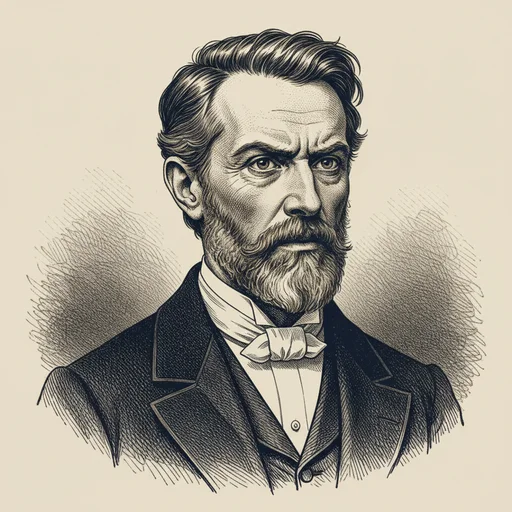
Barbicane was a cannon manufacturer and Nicholl was a master of defensive armor, making them fierce professional rivals. When the Gun-Club project emerged, Nicholl tried to humiliate him with large bets. However, after Michel Ardan's charisma pulled both of them back from the brink of a duel in the woods, they turned into brave friends ready to be trapped inside the same projectile.
When Nicholl and Barbicane were about to hunt each other down in the woods, the fact that both simultaneously shouted their acceptance of Michel Ardan's proposal to board the projectile together.
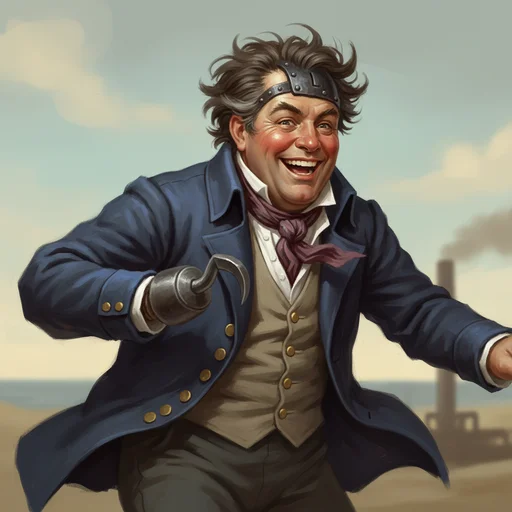
In contrast to Barbicane's strategic and cool-headed stance, Maston provides the project's most provocative and explosive energy. He is devoted to Barbicane and is instantly ready to sacrifice his own life, to take a bullet for him, if his safety is in question.
When Barbicane went to duel with Nicholl, Maston rushing about in terror in the woods and throwing himself forward to Nicholl, saying, 'Leave the President, kill me instead.'
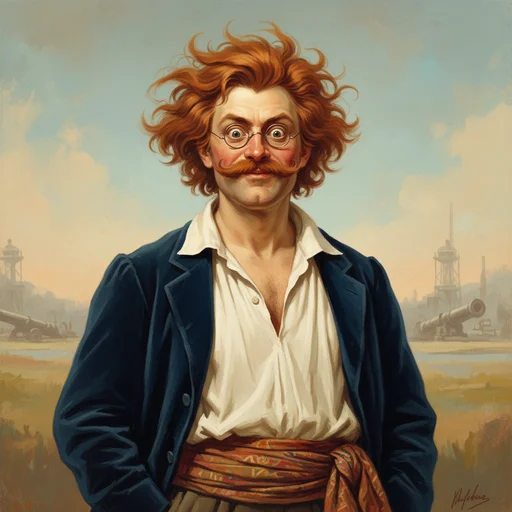
Barbicane is a reserved American based entirely on the realities of calculation, mathematics, and engineering. Ardan, on the other hand, is a playful, aesthetic, and visionary Frenchman who disregards risks. By complementing each other, they transform a hollow, empty projectile into a hope-filled spacecraft that carries life.
Michel Ardan wanting to furnish the inside of the wagon entirely according to his own artistic taste atop Barbicane's cool-headed formulas, and Barbicane making space for this opposing temperament.
Nicholl's sharp and destructive criticisms are softened by Ardan's extremely polite yet quick-witted diplomatic stance. From their very first dialogues, Ardan notices the honorable stance and hidden refinement in Nicholl, removing him from being an enemy.
During their encounters in the woods, Ardan watching Captain Nicholl politely release a bird fighting a spider and claiming that he is 'charming'.
As one a military madman and the other an adventurous madman, the two characters constantly elevate each other's enthusiasm. Ardan's exaggerated statements always find their greatest support in Maston's relentless applause.
While Ardan was talking about interplanetary flight at an outdoor meeting, J. T. Maston excitedly interrupting and giving the most daring response by saying, 'Let's correct the Earth's axis!'
The commercial and prestige advantages the shot to the Moon would provide drive these two American states into a bloody rivalry. Administrators, newspapers, and the general public belittle each other's lands and cultures through the media.
Assembly members from Florida and Texas arriving in Baltimore and causing a brawl around the Gun-Club headquarters, and the resulting expulsion of the Texan envoys from the city by cramming them onto a special train.
Barbicane determines the goals, boundaries, and designs, while Murchison is the one who brings these ideas to life in the field with monstrous energy, employing thousands of workers and massive smelting furnaces.
The excavation of the underground well at Stone's Hill or the successful management of the dangerous casting operations for the Columbiad cannon by Murchison and the deep trust Barbicane placed in him.
Due to his unwavering devotion to President Barbicane, Maston loathes Captain Nicholl, who sought to undermine the project. Even when peace is finally established, traces of the tension remain, yielding only to a forced acceptance.
During the incident in the forest, when J. T. Maston found Captain Nicholl, he assumed Barbicane had been shot and leveled harsh and spiteful accusations against him.