

Nietzsche — 7 karakter
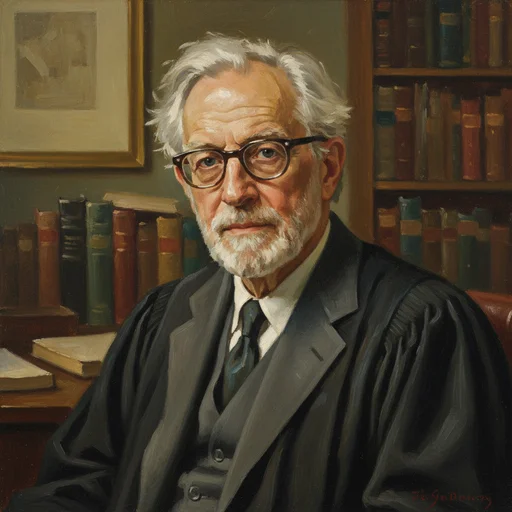
Arthur Danto
Arthur Coleman Danto was born on 1 January 1924 in Ann Arbor, Michigan, and grew up in Detroit. He was the son of Samuel Budd Danto, a dentist, and the household kept the measured tone of Reform Judaism. From 1943 to 1946 he served in the army during the Second World War, stationed in North Africa and Italy; he came home determined to be an artist. At Wayne University in Detroit he studied art and history, and from 1947 he was pulling Expressionist prints. He then went to Columbia for philosophy; a Fulbright took him to Paris in 1949-1950, where he attended Jean Wahl's lectures. In 1951 he returned to Columbia to teach. His woodcuts hung in the Art Institute of Chicago and the National Gallery of Art in the fifties, but after a solo show in 1960 he stopped making art. The turn came in 1964. He saw Andy Warhol's Brillo boxes at the Stable Gallery and wrote “The Artworld”: what makes an object a work is no visible quality but the theory and the history that surround it. The next year he published Nietzsche and Analytical Philosophy of History, reading Nietzsche not as a scattered aphorist but as a coherent thinker. From 1984 to 2009 he wrote art criticism for The Nation, in a voice that joined philosophical precision to everyday looking and never lost its humour. The idea of the “end of art”, developed in The Transfiguration of the Commonplace and After the End of Art, held that a single line of progress had closed and a plural age had begun, one in which anything can be art. In 1990 he received the National Book Critics Circle Award for criticism. He died of heart failure in Manhattan on 25 October 2013.
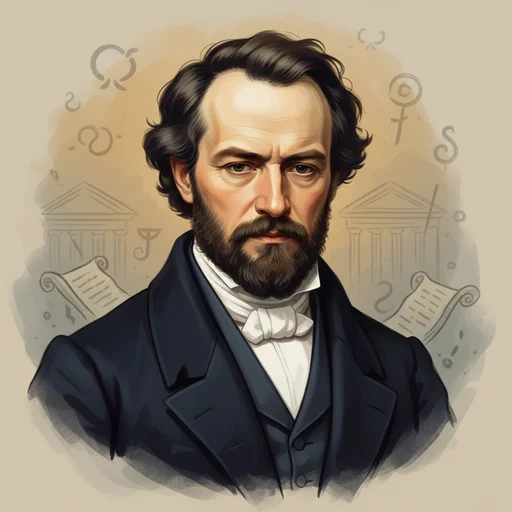
Arthur Schopenhauer
A German philosopher, Schopenhauer placed the concepts of 'Will' and 'Representation' at the center of his philosophy. He bases the existence of the universe not on rational logic, but on a blind and painful desire/will to live that cannot be satisfied. His pessimistic philosophy, which seeks an escape from life and this suffering in 'Nirvana' or pure aesthetic contemplation, was first a refuge for Nietzsche, but later cursed as a 'disease' that Nietzsche fought against.
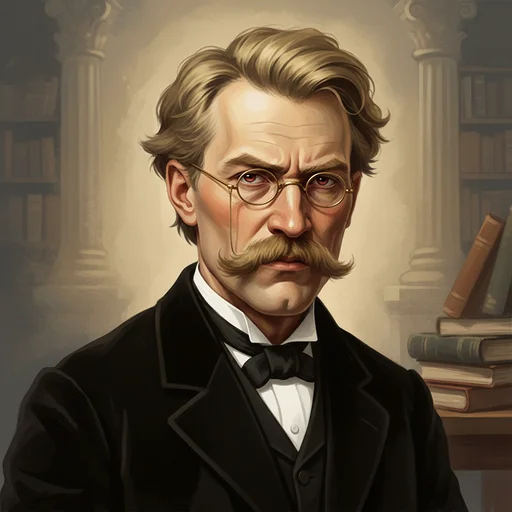
Friedrich Nietzsche
Born in 1844 in Röcken to a Protestant family. He lost his father at a young age and was raised in a household dominated by women. With his brilliant intellect, he became a professor of philology at the University of Basel at a very young age. Despite battling severe physical illnesses, migraine attacks, and loneliness throughout his life, he authored some of the most profound and life-affirming works in the history of philosophy. He rejected traditional morality, religion, and Western rationalism, deeming them sickly. He foresaw the crisis of nihilism and formulated the concepts of 'Will to Power,' 'Übermensch,' and 'Eternal Recurrence' to overcome it. He suffered a mental breakdown in 1889 and spent the last 11 years of his life in silence.
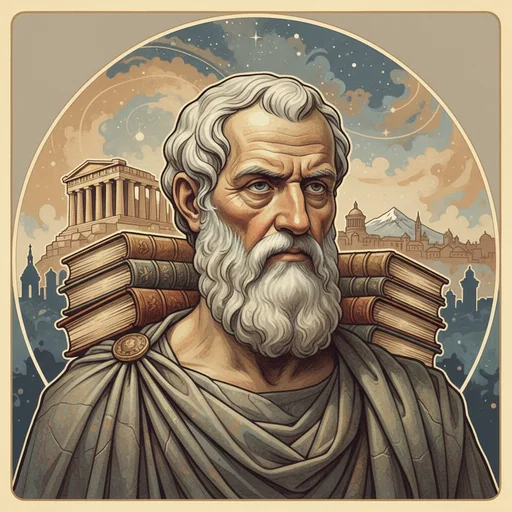
Plato
He was born around 427 BCE in Athens, into one of the city's oldest families. On his father Ariston's side the line was traced, in legend, back to Poseidon; on his mother Perictione's side, to the lawgiver Solon. His real name is said to have been Aristocles, and to have been called Plato for his broad shoulders. He lost his father early; when his mother married her uncle Pyrilampes, his childhood was spent in that household. He received in full the education in poetry, rhetoric and gymnastics expected of an Athenian nobleman. The passion of his youth was politics. What his relatives Critias and Charmides did under the rule of the Thirty, and then the restored democracy's condemnation of Socrates to death in 399 BCE, turned him from that road for good. He set down the trial of the teacher he had followed for years in The Apology of Socrates; the text is at once a piece of testimony and a reckoning served on the city. After Socrates' death he stayed away from Athens for a long time; he went to Megara, to southern Italy, to Sicily and, by some accounts, to Egypt, and came to know the Pythagoreans and Archytas of Tarentum. In his forties he returned and founded his own school, the Academy, in the grove of Academus outside the city. Believing that philosophy could set government right, he travelled three times to Syracuse; his attempt to educate the young tyrant Dionysius II ended in mistrust and house arrest. He built his thought not as treatises but through people who speak. In The Republic, what justice is is never settled by a ready-made definition; it is sought inside an argument that advances by questions, and the reader follows not the conclusion but thinking itself. He died in Athens in 348/347 BCE; the Academy he founded stayed open for centuries.
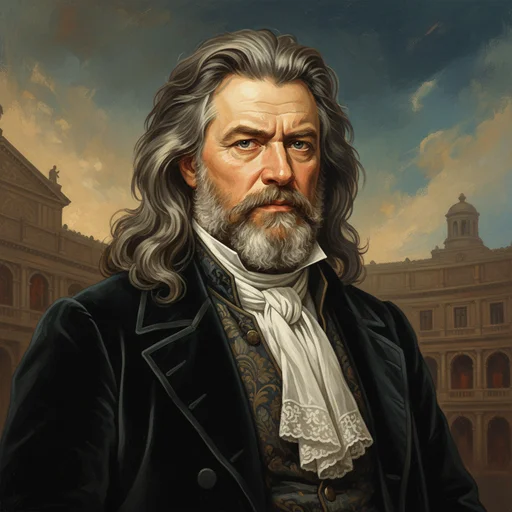
Richard Wagner
German composer and musician. During Nietzsche's youth, his music, which aimed to elevate art to the level of ancient Greek tragedy, gave the philosopher great hope, but he later became one of Nietzsche's greatest intellectual enemies as he veered toward Christian themes, German nationalism, and anti-Semitism.
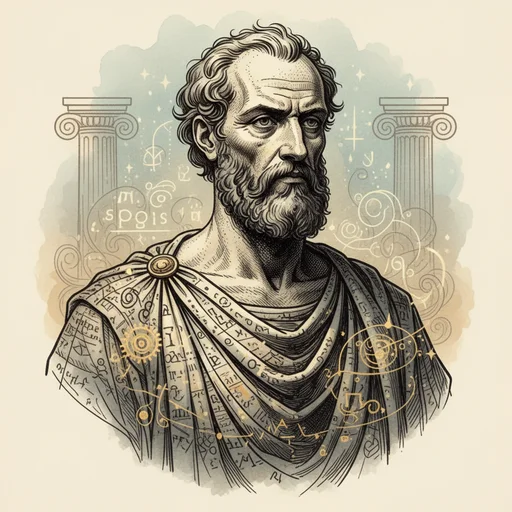
Socrates
The most famous philosopher of Ancient Greece and a symbol of reason. According to Nietzsche, Socrates was the first misguided philosopher who, by destroying instincts and the Dionysian nature of tragedy, made reason the measure of all things. That immense and magnificent power of creation in Greek culture was disrupted by his search for dialectic and rational morality; in Nietzsche's eyes, Socrates became the father of the rationalist decline that dragged the West toward nihilism.
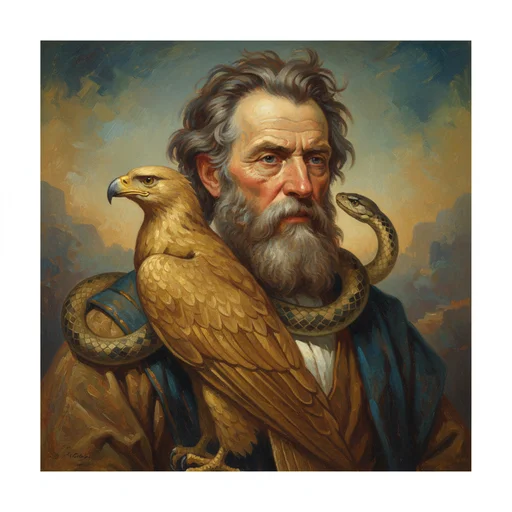
Zarathustra
The prophetic character created by Nietzsche in his work 'Thus Spoke Zarathustra'. Referencing the historical Zarathustra as the one who initiated the good-evil dualism, he has been chosen as the person to correct this error. After staying alone in the mountains for ten years and being filled with wisdom, he descends among humans to announce that God is dead, the Übermensch, and that everything will return eternally.