

The Prince — 4 karakter
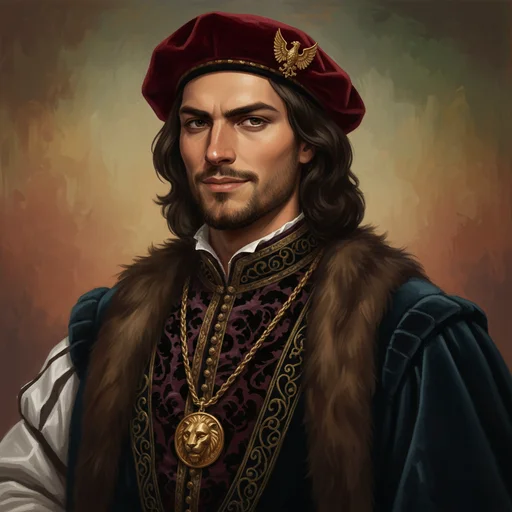
Cesare Borgia
Cesare Borgia, son of Pope Alexander VI, is the most competent historical example of Machiavelli's 'Prince' model. By skillfully using his father's Papal office and French military support, he created a state out of nothing in the Romagna region. He personally displayed all kinds of ruthlessness, cunning, and strategic skill required to hold on to his state on the field. He made it a priority to build his own army and wisely liquidated unreliable mercenaries. By shifting the burden of oppression and violence onto people like his sub-administrator Remirro de Orco, he positioned himself in the eyes of the public as a clean ruler who is both feared and respected. Only due to misfortunes completely outside human control, such as the sudden death of his father and his own being critically ill at the same time, was he unable to maintain his empire. Despite this, he is shown by Machiavelli as a perfect object of imitation for every leader who establishes a state from scratch.
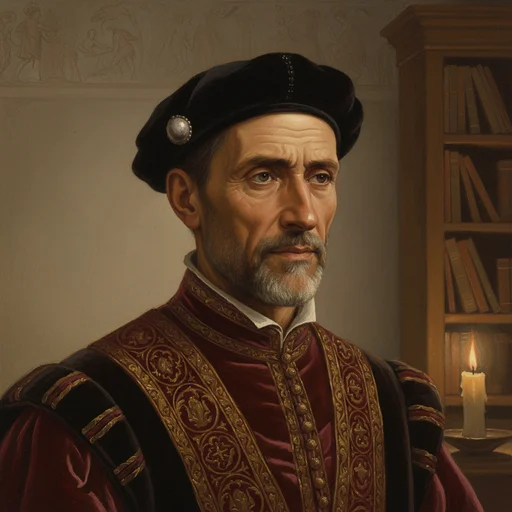
Niccolò Machiavelli
Niccolò Machiavelli was born in Florence on 3 May 1469. His father, Bernardo, had studied law but his debts kept him from practising it freely; his mother was Bartolomea de' Nelli. The family still carried an old name, but no money. Niccolò began Latin at seven, though his real school was his father's library, full of Roman authors. After Savonarola's fall, in 1498, at twenty-nine, he was elected secretary of the Second Chancery of the Florentine Republic. For fourteen years he was on the road on diplomatic missions: in 1502 he waited for months at Cesare Borgia's camp, in 1510 he went to the court of Louis XII. His writing was born in those dispatches; there he learned to describe states, armies and men with a cool eye. When the Medici returned to Florence in 1512 he lost his post; the following year he was jailed and tortured on suspicion of conspiracy. He withdrew to his farm at Sant'Andrea in Percussina. In a letter of December 1513 to Francesco Vettori he described his days among peasants and his evenings spent before the ancient writers, composing a small book: The Prince. Then came the Discourses on Livy, The Art of War, The Mandrake and the Florentine Histories. His style is short, hard and unadorned; instead of passing moral judgement it claims to see things as they are. He took politics out of theology and out of the language of virtue and made it a subject of study in its own right, and he gave Italian prose a living voice close to ordinary speech. When the Medici were driven out again in 1527 he hoped to recover his old office, but his past ties told against him. He died in Florence on 21 June 1527 and was buried in Santa Croce.
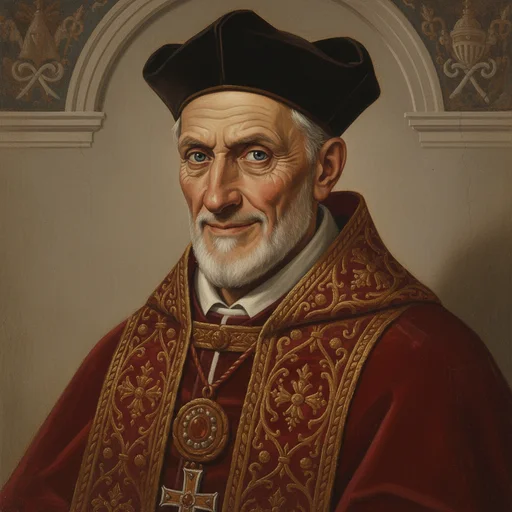
Pope Alexander VI
One of the greatest political figures taking shape in Rome, with not only spiritual but also massive physical power, pursuing land and money within the Church. His true cause is to provide lands for his son, Cesare Borgia, over which he might rule, rather than for papal glory. Machiavelli depicts him as a cleric who reads people's weaknesses perfectly, reinforces his promises with great oaths, and then makes an art out of breaking them for his own gain at the first opportunity. He cleverly pitted his rivals, the Roman barons (especially the Orsini and Colonna families), against each other and weakened them. He is the proof of the world turning not on moral, but on pragmatic cogs, disguised under the veil of the Papacy. He is the jugular vein of the political maneuvers that ensured his son's entire rise.
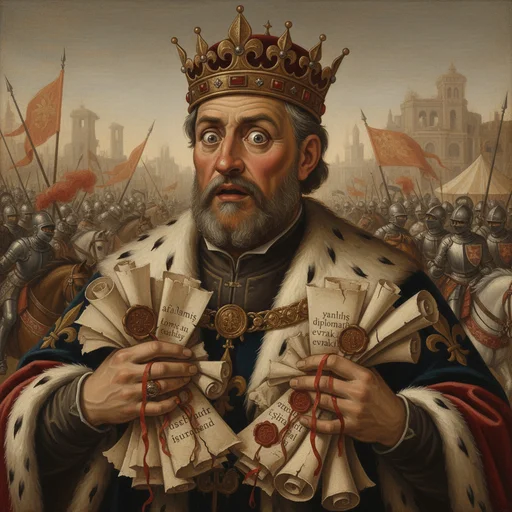
Louis XII
Although he sat on the throne of France, the most powerful state of his time, according to Machiavelli, he is the embodiment of wrong alliances and strategic blindness. He came to the region with the ambition to conquer Lombardy and Italian lands. Although the initial call from the Venetians was a great opportunity, Louis behaved with enough lack of foresight to disregard the rules in the new territory he conquered. Instead of protecting his weak friends (small Italian states), he crushed them, recognized the Pope's sovereignty in Rome, and shook his security in the region. Moreover, his greatest and most fatal mistake was involving the King of Spain as a new enemy against the enemy he had already weakened. Machiavelli treats him as the primary indicator of insufficient, weak princes who cannot conduct the art of conquest and turn the most brilliant advantages into frustration.