

Think and Grow Rich — 5 karakter
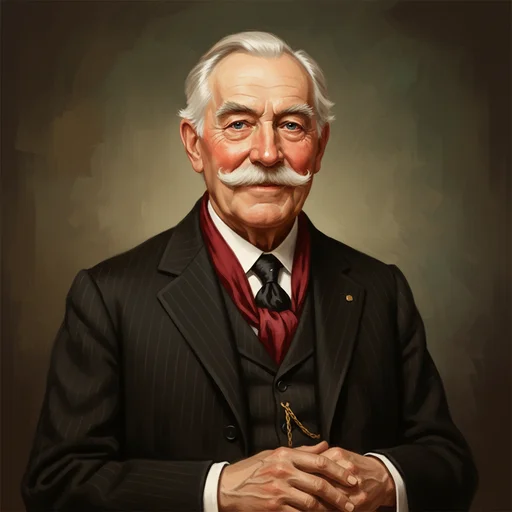
Andrew Carnegie
America's greatest steel king of all time, an extraordinary visionary, Scottish-born billionaire. He is the true owner of the success secret described in the book and the practitioner of the formula. He believes that the algorithms for acquiring wealth he created through his experiences in his youth could revolutionize not just schools but the entire educational system. By giving the task to Napoleon Hill, an intelligent and observant young man who could give his secret to the world, he initiates the entire plot of the book. He became rich by managing expert people and forming a 'Master Mind' group around him, rather than through technical details.
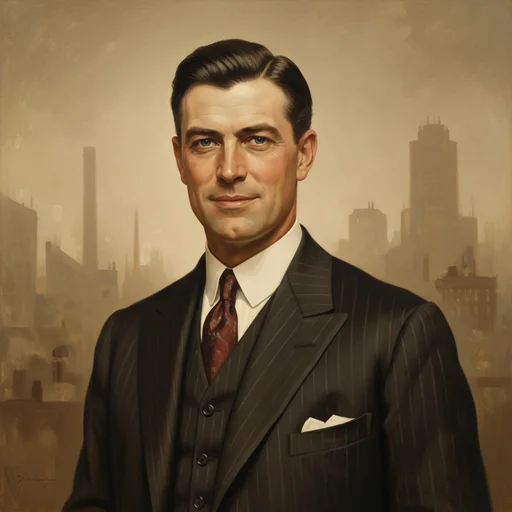
Charles M. Schwab
A tremendous mediator and visionary who emerged from the shadow of Andrew Carnegie's empire to ensure the establishment of the U.S. Steel corporation. With his unforgettable speech at the University Club, he left his mark on the largest company merger in American history. Through his simple and grammatically broken yet faith-filled language, he captivated a cold financial giant like J.P. Morgan and reshaped the American financial market by selling Carnegie's company to the trusts. At the center of his success lies his miracle of translating his faith into words and plans.

Edwin C. Barnes
The ragged-looking but brilliantly determined traveler from the previous chapter. He acted not just to work alongside Edison, but with the passion and definitive goal of becoming his partner. Despite having no money in his pocket at the start and looking disheveled, he had one single purpose: to become Thomas Edison's business partner. He started as an ordinary, very low-paid assistant, but he did not give up. When everyone else gave up on selling the Edison Dictating Machine, he saw the opportunity, used it to sell the machine across the entire country, and not only became very wealthy but concretely proved that one can 'get rich by thinking.'

Little Black Girl (Child of one of the tenants)
A modest little tenant child we encounter at the mill belonging to Darby's uncle. She came there for only 50 cents. While she was expected to be scared and run away in the face of the uncle's bullying, she stood like granite before him, as if proving how willpower, stubbornness, and mental unshakeability make a person strong. Her resistance did not just meet her own need; it became a spiritual lesson for R.U. Darby, who was watching her, teaching him not to give up in the face of poverty and that 'no' does not always mean 'no'.

Napoleon Hill
Oliver Napoleon Hill was born on 26 October 1883 in a one-room cabin near Pound, in Wise County, Virginia. It was a poor corner of Appalachia; his father, James, made a living as a dentist. His mother, Sarah, died when he was nine. Martha, his father's second wife, was an educated woman: she enrolled the boy in school and put a typewriter in his hands. At thirteen he began filing reports for the small newspapers of the mountain towns; in later years he admitted that what he wrote in slow weeks had been invented. He finished high school at seventeen, spent a short spell at a business college, and in 1901 joined the office of Rufus Ayers, a lawyer and coal operator. His ventures, from lumber to a motoring school, collapsed one after another; in 1908 he moved to Washington, and the magazine he founded in 1919, Hill's Golden Rule, finally found him a readership. In 1928 he published the eight-volume The Law of Success, which brought him a brief prosperity. His real breakthrough came in the middle of the Great Depression, with Think and Grow Rich, printed in 1937. He rested his account on the claim that in 1908 Andrew Carnegie had charged him with building a philosophy of success; no document confirming that encounter has ever been found. After 1952 he lectured alongside W. Clement Stone, and in 1963 he set up his own foundation. He wrote in short sentences, in an imperative tone, with formulas repeated until they held; he forged a language that reduced desire, faith and persistence to measurable steps. Most of the stories of meetings with famous industrialists that decorate his books could not be documented, yet this manner of telling became the template of the self-help genre. He died on 8 November 1970 in Greenville, South Carolina, at eighty-seven.