

Toilers of the Sea — 7 karakter

Déruchette
A young woman born in Saint-Pierre-Port, who grew up fatherless and was raised with great care like a princess by her uncle Lethierry, having seen no hardship or pain. She is extremely beautiful, light-hearted, and innocent. Her act of writing Gilliatt's name in the snow, entirely unaware, triggers his obsession with her. She becomes the sorrowful angel of a house shaken by the sinking of La Durande. Spiritually drawn to the religious path and the priest Ebenezer overnight, she discovers love. In the finale, she marries Ebenezer and departs the island by steamer toward happiness, thanks to Gilliatt's immense sacrifice.
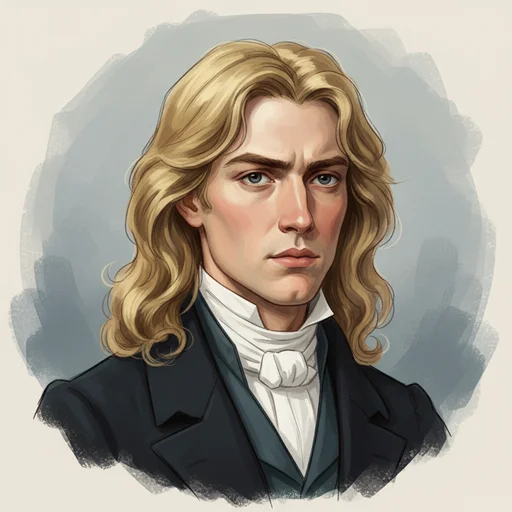
Ebenezer Caudray
A young, handsome, serious, respectable, and intellectually bright Anglican parish priest recently appointed to the island of Guernsey. Distant from worldly evils, his faith-woven mind is deeply shaken when he encounters Déruchette. While indifferent to worldly pleasures, he suddenly comes into incredible wealth upon the death of his uncle. As the indirect beneficiary of Gilliatt's immense sacrifice, he sets off with Déruchette on the steamer Cashmere, leaving the lovers separated from the island.
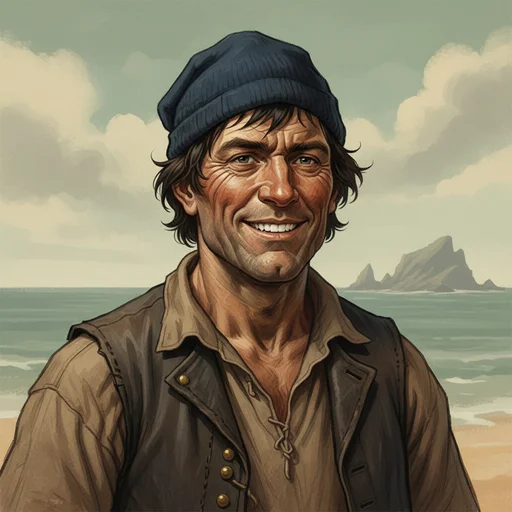
Gilliatt
A young sailor who has grown up in touch with nature and has always been an outcast, deemed uncanny, a sorcerer, or suspicious by the people of Saint-Sampson. By teaching himself trades such as carpentry, blacksmithing, and navigation, he has established an independent and isolated life. Due to his secret and epic love for Déruchette, he assumes a task equivalent to suicide: retrieving the engine of the broken La Durande. For two months, he faces hunger, storms, cold, and a giant octopus on the Douvre rocks, achieving the impossible. When he returns and sees that the girl who is his prize appears happy with someone else (Ebenezer), he chooses the silent withdrawal typical of great heroics. He sends the young couple away and ends his epic life in tragedy by allowing the waters to swallow him in a hollow by the ocean.
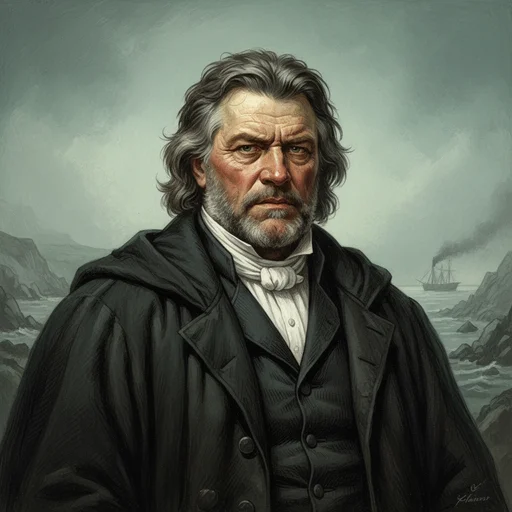
Rantaine
A giant, intelligent, and dangerous con man who once extorted Lethierry's savings and capital before vanishing. Cornered by the similarly minded Clubin, he is forced to surrender the 75,000 francs (Lethierry's actual money) he had kept in usury for ten years—using blackmail and threats—at the point of Clubin's gun. He escapes from the Channel shores to across the ocean by colluding with smugglers.
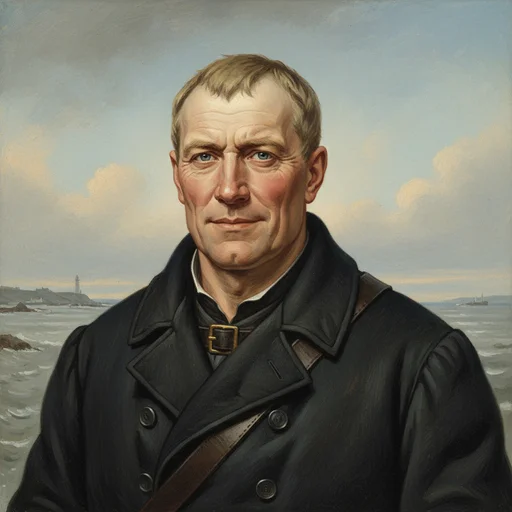
Sieur Clubin
The captain of the Durande, an intelligent yet hypocritical man accepted throughout Guernsey as the epitome of honesty and professional ethics. Under a mask of fake honesty that he carefully wove for years, he calculates a massive theft plan. He believes he will achieve a tremendous victory at the last moments when he takes the money from Rantaine at gunpoint and deliberately steers the Durande toward a cliff, as if it were an accident, sending the people away. According to his plan, everyone will think he died honorably with his ship, while he will escape with Rantaine's money and identity. However, his mistake in the dark fog of the sea, hitting the wrong rocks, and his failure to escape the octopus signal his legendary punishment.
Mess Lethierry
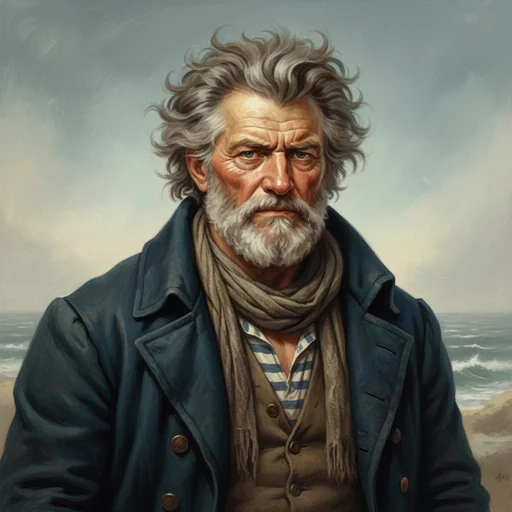
A Guernsey-born former sailor, carpenter, and shipowner in pursuit of new horizons. The steamship La Durande, which he built as a product of his own genius and courage, is a machine feared by all the Channel Islands, but it brought him great wealth and respect. Instead of marrying, he raised his orphan niece Déruchette, whom he loved like a sister, in a pampered way. He is a stubborn but very well-intentioned person who hates priests and believes in progress. When Clubin deliberately sinks the ship, he suffers a mental collapse; with the rescue of the engine, he returns from the brink of death. Although he insists on keeping the promise he made to Gilliatt, he has the virtue to accept the situation when he learns of his daughter's love.
Victor Hugo
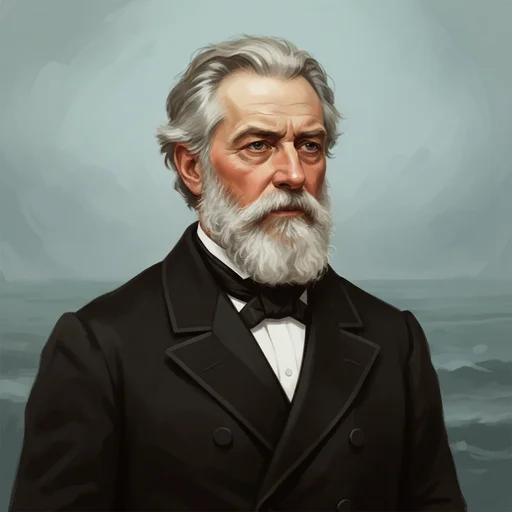
Victor Hugo was born in Besançon on 26 February 1802. His father, Léopold Hugo, was an officer in Napoleon's army; his mother, Sophie Trébuchet, held firm royalist convictions, so two opposing worlds met under one roof. His father's postings kept the family constantly on the road, and his childhood reached as far as Italy and Spain. He eventually settled in Paris with his mother, where reading became his refuge early on. At twenty he published his first collection of poems, and that same year he married his childhood friend Adèle Foucher. His 1827 preface to Cromwell was an open challenge to the rules of classical theatre and was read as a manifesto by the young Romantics. In 1830 the premiere of Hernani turned the auditorium into a brawl; that night, remembered as the “Battle of Hernani”, put him at the head of his generation. A year later came The Hunchback of Notre-Dame. He was elected to the Académie française in 1841, but the real rupture came in 1843: his daughter Léopoldine drowned in a boating accident on the Seine, shortly after her wedding. Hugo learned of her death from a newspaper and spent years tracing her in his poetry. When he opposed Louis-Napoléon's coup of 1851 he was forced to leave France; after Brussels came a long exile on the islands of Jersey and Guernsey. He wrote most of Les Misérables there and dedicated Toilers of the Sea to the island. His language was broad and loud-voiced: he carried the speech of the street into poetry, history and poverty into the novel, and he wrote against the death penalty all his life. He returned to France in 1870 and was elected senator in 1876. He died in Paris on 22 May 1885; he was given a state funeral and buried in the Panthéon.