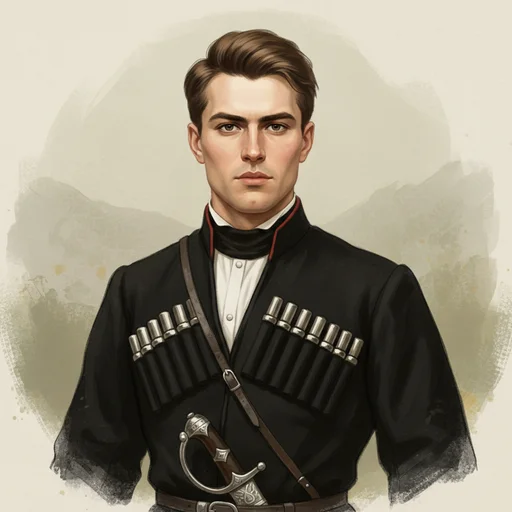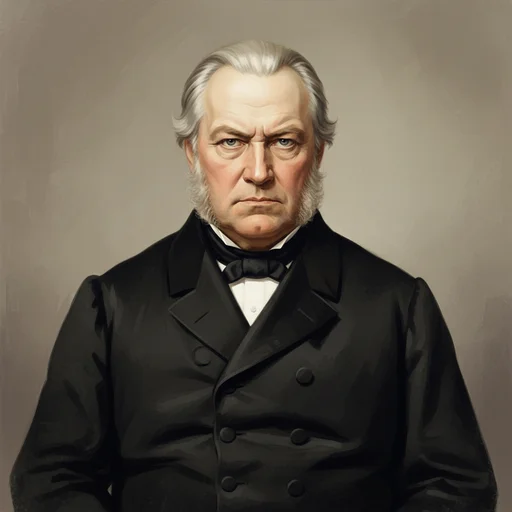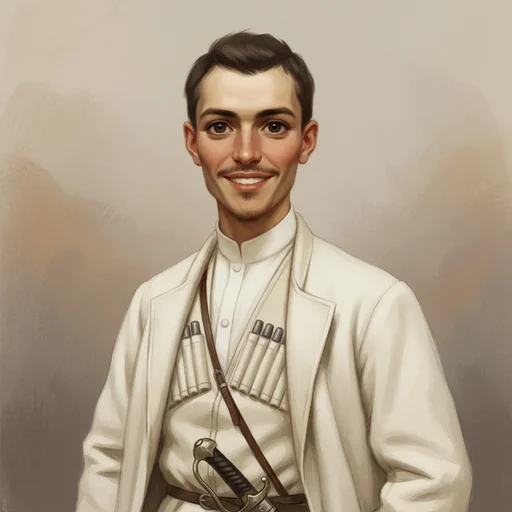

Lev Tolstoy
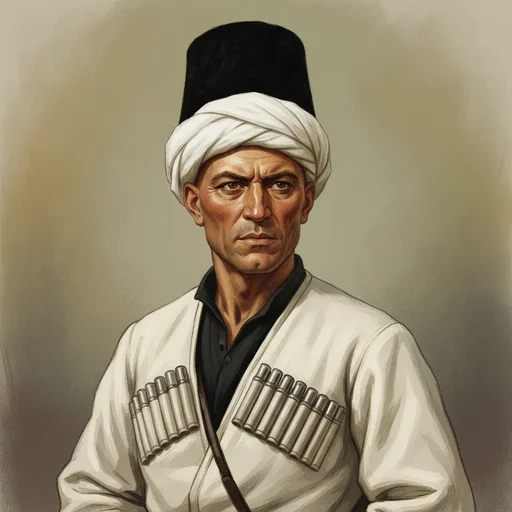
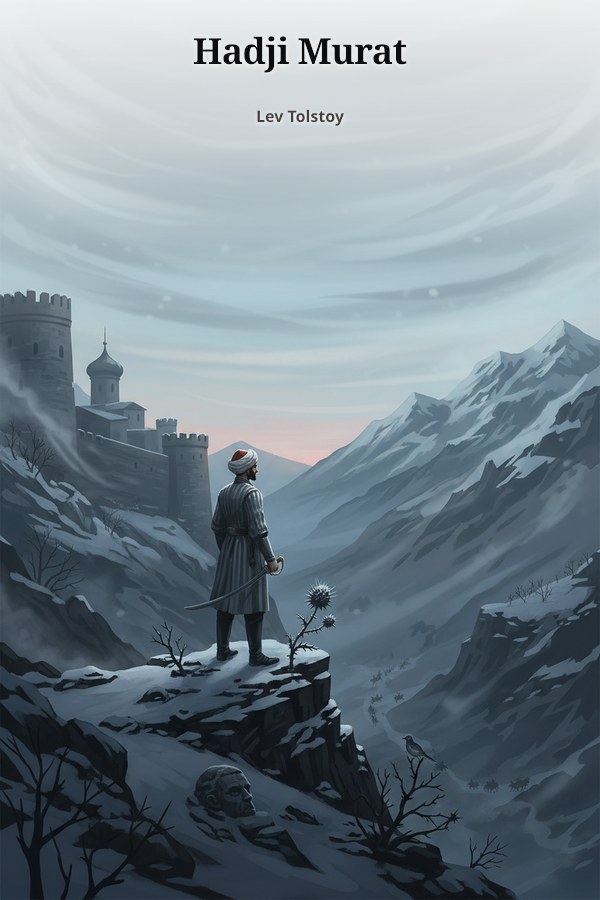
"Hadji Murat" refers both to the legendary Avar leader who resisted the Russian Empire in the Caucasus, Leo Tolstoy's famous work depicting his life, and a classic car model that has become a cult icon in Türkiye.
Hadj Murad, a Caucasian naib in a blood feud with Shamil and whose family is held hostage by him, seeks refuge with his mortal enemies, the Russians, in the hope of saving his family and taking revenge. As both Shamil and the Russians (the Tsar and Vorontsov) wish to use him as a pawn for their own interests, Hadj Murad is driven into a tragic impasse, caught between two fires.
Caucasus (Chechnya, Dagestan, Tiflis, Naha, Vozdvizhenskoye fortress) and Russia (Winter Palace in St. Petersburg).
1851-1852 (mid-19th century, during the Caucasian War).
A heavy atmosphere woven with tension, tragedy, death, honor, and betrayal, oscillating between the rugged, wild nature of the Caucasus and the artifice of the Russian imperial courts and barracks.
An omniscient, critical, third-person external narrator who is masterful in detail and insight into the characters' inner worlds, emphasizing the futility of war and the rebellious nature of the wild.
For the Caucasian highlanders, 'ghazawat' (holy war) and hospitality (kunakship) are the most sacred values. In the Russian army, a rigid hierarchy, ambition for rank, gambling, and obedience are fundamental. Both sides practice the ruthless rules of war; there is no room for weakness or sentimentality.
On one side, the Islamic Caucasian peoples, fiercely independent and strictly bound to Sharia laws and tribal customs; on the other, the Orthodox Russian Empire, a bureaucratic and military machine governed by elites who imitate European fashions.
Characters are arranged at equal intervals on a circle; you can read the relationship type and dynamics by clicking on the lines.
Bir çizgiye tıklayarak ilişki detayını açın.
Although they were once on the same side, they grow to hate each other over time due to a blood feud and power struggles. Shamil fears and mistrusts Hadj Murad, thus attempting to control him by holding his family hostage. Hadj Murad, in turn, makes destroying Shamil his greatest life goal.
After escaping Shamil, Hadj Murad swears to Vorontsov that he will destroy Shamil in exchange for rescuing his family.
Vorontsov views Hadj Murad as a strategic tool for Russia to conquer the Caucasus. Hadj Murad, conversely, wants to use Vorontsov's power to save his family. Neither fully trusts the other, but they communicate within a framework of feigned diplomatic respect.
While Vorontsov reports Hadj Murad's surrender to the Tsar as a triumph for his own political career, Hadj Murad sees him only as a stepping stone.
Butler, young and captivated by the romanticism of war, admires Hadj Murad's valor and highlander culture. Hadj Murad also likes this young Russian officer's pure and sincere approach and values him as a 'kunak' (friend).
Butler visits Hadj Murad to chat, and Hadj Murad bids him farewell by saying, 'You are a staunch kunak!'
Eldar is bound to Hadj Murad with absolute obedience and deep affection. He carries out every order of his leader without question and goes to his death for him without blinking.
In Hadj Murad's final skirmish, Eldar draws his sword, charges the enemies, and dies at the feet of his master.
Marya Dmitriyevna senses that Hadj Murad, known as a savage warrior, is actually a kind and fair man. Hadj Murad shows her respect by giving her gifts. When his severed head is brought in, Marya accuses the Russians of being 'murderers'.
As Hadj Murad leaves the fortress, he presents his own white bashlyk to Marya Dmitriyevna as a token of thanks.
Although Vorontsov appears diplomatic and respectful toward the Tsar, the Tsar and his inner circle (especially Chernyshov) envy Vorontsov's power and wealth and attempt to undermine his decisions.
While presenting Vorontsov's report to Tsar Nicholas, Chernyshov seeks an opportunity to criticize his decisions.
They are two officers who fight together and spend time at the fortress. While Ivan Matveyevich is more experienced, coarse, and prone to drinking, Butler is young and naive. Both represent different facets of Russian military life.
Upon returning from an attack, they celebrate their victory by singing songs and drinking.
Sado, despite Shamil's death threats, chooses honor over money and fear, hosting Hadji Murat in his home. This relationship demonstrates the unshakeable nature of Caucasian tradition.
Sado affirms his loyalty to Hadji Murat, saying, 'As long as my head is on my shoulders, no one can touch you in my house.'
Loris-Melikov interviews Hadji Murat to record his life story and secrets on behalf of the Russian army. Their communication is formal but respectful.
Loris-Melikov records Hadji Murat's life story and his grudge against Shamil in his notebook, reporting it to his superiors in Tiflis.
Marya Dmitriyevna acts almost as a mother and caregiver to the major. Ivan Matveyevich's harsh, alcoholic nature is balanced by Marya's affectionate side. They have an unofficial but practical marital relationship.
The officers know that Marya Dmitriyevna is the only person who cleans up after Ivan Matveyevich and manages him when he falls apart due to drink.