

Felatun Bey and Rakım Efendi — 9 karakter
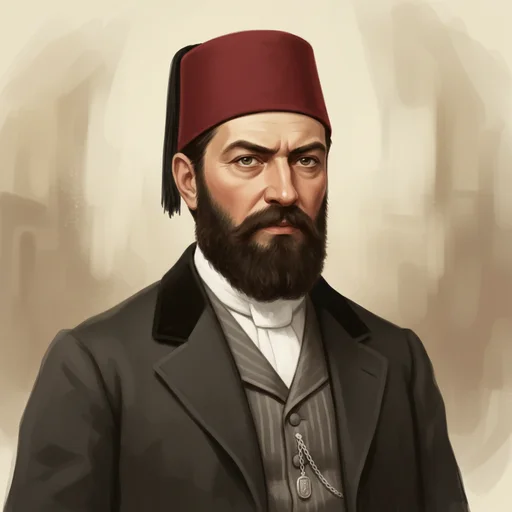
Ahmet Mithat Efendi
Hij werd in 1844 geboren in de Istanbulse wijk Tophane. Zijn vader, Süleyman Ağa, handelde in stoffen; zijn moeder, Nefise Hanım, kwam uit de Kaukasus. Omdat hij zijn vader vroeg verloor, ging hij niet naar school maar in de leer, bij een kruidenhandelaar op de Egyptische Bazaar. De aanstelling van zijn oudere broer bracht hem eerst naar Vidin en daarna naar Niš, waar hij de middelbare school afmaakte. Als klerk op de kanselarij van de Donauprovincie viel hij op bij Midhat Pasja, die hem zijn eigen naam gaf. In Roetsjoek begon hij te schrijven voor de krant Tuna en werd er al snel hoofdredacteur van. In 1869 volgde hij de pasja naar Bagdad en leidde daar het blad Zevrâ. Terug in Istanbul richtte hij in 1871 een eigen drukkerij op en gaf hij de tijdschriften Dağarcık en Kırkambar uit. Een artikel in Dağarcık leverde hem de aanklacht van goddeloosheid op; in 1873 werd hij naar Rhodos verbannen, waar hij bleef lesgeven. In 1876 keerde hij terug naar Istanbul. Zijn romanwerk begon in 1874 met Hasan Mellah en kreeg een jaar later een eigen stempel in Felâtun Bey en Râkım Efendi. De krant Tercüman-ı Hakikat, die hij in 1878 oprichtte, werd een van de langstlopende van de Ottomaanse pers; hij was het die Fatma Aliye de literatuur binnenhaalde. Hij schreef eenvoudig, alsof hij de lezer bij de hand nam, en aarzelde niet het verhaal te onderbreken om iets uit te leggen. Met meer dan tweehonderdvijftig boeken heette hij ‘de schrijfmachine’ en gold hij als de eerste leraar van het volk. Hij bracht de roman bij een breed Turks publiek. In 1889 nam hij deel aan het oriëntalistencongres in Stockholm. Zijn laatste jaren doceerde hij aan het Darülfünun; op 28 december 1912 stierf hij in de Darüşşafaka, waar hij vrijwillig lesgaf.
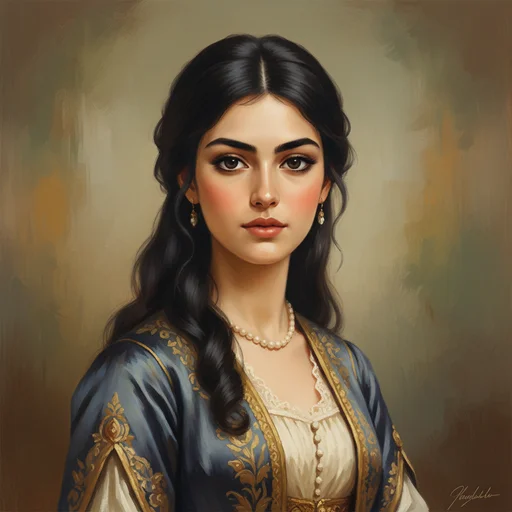
Canan
A white Circassian concubine brought from the Caucasus who, despite appearing thin and sickly, possesses an extremely beautiful face and well-proportioned features. She was purchased by Râkım for one hundred gold coins to assist the house nurse, but under Râkım's compassion and education, she soon learned French, Turkish, and the piano to an excellent level. She was raised not as a slave, but as the mistress of the house. With her intelligence and speed of learning, she fascinates everyone, including her English teacher, Josephino. She is tied to Râkım with great respect and an increasingly intense love; she is so loyal that even if she were offered freedom and great diamonds, or manumitted, she would only ever wish to remain a prisoner by Râkım's side. Ultimately, she conquers Râkım's heart with all her talents and love, and is rewarded with marriage.
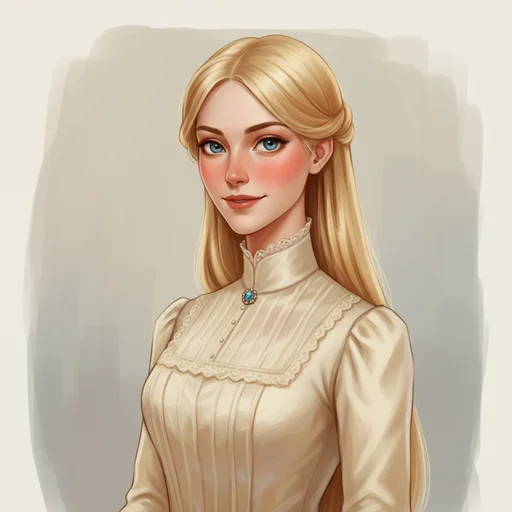
Can (Jane Ziklas)
Mr. and Mrs. Ziklas's elder daughter. She is a perfect noble beauty with English grace and 'light, flaxen hair close to white.' She progresses rapidly in Turkish literacy and cultural lessons taken from Râkım, and through this, falls into a violent, platonic love, captivated by Râkım's dignified charm. Despite being a Western woman, she never behaves indiscreetly toward Râkım's boundaries and suffers in silence to the point of contracting tuberculosis (consumption). Once her illness is diagnosed by her doctor and family, and a proposal is taken to Râkım, she respectfully accepts Râkım's bond with Canan, appreciates Râkım's honest integrity as 'an example of virtue,' and accepts the situation. After recovering from a severe depression, she is sent back to her homeland (Alexandria) by her father.
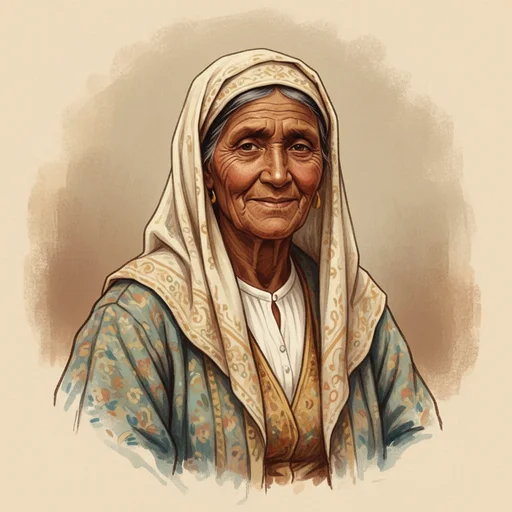
Fedai Kalfa
A loyal, veteran Arab servant who took on Râkım's care when he was orphaned at the age of one. After the death of Râkım's mother, she dedicated her entire life to raising Râkım honestly by performing hard labor such as laundry and house cleaning. Even when Râkım grew up and started earning money, she doted on him and always monitored his upbringing. When Canan arrived at the house, she initially wanted the girl to help with housework, but eventually loved her like her own daughter. Throughout the novel, she is a traditional, pure, compassionate, and intelligent woman who establishes dominance in managing the house and is respected by everyone as 'Mother' and 'Nanny'.
Felâtun Bey
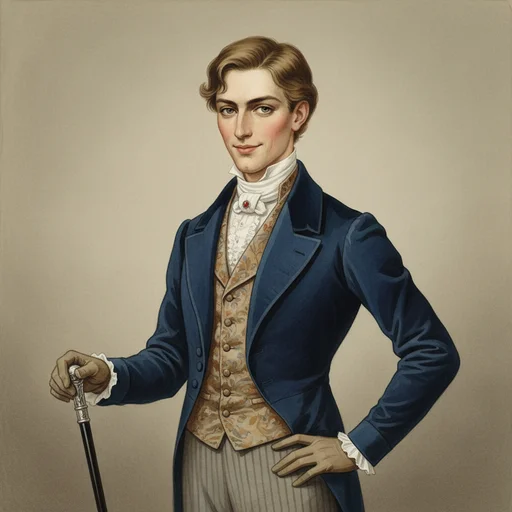
The son of Mustafa Merakî Efendi; encouraged by his father, he is an extremely spoiled, uneducated type who thinks he is a highly cultured intellectual. He supposedly finished middle school (Rüştiye) and is an official at the bureau, but he rarely goes to work; he spends most of his time in Western-style theaters in Beyoğlu, at shops, and at flashy social invitations. He has adopted the name 'Platon' just for titles, but has no capacity to understand what he reads. He has books custom-bound and placed on shelves just for show. After his father dies, he wastes most of the half-million francs he inherited on harlots like the French actress Polini. By the end of the work, he falls into a pitiful state and is forced to leave Istanbul with the small remaining fortune and a simple district governorship (mutasarrıflık) title obtained from the state.

Josephino
Madam Josephino is an unmarried and intelligent French woman approaching her forties, familiar with the free lifestyle of Istanbul (Beyoğlu). She gives piano lessons in many houses and appears in social circles. Her first meeting with Râkım occurs at a gathering at her French friends' house. She is very interested in Râkım's patronage of Canan and his serious demeanor; she develops romantic feelings for Râkım in a short time and begins hosting him as a special guest. However, as Râkım's invisible bond with Canan and her own naive personality come to light, Josephino reins in her passion, shows maturity, and transforms into a loyal, close civil friend to Râkım and a dedicated piano teacher to Canan.
Mr. Ziklas
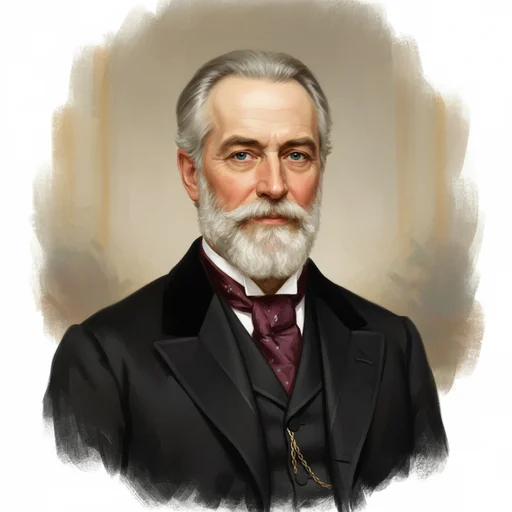
A serious, very wealthy, and quite polite English family man who came from England and settled in Asmalımescit Street. He hires Râkım as a Turkish teacher for his eldest daughter, Can (Jane), and his younger daughter, Margaret. As a family, they are enchanted by Râkım's morality and gentlemanly conduct. He never underestimates Râkım's luck or effort, holding him in higher regard than the English, Franks, and heirs to fortunes in his own circle. Upon learning of Râkım's noble stance and his situation with Canan regarding his daughter Can's platonic love—which had reached the stage of tuberculosis—he accepts the truth with fortitude and honors Râkım's honesty as 'the noblest of sentiments.'

Mustafa Merakî Efendi
Introduced at the beginning of the novel as the father of Felâtun Bey and Mihriban Hanım. He acquired the nickname 'Merakî' (the Curious/Whimsical) because whenever those around him asked about his strange and excessive endeavors, he would reply, 'It is just a whim!' While he was a content and very wealthy man in Üsküdar, Istanbul, he suddenly shifted to full Westernization, sold his home and property, moved into a Western-style stone mansion in the Beyoğlu district, and filled his house with Armenian and Greek servants. He considered his son’s knowledge of French to be sufficient as a perfect intellectual education. He is extremely careless and superficial in guiding the moral development of his children. His death leaves his son with an uncontrolled, massive fortune and a total lack of qualifications.

Râkım Efendi
Râkım werd geboren als de zoon van een van de oude officieren van de janitsaren in Tophane en werd op eenjarige leeftijd wees, waarna hij in materiële armoede leefde. Hij werd opgevoed door Fedai Kalfa, een van de oudere dienstmeisjes uit het gevolg van zijn moeder, die met haar eigen handen voor hem werkte alsof hij haar eigen kind was. Dankzij zijn buitengewone intelligentie en ambitie leerde hij na zijn basisonderwijs (rüştiye) zichzelf Arabisch, Perzisch en Frans, evenals diverse westerse wetenschappen. Nadat hij was begonnen met werken bij het Ministerie van Buitenlandse Zaken (Hariciye Kalemi), verdiende hij zijn fortuin door hard werken, door Turkse les te geven aan buitenlanders en artikelen te schrijven voor kranten. Hij geeft de welvaart die hij door werk heeft verworven niet uit aan uiterlijk vertoon, maar aan zijn bibliotheek, het onderhoud van zijn huis en zijn concubine Canan, die hij met mededogen verzorgt. Hij voedde Canan op tot een onberispelijke dame en opende uiteindelijk zijn hart voor haar als broer, vriend en uiteindelijk als echtgenote. Hij symboliseert de ideale Turkse intellectueel uit het Tanzimat-tijdperk, die het Westen op rationele wijze omarmde zonder de banden met de morele en deugdzame wortels van het Oosten te verbreken.