

A Tale of Two Cities — 8 karakter
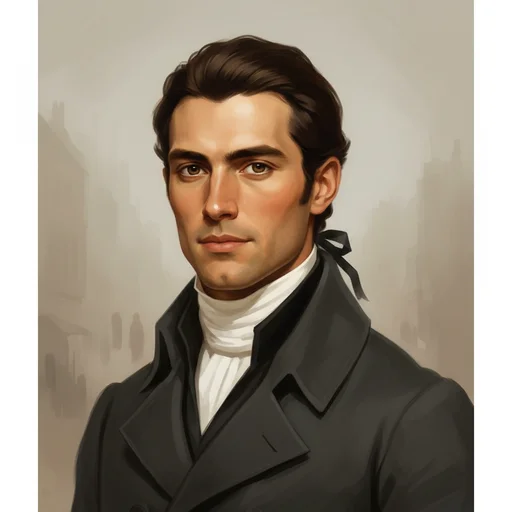
Charles Darnay
Darnay's real name and surname belong to the Marquis St. Evrémonde, one of the most deep-rooted and cruel noble families of France. He rebels from the heart against the unjust practices of his uncle, the Marquis, and the aristocracy in general toward the fallen humanity and the peasantry, and he leaves all his inherited property, name, and rank behind with disgust. With the honor of being a 'new and moral' man, he turns to teaching literature and language to make a living in England. When they first meet, he helps the elderly and confused Dr. Manette and his delicate daughter Lucie with deep nobility and falls in love with Lucie with a very intense bond; they marry. The feelings of mercy and gratitude coming from his noble nature bring a perfect sense of respect to this family he married into and to London, but the burden of his past name and his uncle's resentment-filled memories will tighten around his neck like an inevitable thread of fate. During the ongoing French Revolution, in an act of innocent nobility, he returns to France by risking his own head to save his poor valet Gabelle, who once honestly worked for him, from the guillotine or the pikes; he cannot escape the illegal arrests, which are the ruthless vortex of the Revolution. He symbolizes defending one's moral stance at any cost.
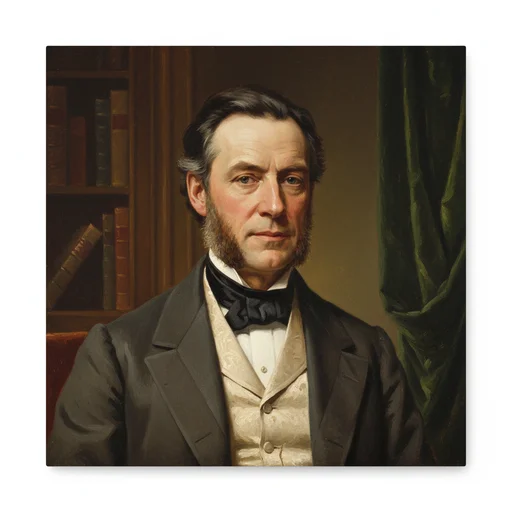
Charles Dickens
Charles Dickens was born on 7 February 1812 in Portsmouth, the second of the eight children of John Dickens, a clerk in the Royal Navy Pay Office, and Elizabeth Dickens. The household was permanently in debt; when his father was sent to the Marshalsea debtors' prison in 1824, twelve-year-old Charles was taken out of school and set to pasting labels on bottles in a blacking warehouse for six shillings a week. Those few months left a wound he avoided speaking of for the rest of his life. After his father's release he returned to school, then worked as a solicitor's clerk; he taught himself shorthand and became a parliamentary reporter. The sketches of city life he sent to magazines from 1833 were collected in 1836 as Sketches by Boz. The Pickwick Papers, serialised the same year, made him at twenty-five the most widely read writer in the country; two days after the first instalment appeared he married Catherine Hogarth. He published Oliver Twist in monthly parts between 1837 and 1839 in the magazine he edited, turning the novel into an instrument of social criticism. In David Copperfield he went back to his own childhood; the journals he ran made him a public man as well as a novelist. He separated from Catherine in 1858; his attachment to the young actress Ellen Ternan lasted until his death. A Tale of Two Cities appeared in 1859 as the first serial in his new magazine, All the Year Round. Serial publication shaped his manner: he closed every instalment at the tightest moment, set laughter beside pity, and made characters whose faces rise the instant their names are spoken. He brought the English of the street into the novel and put poverty and the coldness of institutions in front of his readers. His last novel, The Mystery of Edwin Drood, was left half finished when he died of a stroke on 9 June 1870 at Gad's Hill Place, his house in Kent; he was buried in Poets' Corner in Westminster Abbey.
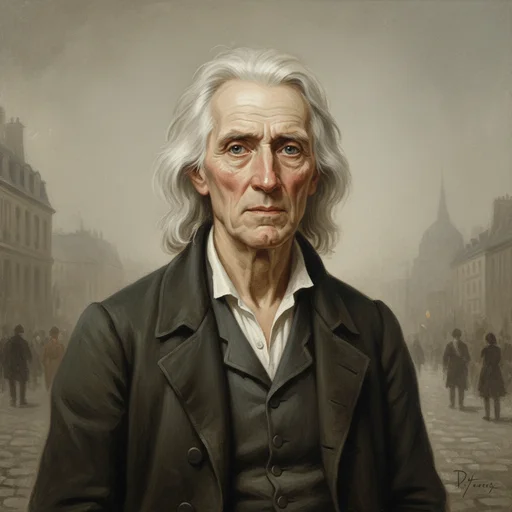
Dr. Alexandre Manette
While he was a very successful and intelligent doctor in Paris, he was secretly thrown into prison by a royal decree after he coincidentally witnessed a murder committed by the cruel Evrémonde nobles and reported the situation. He was completely isolated from the outside world for eighteen full years in the Bastille dungeon in 'One Hundred and Five, North Tower,' and during this time, he lost his memory, consciousness, and entire personality. During his prison years, to occupy his mind and not go completely insane, he took refuge in simple shoemaking, and his identity became trapped within this act. Years later, when he stepped out again on the roof of his former servant Defarge, his daughter Lucie and the banker Mr. Lorry found him. Under the intense love, compassion, and protective atmosphere of Lucie, he was brought back to London; he began to practice his brilliant intellect and doctoring profession again. Although he transformed into a normal gentleman, the 18 years of darkness and helplessness in his subconscious never faded; at the threshold of emotional trauma or very serious stress, he immediately slips into his old mechanical state, retreats to a corner, and starts tapping away at those shoes again. He is the purest indicator of how secrets and oppression can ruin human nature. In the final periods of his life, he is an honorable father and a disaster survivor, determined to erase all those black clouds in his mind with his daughter's compassionate hands.

Ernest Defarge
A steadfast character who laid the foundations of a revolution that would leave a deep mark on society from his wine shop in a dilapidated, wretched cellar, yet a former servant who, even in the shadow of revenge, retained a modicum of humanity. In his youth, he trained under the command of the famous Dr. Manette, and after his master's terrifying captivity in the Bastille, he took him in, provided him with a sanctuary in the attic, and paved the way for his escape with the English entourage. However, in the meantime, while becoming one of the most secret leaders of the Revolution, he broke the 'Jacques' committees, and by closely observing the deep misery of the people and the cruelty of the aristocrats, he became a commander of this rebellion that would be stained with weapons and blood. Compared to the mind of his wife, Therese, which is fueled by inexhaustible malice, he always carries a pang of conscience against the revolutionary dangers directed at his own master and his tiny baby (Lucie). Even as he takes up arms, storms the dungeons of the Bastille, and fights amidst the gunpowder in those towers, he remains a broken yet powerful man of action looking from the darkness of the story toward hope, driven by his unending respect for his old Doctor.
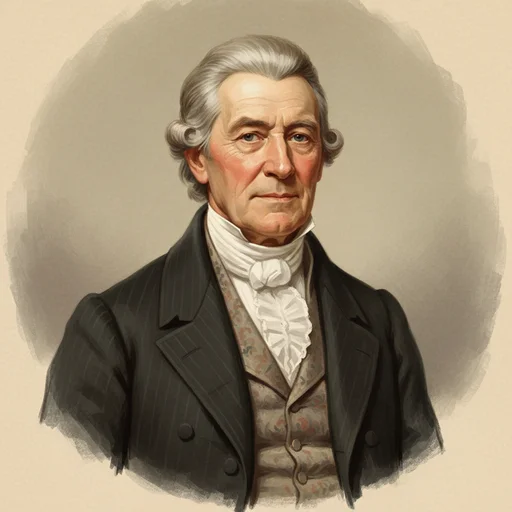
Jarvis Lorry
He is a British gentleman banker who has spent over sixty years among the dark and misty shelves of the famous Tellson's Bank in London, constantly masking himself as if he were born to work and as if his life's only function were the interests of this bank and a mechanized sense of duty. However, beneath this conservative and emotionless man of rules lies an extremely fatherly heart full of affection and honor. Throughout the story, beginning with bringing Lucie Manette to safety 17 years ago, taking her back to France to retrieve her father, and bearing the brunt of Tellson's Bank's crises during the revolution years to be a harbor for the whole family despite his aged heart, he is always the voice of reason. He is the secret supporter of Charles Darnay and Lucie's love; he is a guardian who never leaves old Doctor Manette alone, even during his mental crises. Amidst all the brutality and destruction, he is a noble companion of life who bases trust on the purity of conscience rather than the order of the law.
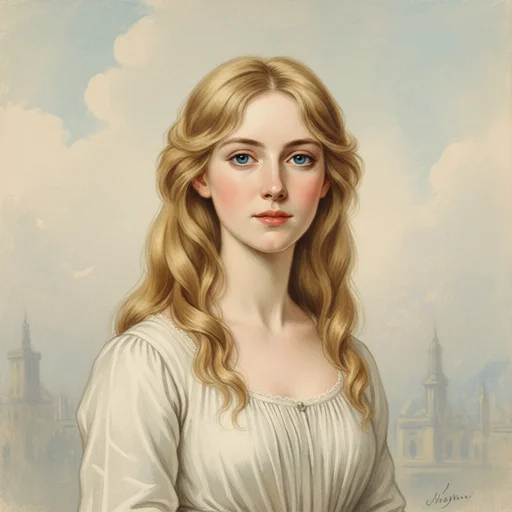
Lucie Manette
A French-born young woman who was taken to London while still an infant under the guardianship of Tellson’s Bank, she is extremely graceful and pure. She spent nearly seventeen years of her life in silent obedience, believing her father to be dead. When she learned that he had survived the Bastille, she trembled with compassion over a man who was like one dead, without a moment of hesitation, and slowly resurrected him by instilling the light from her golden hair into his clouded mind. She possesses a respectable, compassionate, and extraordinarily delicate spirit. During their life in London, she acts as the central element—a 'golden thread'—that connects her husband, Charles Darnay, her friend Mr. Lorry, the weary and ill-fated Sydney Carton, and even the stern-hearted Miss Pross, through her sweet presence and constant care. She is the ultimate reflection in this work of unrequited love, womanly virtues, mercy, and the light of goodness that warms a home. As the great waves of the Revolution rise, her greatest concern is for the dangers directed at her father's mind and her husband's life.
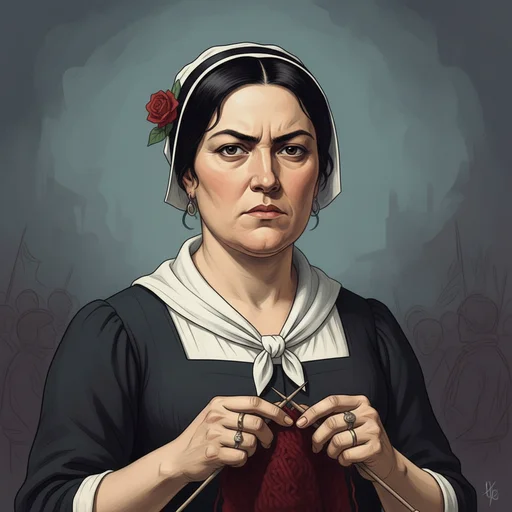
Madame Therese Defarge
She is the mistress of the dilapidated wine shop in the Saint Antoine district, yet this shop is a key hub that generates not only the innocent but the most powerful hurricane of those bloody winds of the Revolution. Madam Defarge knits her knitting all day. But the thread in her hand is actually a list of names for that relentless massacre to be inflicted upon the aristocracy. She carries the grace of a killer with her cold-bloodedness. She merely observes her surroundings from where she sits and notes every small tremor in her brain. She is a character who has become so monstrous that she can sever the head of a despot like Foulon—who mocked the hunger of the people—with terrible pleasure while keeping it under her own feet. She feels that even her husband, Ernest Defarge, is slow compared to the speed of the tiger in her own heart. In her eyes, neither the 18-year tragedy suffered by Doctor Manette nor the weeping of blonde-haired Lucie matters. She is the symbol of savage and extremely loyal justice of a revolution that cannot accept any heart finding peace before the 'Magnet Rock' is toppled.
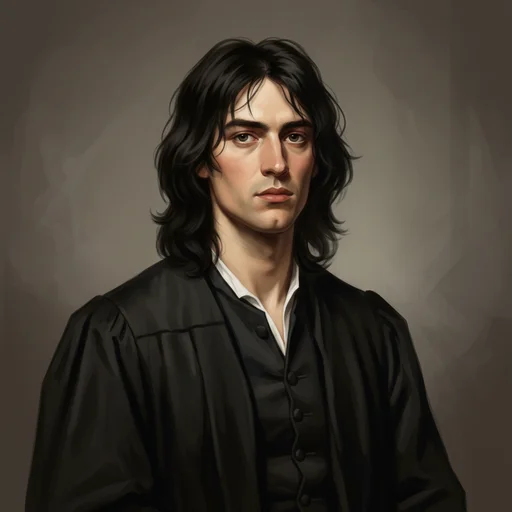
Sydney Carton
To the outside world, he is a lazy, alcoholic, soulless, and 'jackal' English lawyer. Although his intelligence and legal knowledge are actually far superior to Stryver's, he possesses no ambition to take him to the top, nor any joy to cling to life. Since his youth, he has been content to remain in the shadow of others (especially Stryver), a lonely vagabond who wastes his days away wrapped in towels in bars. At Charles Darnay's trial at the Old Bailey, he used his genius through his exact resemblance to Darnay to save him from death. Beneath this gruff appearance lies a highly fragile romantic character who is aware of his own misery. The presence of Lucie Manette dawned like a star in his life, transforming into a sacred vow that, for the sake of this golden-haired woman, he could erase all the evil and dishonorable life in the world. By giving his word, 'Know that I would sacrifice my life for all you love and care for,' he will be the victim figure at the center of 'resurrection' and salvation themes, proving his existence on the scaffold not for heroism or applause, but solely for a quiet and firm peace of conscience by trading his life for Darnay's.