

The Carriage Affair — 5 karakter
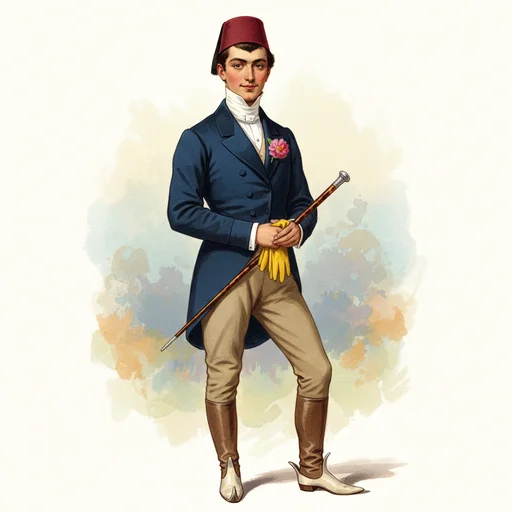
Bihruz Bey
He is an extremely spoiled, uneducated son raised by one of the former statesmen and pashas, who ironically believes himself to be highly educated (civilized). After his father's death, he inherited a large fortune and neglected both his reading and his clerk position at the government office, dedicating himself entirely to dressing stylishly, adopting European mannerisms, and showing off in luxury phaetons at excursion spots. One day, he mistakes Periveş Hanım—a blonde, gaudy woman of the lower class he sees in Çamlıca—for the innocent and noble lover from French novels. He becomes a tool in the games of Keşfi Bey, whom he quickly believes in this fantasy world he has created, and is convinced that Periveş has died, entering a period of fake mourning. Throughout the novel, we watch him deceive himself, use and trick his servants and mother just for show, and see his dreams crash down with a harsh reality at the end of the day. He is one of the most typical 'westernized dandy' (alafranga züppe) prototypes in Turkish literature.
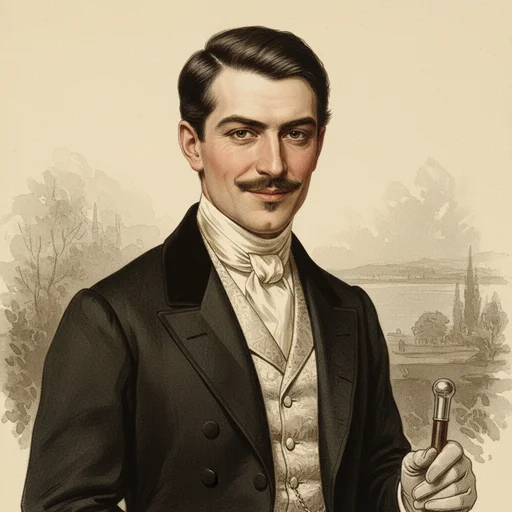
Keşfi Bey
One of Bihruz's friends at the government office. He is a type who has turned lying into an art form; he is clever but spends this intelligence entirely on empty affairs and pranking people. Knowing Bihruz's naive, romantic nature, he hatches a grand conspiracy just to deceive him and see where it leads. Keşfi, the son of the Damascus defterdar (finance director), drags the book toward the center of a dramatic crisis by stringing together lies—such as that he knows Periveş and that she has died. He is the main source of humor and fake intrigue (trickster) in the novel.

Monsieur Pierre
He is an elderly, opportunistic French teacher who frequents the mansion under the pretext of giving French lessons to Bihruz Bey. He takes great advantage of the wealth Bihruz inherited after his father's death, peddling worthless, dilapidated magazines and books to him at exorbitant prices (fifty francs, etc.). As a character, he is the greatest provocateur of the corrupt 'European' aspirations within Bihruz; by constantly praising romantic, distorted literary works to Bihruz, he leads his mind toward a fantasy world and absurd passions.
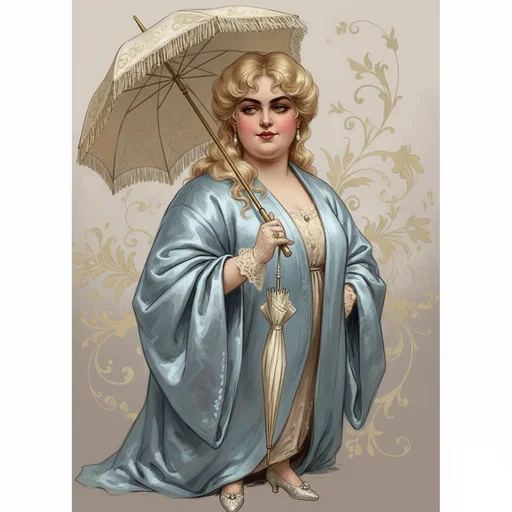
Periveş Hanım
A young, showy, and frivolous widow who wanders around the Çamlıca Gardens and excursion spots with Çengi Hanım. In Bihruz's eyes, she has transformed into a French angel symbolizing nobility and decency. In reality, however, she is a common street songbird who likes to talk in slang, pursues entertainment, and takes a fake pleasure in mocking wealthy fops. At the final great moment of revelation in the book, she encounters Bihruz and shatters his groundless fantasy, reflecting the bitter truth. Throughout the text, her true identity is deliberately hidden from Bihruz and the reader by a cloud of illusion.
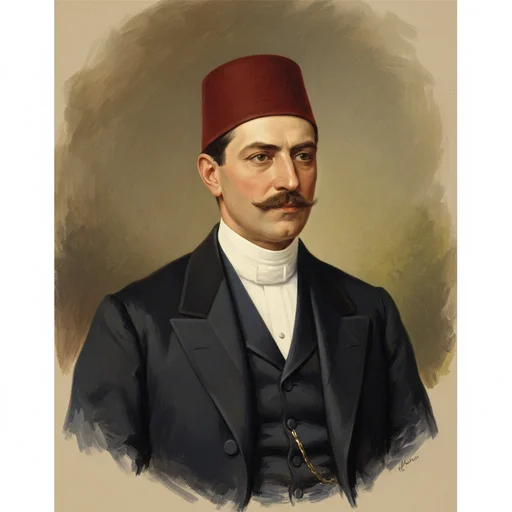
Recaizade Mahmut Ekrem
Mahmut Ekrem was born on 1 March 1847 in Vaniköy, on the Bosphorus shore of Istanbul. His father was Recai Mehmet Şakir Efendi, once head of the state almanac office and known as a poet and calligrapher; the family library was the boy's first school. He learned Arabic and Persian from him. After the secondary school at Beyazıt he attended the Mekteb-i İrfan, and entered the military preparatory academy but had to leave it because of illness. In 1862 he joined the correspondence bureau of the Foreign Ministry, where he met both the masters of the old poetry and Namık Kemal. Fleeing to Europe in 1867, Kemal left him the newspaper Tasvir-i Efkâr. His first book of verse, Nağme-i Seher, appeared in 1871, and its language was still the language of divan poetry. Between 1878 and 1887 he taught literature at the Mekteb-i Sultani and the School of Civil Service. Talim-i Edebiyat, which grew out of his lecture notes, was regarded as the book that carried Turkish letters from Eastern eloquence to Western rhetoric, and it earned him the name of “master”. Muallim Naci answered the innovations he defended in the prefaces to Zemzeme with Demdeme; the quarrel of old and new grew sharp enough to require the government's intervention. In 1896, shielding his own students, he helped open the magazine Servet-i Fünun to young writers. In poetry he took thought, feeling and imagination as his foundation; by saying that everything beautiful, from the mote to the sun, could be a subject for verse, he removed the limits of subject matter, and he argued that not every measured and rhyming phrase deserves the name of poem. The Carriage Affair, serialized that same year, is held to be the first realist Turkish novel for the ridiculous passion of Bihruz Bey, who mistakes Westernization for display. All three of his children died before him; what he wrote after the death of his son Nijad in 1900 makes up his most affecting pages. He died in Istanbul on 31 January 1914 and was buried beside his son in the Küçüksu cemetery.