

Dead Souls — 8 karakter
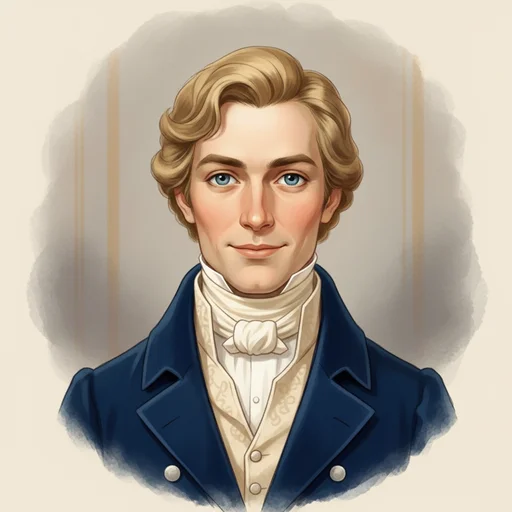
Manilov
Manilov is a wealthy nobleman and owner of the village of Manilovka near N... city. Although he seems affectionate, overly sweet, and hospitable at first, in time, this sweetness creates weariness and boredom in others. In the sugar-colored, sticky, and dreamy romantic world he built with his wife, Manilova, he takes pride in having given their children classical names like Themistoclius and Alcides. One can hardly say he cares about his farm, his peasants, or household management; he spends his time smoking a pipe, looking at the pages of unread books, and dreaming of impossible bridges and high castles. He becomes so captivated by Chichikov's friendship that he finds it an insult to take money from him, happily handing over the dead souls for free and experiencing a transcendent spiritual satisfaction in his own way.
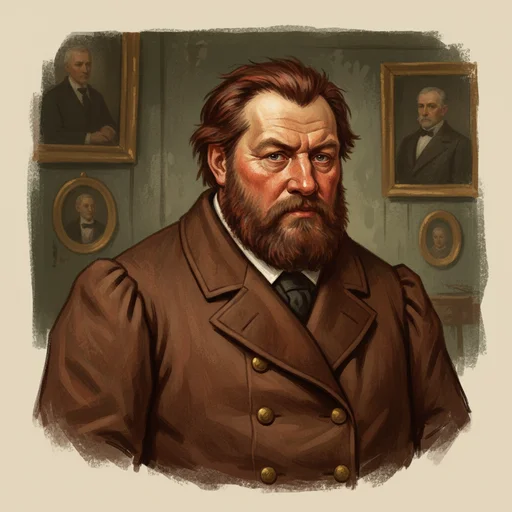
Mikhail Semyonovich Sobakevich
Sobakevich is a large-bodied, bear-like landowner who embodies the animal both inside and out. He is quite blunt but extremely practical and worldly. He lives in a castle that, at first glance, seems to have been built with no architectural taste, featuring heavy, crude furniture, yet it is constructed with immense durability. While visiting, he ignores Chichikov's presence for a long time, showing a silence similar to his own furniture; however, when the topic turns to food, he reveals a gargantuan appetite. With his deep hatred for officials, the governor, and the elite, he calls everyone a 'scoundrel' or 'crook.' When Chichikov mentions dead serfs, he quickly calculates the intent and absurdity of the request, entering into this 'abnormal' negotiation with the cool-headedness of a normal merchant, eventually proving his cunning by valuing his dead [serfs] at a hundred rubles, then settling for at least two and a half.
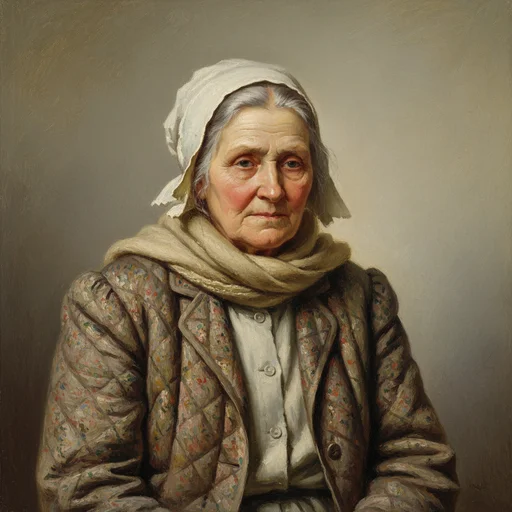
Nastasya Petrovna Korobochka
Nastasya Petrovna Korobochka is an elderly and stubborn widowed landowner living near N... city. When Chichikov sets off towards Nozdryov's, he knocks on her door by chance when his carriage gets stuck in a storm. She is a typical provincial woman, traditional, narrow-minded, and constantly whining about harvest and financial losses. She stores the honey, hemp, and wool she produces in her home, trying to make a profit from everything. When Chichikov makes the offer to purchase dead souls, she is deeply shocked; rather than the moral aspect, she hesitates regarding whether she will lose money by selling the dead or if she could find another buyer and sell them for more, displaying an exasperating stubbornness. Finally, upon Chichikov's wearying ultimatum, she agrees to sell them for 15 rubles.
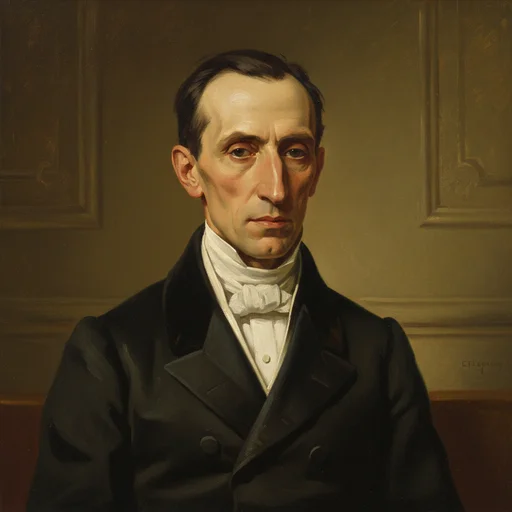
Nikolay Gogol
Nikolai Gogol was born in 1809 in Sorochintsy, a town in the Poltava region of Ukraine, into a family of minor landowners. His father, Vasily Gogol-Yanovsky, wrote amateur plays and staged them at home; he died when Gogol was fifteen. A sickly, withdrawn child, the future writer became known at the school in Nezhin for his sharp tongue and for the old men and women he played in school theatricals. In 1828 he went to Petersburg in search of fame; his attempt at acting came to nothing, and when the poem he had printed at his own expense, Hanz Küchelgarten, was savaged by reviewers, he gathered up every copy he could find and burned it. Written while he held a minor clerkship, Evenings on a Farm Near Dikanka (1831-32), a set of Ukrainian village tales, made him known overnight and won him Pushkin's friendship. In 1835 he published Mirgorod and Arabesques; the following year The Government Inspector reached the stage, and its mockery of provincial officials caused an uproar. Worn down by the reaction, Gogol left Russia and spent most of the next twelve years in Rome, where he wrote the first volume of Dead Souls. Selected Passages from Correspondence with Friends, published in 1847, turned against him the very critics who had defended him; Belinsky's furious letter shook him deeply. Gogol's pen holds the ridiculous and the frightening in a single sentence: the colourless copying clerk of The Overcoat and the provincial manor houses of Dead Souls make the reader laugh and grow uneasy at once. Much of the realist strain in Russian prose grew out of that way of looking. In 1848 he made a pilgrimage to Jerusalem; his last years were consumed by a religious crisis. In February 1852 he threw the manuscript of the second volume of Dead Souls into the fire, refused food, and died days later in Moscow, aged forty-two.
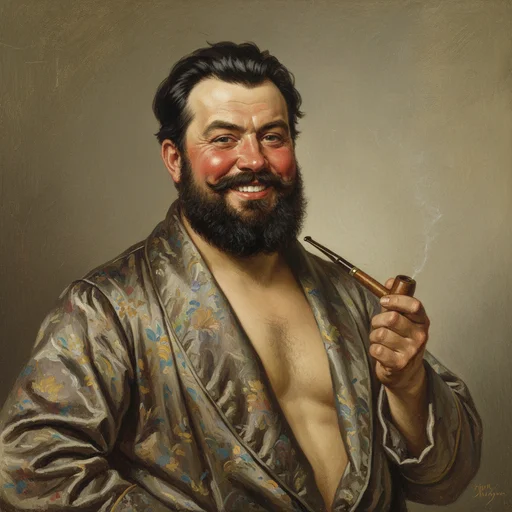
Nozdrev
A landowner in his thirties, active, a gambler, a braggart, and a brawler. Chichikov first encounters Nozdrev at the governor/prosecutor's party in town, but is not particularly bothered by his coarse energy. That is, until he meets his brother-in-law, Mizhuev, on the way to his estate and is forced to invite himself to his home. Nozdrev is someone who constantly wanders through fairs and gambling tables, losing everything in his wallet (and sometimes even his horses and carriage). He is a character with a boundless, cheerful appearance but a pathological liar, making it his mission to sell or trade everything he owns at the expense of others. Instead of giving the dead souls to Chichikov for free or for money, he forces him into a situation where he must win them in backgammon, checkers, or cards (by cheating). Eventually, a deal is struck; as Nozdrev tries to have his servants beat Chichikov, a police raid occurs by chance.
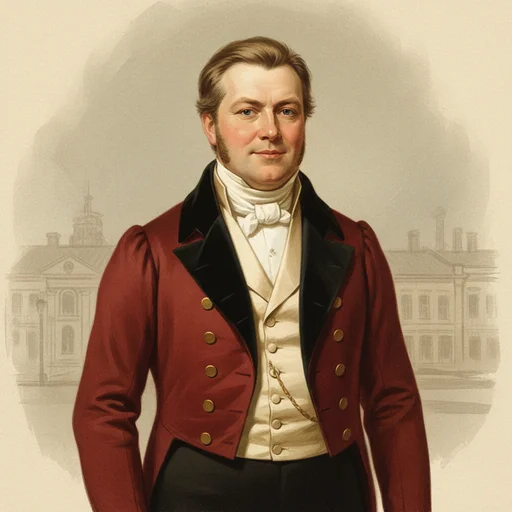
Pavel Ivanovich Chichikov
Pavel Ivanovich Chichikov is a former civil servant, a meticulous negotiator, and the protagonist of the novel. Having lost his fortune several times, he decides to exploit a legal, albeit morally absurd, loophole to become wealthy again and settle in a remote region as a respectable person. He locates and buys 'dead souls'—serfs who, despite having died between census counts (revisions), still appear as alive in official 'revision lists'—cheaply from landowners. His goal is to mortgage these serfs, who have no physical existence, to the state and obtain a large loan to gain status as a nobleman. In the town of N..., he charms the governor and all influential officials with intense flattery. He visits the landowners one by one and focuses on clinching the deal by enduring the eccentricities of each (Manilov, Korobochka, Nozdrev, etc.). Chichikov is a reflection of the 'middle class'—entirely pragmatic, devoid of romanticism, cold-blooded, and fixated solely on the realization of the false dream of wealth he has constructed.
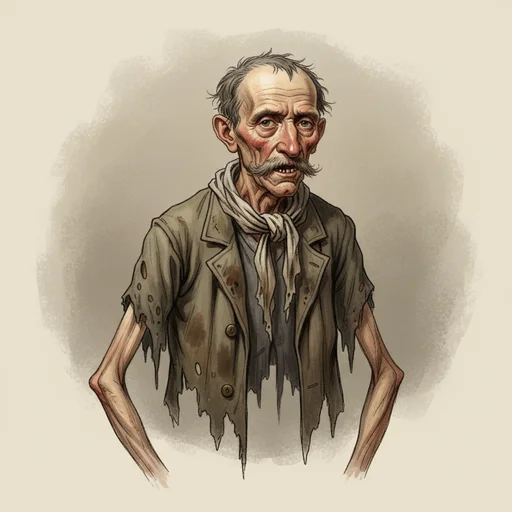
Plyushkin
Plyushkin is an elderly nobleman who was once an extremely wealthy, organized, and prosperous landowner, but who withdrew into himself after experiencing a great psychological breakdown following his wife's death. When he first sees him, Chichikov struggles to understand whether he is an old housekeeper with tattered clothes and hair growing from his chin, or a male beggar. Despite having over a thousand peasants, vast lands, and tons of produce rotting in warehouses, he presents a picture of pathological insolvency (a hoarder/miser), collecting small nails from the ground, old rags, and paper scraps, letting them rot in his room. He did not extend a helping hand to his daughter and grandchild, and he disowned his son. Chichikov uses his sick stinginess to convince him to sell/transfer the 'dead souls' instantly, under the pretext of saving him from taxes. Plyushkin is a figure who has lost his mind enough to think Chichikov is an angel in the face of this shrewd maneuver, and he is a man in love with his own misery.
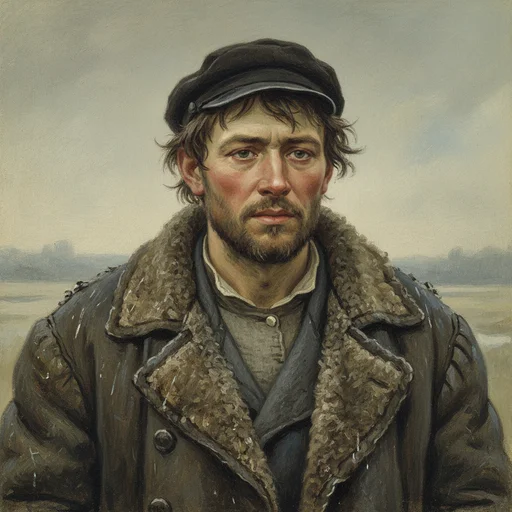
Selifan
Chichikov's coachman. Throughout the novel, he drives Chichikov between towns and estates in a horse-drawn carriage. With his tough skin, simplicity, and extreme fondness for fun (alcohol), he is a representation of the typical old Russian 'muzhik' (peasant). During the journey, he stops at taverns whenever he finds the opportunity and, by getting drunk, both overturns the carriage, endangering his master, and gets lost. He oscillates between blind obedience and feigned cunning. When he hears rebukes and insults from Chichikov, he mutters to himself, thinking he can escape blame by always shifting it onto others or fate, especially onto the lazy horses hitched to the carriage (like the 'piebald nag').