

Fathers and Sons — 9 karakter
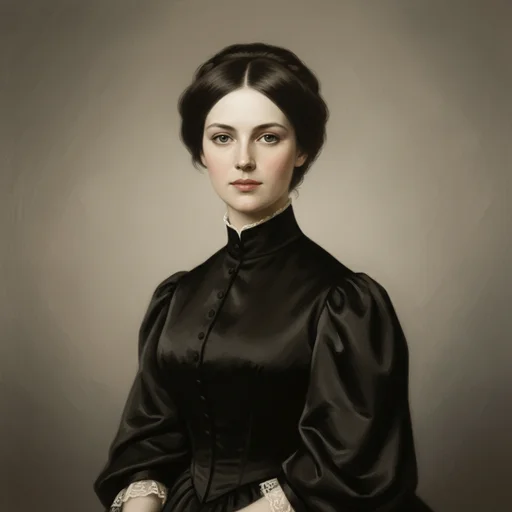
Anna Sergeyevna Odintsova
A wealthy and comfortable widow who reigns over a grand estate (Nikolskoye) on her own. After unfortunate years and the reputation of a bad father, she had entered a marriage of convenience with a wealthy older man, and upon his death, became the mistress of everything. She maintains the rigid, comfortable daily routine she established with Katya (her sister) and her odd aunt. However, after encountering Bazarov's rebellious passion and sharp ideas, she experiences a brief moment of curiosity and awakening in her life. Nevertheless, her essential search for effortless comfort prevents this fire of predatory nihilism (the possibility of love), and she rejects Bazarov.
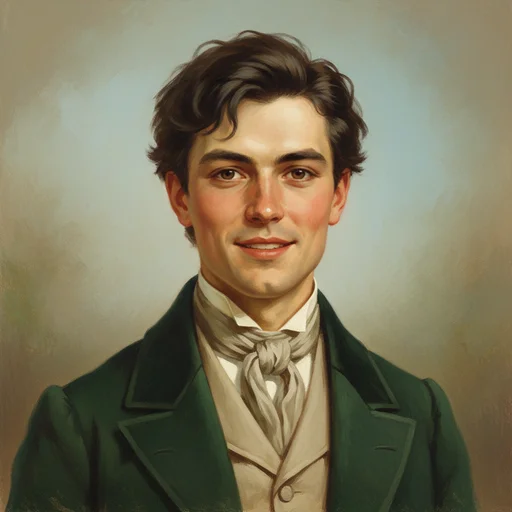
Arkady Nikolayevich Kirsanov
A young man with a hybrid soul who has just returned to his father's village and finished university. For a time, he was overly influenced by Bazarov's dogma and attempted to define himself as a nihilist. Although he tried to overcome the shy, old-fashioned ways of his father, deliberately be ashamed of his affections, and manage life according to nihilist rules rather than analyzing it, he can never hide his timid, compassionate, good, and romantic heart. This naive character, who initially leaned toward Odintsova, eventually comes to accept his own identity, falls in love with Odintsova's sister Katya, and parts ways with his nihilist master by heading toward an entirely opposite life.
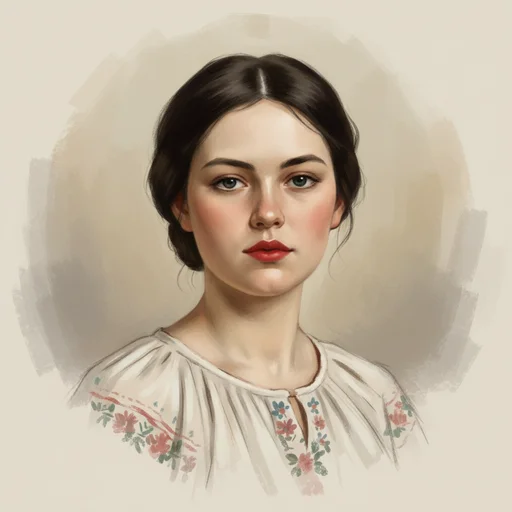
Fenichka (Fedosya Nikolayevna)
A young, sweet woman who came to Nikolai Petrovich's house as a housekeeper after her mother's death; she sought refuge in his kindness and, over the years, unknowingly bore his child, Mitya. She is completely devoted to Nikolai, but due to the class difference in society, she feels deep shame and hides from both Pavel and the son, Arkady. However, her beauty and innocence deeply affect these men of all classes. After Bazarov’s unexpected kiss and the duel that followed, her status is elevated to that of Nikolai's 'respected wife' through a chivalrous gesture by Pavel Petrovich.
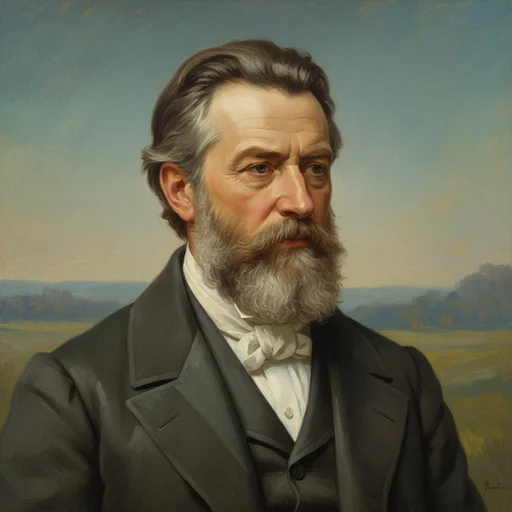
Ivan Turgenyev
Ivan Sergeyevich Turgenev was born in 1818 in Oryol, the second son of a wealthy noble family. His father was a cavalry colonel; the land and the serfs belonged to his mother, Varvara Lutovinova, a woman known for her hard temper. He spent his childhood on the family estate at Spasskoye, in a household where only French was spoken; he learned Russian largely from the servants. He began his studies at Moscow University, continued them in Petersburg, and then went to Berlin to read philosophy. He came to writing through poetry; “Parasha”, published in 1843, was the work that first made his name. That same year he met the singer Pauline Viardot, who had come to Petersburg on tour; the bond that followed lasted the rest of his life and tied him to Europe. The village stories he published in magazines from 1847 onwards appeared in 1852 as A Sportsman's Sketches; these pieces, showing the everyday face of serfdom, were widely read. In 1852 an obituary he wrote for Gogol, refused by the censors, earned him a month in prison and then confinement under surveillance at Spasskoye; he wrote Mumu while detained. After Rudin, Home of the Gentry and On the Eve came Fathers and Sons in 1862. Bazarov's “nihilist” stance angered the young radicals and the older generation alike; the quarrel the book provoked drew Turgenev away from Russia. He lived in Baden-Baden, and later near Paris. His language was measured and trusted the detail; he wove descriptions of nature into his characters' states of mind and carried an argument without raising his voice. He became the writer who brought the Russian novel to Western Europe; he was a friend of Flaubert and Zola, and in 1879 received an honorary doctorate from Oxford. In 1877 he published his last novel, Virgin Soil. He died of cancer on 3 September 1883 at Bougival, near Paris; his body was taken back to Russia and buried in the Volkovo Cemetery in Petersburg.
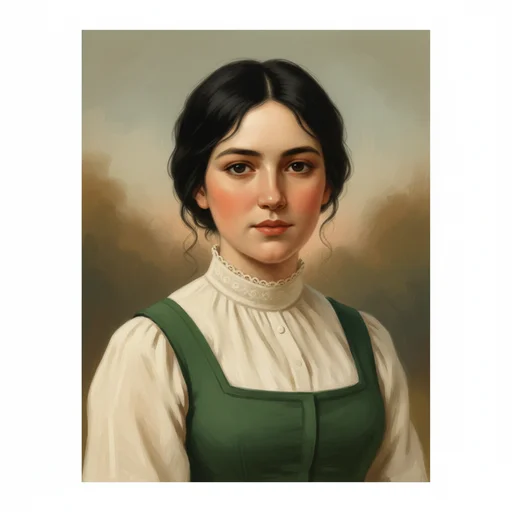
Katerina Sergeyevna (Katya)
Anna Odintsova's younger sister. Orphaned and raised under her sister's stern wings, she grew up isolated from the outside world, like a dependent, passing her time with books and her dog. When Arkady and Bazarov arrive at the estate, while her sister is lost in the fire of Bazarov, Katya and Arkady find solace in each other's loneliness, playing the piano and forming a friendship. Over time, setting her sights on Arkady, she transforms herself into his loving wife in an innocent but highly determined and passionate manner. Her path to escaping her sister's domination lies in this quiet resilience.
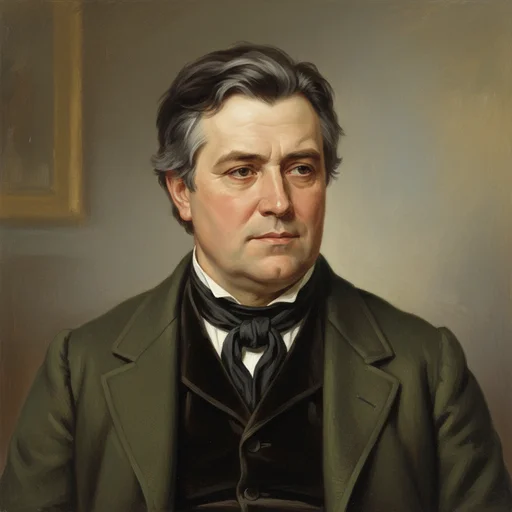
Nikolai Petrovich Kirsanov
In his 40s, unlike his general father, he has moved away from military life; he is a mild-mannered landowner who tries to read with timid enthusiasm and manage his estate. After losing his wife, he has lived with a deep devotion to his son, Arkady. He has brought the lower-class Fenichka into his home and fathered a child named 'Mitya' with her; he struggles to conceal the shame of this between his enlightened honesty and his aristocratic identity. He attempts to make changes in his life and tries new ideas to free his fields, but always fails, remaining in the melancholy of feeling old compared to the new nihilist generation.
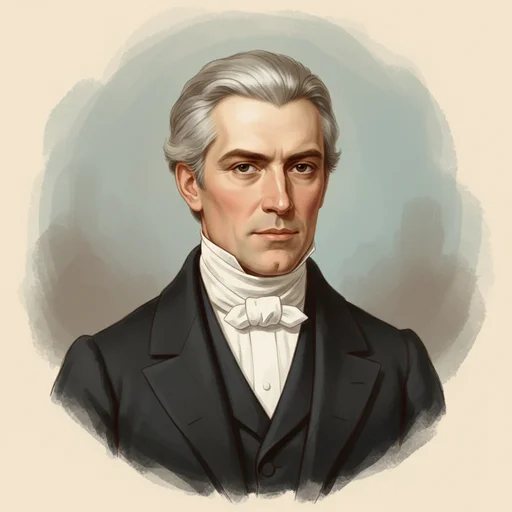
Pavel Petrovich Kirsanov
An elderly and stern aristocrat living on the estate with his brother Nikolay, harboring a history of a brilliant career and beauty. While he once ruled over everything and everyone as a socialite, he withdrew into solitude and lost his vigor after becoming pathologically attached to and subsequently disillusioned by a legendary, ominous woman (Princess R.). He maintains high standards of European culture, luxury, and elegance even in the rural wilderness; he is a quintessential defender of the 'old generation' who prides himself on his nobility. Consequently, he engages in sharp, irrational, and stubborn arguments with the nihilist Bazarov and officially brings an end to the era by dueling Bazarov over the Fenechka incident, which he turned into a matter of honor.
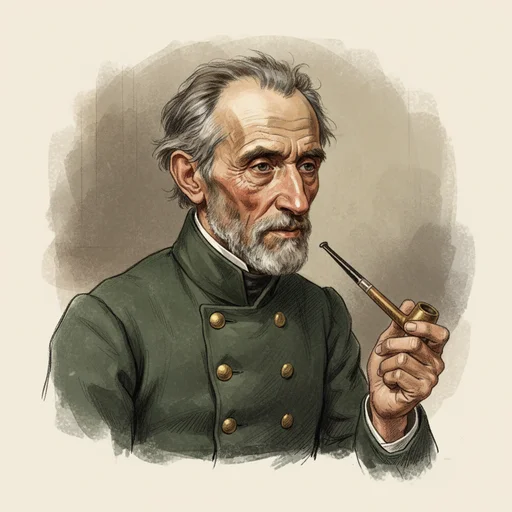
Vasily Ivanovich Bazarov
Yevgeny Bazarov's 60-year-old father, a retired military man and an enthusiastic provincial doctor. He leads a quiet, peaceful life on his small estate with his wife Arina, finding joy in preparing medicinal herbs and helping the poor peasants. He absolutely idolizes his son's formidable intellect, willing to take pride in him while showing off his own outdated medical knowledge and bowing to his son's superiority at the same time. He is even willing to trail after his son like a shadow just to receive a shred of attention from him, a nihilist who loathes sentimentality. Yevgeny's death, however, drives him to revolt against faith and destiny.
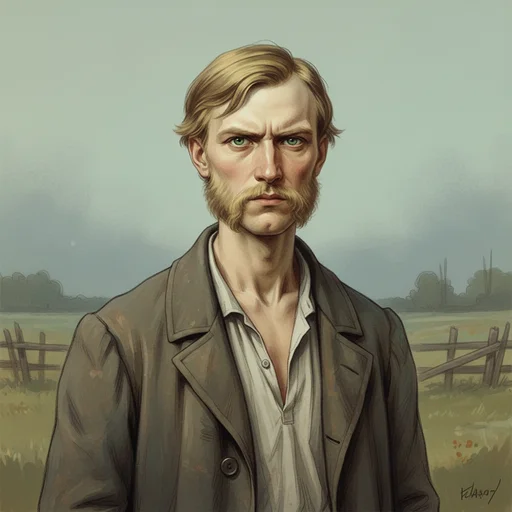
Yevgeny Vasilyevich Bazarov
Bazarov is a medical student representing the new, radical-thinking youth of Tsarist Russia. He defines himself as a 'nihilist'; he accepts no values, authority, tradition, or art outside of empirical evidence. While visiting his friend Arkady's family in Maryino, he enters into fierce intellectual conflicts with Pavel Petrovich, who represents the old aristocratic world. Although he views love only as a physiological necessity and a romantic malaise, he falls deeply in love with Anna Odintsova, which leads him to contradict his own beliefs and experience spiritual turmoil. At the end of the story, he infects himself through carelessness while treating a typhus case in his village and dies a tragic death, which he tries to face with stoic, scientific detachment.