
J.K. Rowling
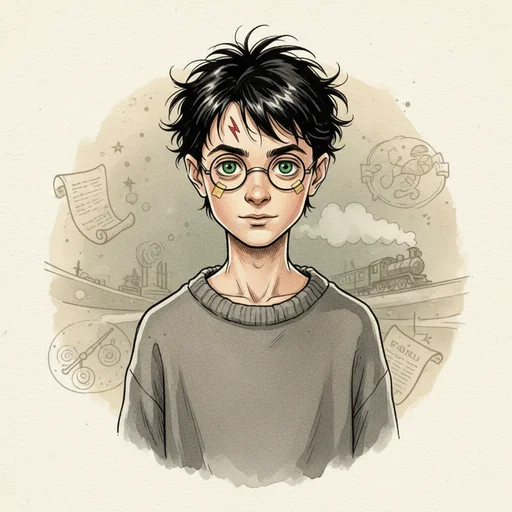
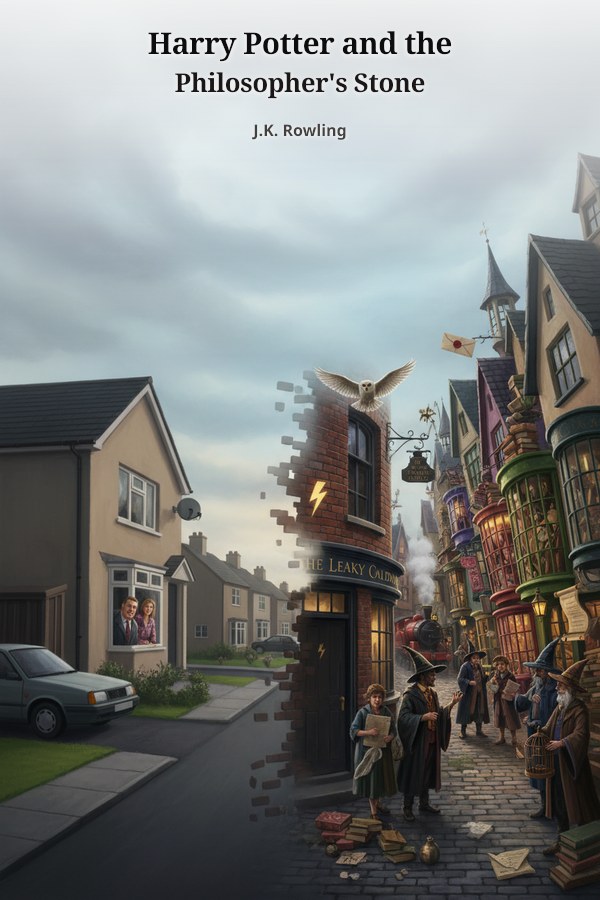
Harry Potter and the Philosopher's Stone is the first book in J.K. Rowling's world-famous series (1997). It follows the story of Harry, who learns he is a wizard and begins attending Hogwarts School of Witchcraft and Wizardry, where he makes friends and embarks on an adventure to protect the legendary Philosopher's Stone, which grants immortality, from the dark wizard Lord Voldemort.
The struggle of Harry Potter, an orphaned and belittled child, to learn who he truly is, and having to deal with the legacy of the dark wizard Voldemort—who failed in his attempt to kill him as a baby and whose name is spoken only with fear—as he steps into the magical world.
England; initially the boring and monotonous Number Four, Privet Drive in the London suburb of Little Whinging, Surrey, followed by the stormy Hut-on-the-Rock in the middle of the sea, the Leaky Cauldron in London, the hidden shopping street Diagon Alley, and the magical Platform Nine and Three-Quarters at King's Cross Station.
Early 1990s (constructed with the contrast between modern yet pre-millennial gadgets such as the television, video player, and computer games at Privet Drive and the more Gothic, parchment-filled, and steam-train-powered Victorian feel of the wizarding world).
A mysterious atmosphere adorned with a growing sense of wonder and a chain of extraordinary events, where dark secrets and magical possibilities lie hidden behind the mundane daily routine. A hopeful yet unsettling air prevails, stemming from the transition from the suffocating nature of the boring Muggle world to a vibrant, dangerous, and richly detailed fantasy world.
Third-person limited narrator. While the first chapter provides an external approach to the anomalies in the universe by conveying events from Mr. Dursley's perspective, the narrative subsequently focuses entirely on Harry Potter's inner world, thoughts, and observations, allowing the reader to discover the magical world along with him.
Witchcraft is a secret talent that is innate but must be trained by invitation via letter at academies like Hogwarts. The magical world is hidden from the Muggle (ordinary people with no magical talent) world under the Statute of Secrecy and is supervised by the Ministry of Magic. Wizards communicate via animals (mostly owls), keep their money (Galleons, Sickles, Knuts) in banks managed by goblins called Gringotts, and wands always choose their own wizard.
There is a sharp conflict between the rigid British middle-class culture (represented by the Dursley family), which is obsessed with appearances and what neighbors think and rejects fantasy, and the insular British Wizarding community, which prides itself on oddities, its own traditional rules, eccentric attire, and noble family lineages.
Characters are arranged at equal intervals on a circle; you can read the relationship type and dynamics by clicking on the lines.
Bir çizgiye tıklayarak ilişki detayını açın.
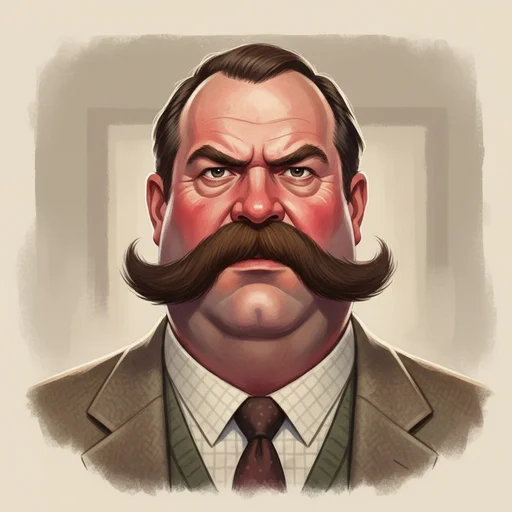
Uncle Vernon tries to crush Harry by applying physical and psychological pressure, as he fears the magical potential within him. Harry has developed a sense of endurance and hidden sarcasm rather than fear. As the letters arrive, Vernon loses control, while the drive for rebellion and liberation within Harry grows proportionally.
Harry's ignoring of Vernon's pedantic demands—such as ordering him to comb his hair—and his secret mockery of his behavior.
Petunia indirectly projects the deep jealousy and hatred she feels toward the magical talents her sister Lily possessed onto Harry. She treats Harry not like one of her own kin, but like an unwanted stain in the house. In Petunia's eyes, Harry's origins are shameful, and she constantly suppresses him.
Petunia's intolerance of Harry's physical presence and differences, even going so far as to cut his hair practically bald with kitchen scissors.
Empowered by his parents, Dudley uses Harry as his personal punching bag and subject of ridicule. Harry survives by remaining faster than him and avoiding physical fights. With Hagrid's arrival and the emergence of Harry's magical power, the bullying dominance established by Dudley is completely shattered and replaced by fear.
Dudley punching Harry in the ribs and pushing him to the ground to get a better view of the snake at the zoo, and the terror he experiences when the snake's glass enclosure vanishes.
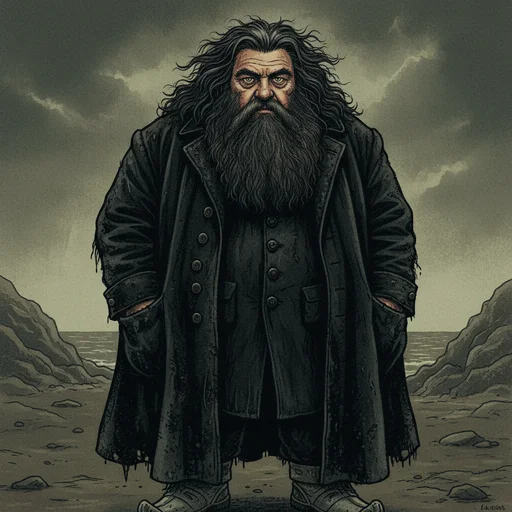
Hagrid is the key figure who pulls Harry out of a loveless world and helps him take his first steps into the magical world, filling the parental void. He is very merciful and protective of Harry; in return, Harry immediately trusts Hagrid deeply. A warm, sincere, and honest bond exists between them.
Hagrid hesitantly presenting Harry with a chocolate cake he made himself for his birthday, with 'Happee Birthdae Harry' written on it.
There is a deep mutual respect and a professional friendship between the two. While McGonagall presents a more anxious, rule-oriented side that openly reflects her emotions, Dumbledore always maintains a calmer, more mysterious, and wise demeanor. Although they may seem opposite, they act in the same direction when faced with major disasters.
When leaving baby Harry on Privet Drive, Dumbledore nodding his head with a calm consolation as McGonagall sheds tears.
Vernon Dursley fears and hates the fantasy-filled strangeness and uncontrollable nature represented by Hagrid to his core. Hagrid, in turn, cannot forgive Vernon's narrow-mindedness and the abuse he inflicted on Harry. The tension between them is resolved not through status or debate, but through pure brute force and threats.
Hagrid going mad with rage after Dursley speaks ill of Dumbledore and giving Dudley a pig's tail with his pink umbrella.
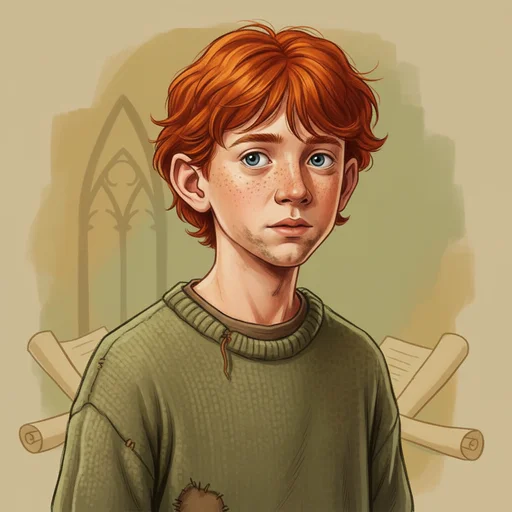
It is a bond that develops when they share the same compartment on the Hogwarts Express by pure coincidence. While Harry feels uneasy due to his ignorance of the wizarding world, Ron struggles with his insecurities stemming from his financial hardships and being one of many brothers. However, sharing food and confiding in each other levels these differences, paving the way for a pure friendship.
Harry breaking the ice by generously sharing the sweets and pastries he bought from the trolley with Ron, without any expectations.
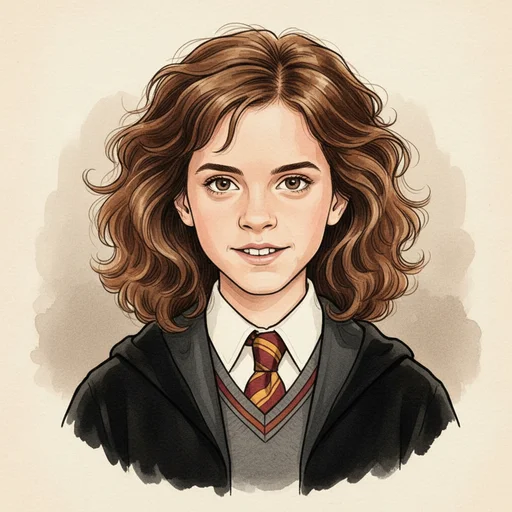
Hermione's know-it-all, pretentious, and rule-abiding nature is found to be quite annoying by the insecure Ron, who is looking for more fun. Hermione openly judges Ron's clumsy attempt at magic, causing a tense yet comical dynamic to emerge between them.
Hermione watching Ron's attempt to turn Scabbers yellow fail, and casually questioning whether it was really a spell at all.
Harry feels confused and slightly diminished by Hermione's rapid-fire speech, her arrogance, and her unhesitating admission that she has seen his name in books. However, he remains silent and observes her; although there is no fight between them, there is a momentary sense of alienation.
Harry falling silent to hide his confusion after Hermione says she knows everything written in the books about him.
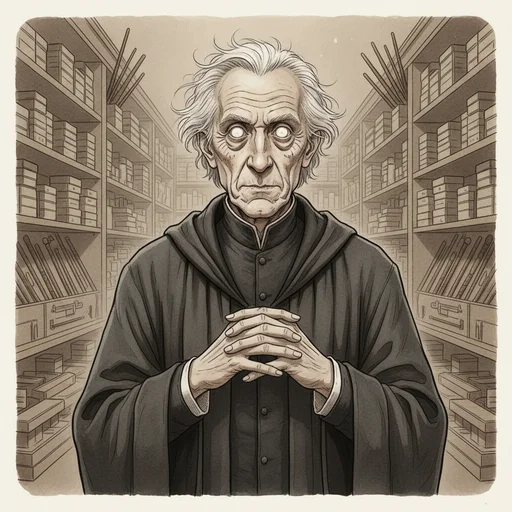
Ollivander's intimidating, secretive, and invasive manner sends chills down Harry's spine. However, the process of the wand choosing Harry creates a sense of cosmic, inevitable companionship between them. Ollivander's insights about Harry are unsettling.
Harry's skin crawling as Mr. Ollivander touches the lightning scar on his forehead and mentions that he sold the wand that gave it to him.
Petunia has never forgiven her family for praising Lily for being a witch. Her own ordinariness has subconsciously turned into a constant feeling of exclusion, which she masks with a fanatical hatred toward elders and magic. Lily's legend is Petunia's most sensitive taboo.
Petunia finally snapping at Hagrid, labeling her sister a 'freak' and bitterly venting about how her parents prioritized her.
Although they have not yet met, Harry is under the shadow of Voldemort because of the scar on his forehead and the terrifying legends surrounding him. Even the mere mention of his name triggers an involuntary image of green light and a high-pitched laugh in Harry. This enmity is a dark connection suggesting that while one lives, the other cannot truly survive.
The memory of a blinding green light and a cold laugh that suddenly appears in Harry's mind when Hagrid speaks the name of Voldemort.